

The Battle of Manila Bay took place on May 1, 1898, during the Spanish-American War. It was a major naval battle between the United States and Spain. The U.S. Asiatic Fleet, led by Commodore George Dewey, sailed to the Philippines to fight the Spanish fleet stationed there. The battle ended with a clear victory for the United States, as they destroyed Spain’s outdated ships.
This battle was important because it gave the U.S. control of Manila Bay and marked the beginning of American involvement in the Philippines. It also made Commodore Dewey a national hero in the U.S., and changed the course of history for both Spain and the Philippines.
Background Leading to the Battle
The events leading to the Battle of Manila Bay began in April 1898, when tensions between the United States and Spain reached a breaking point. The U.S. was preparing for war, and the Asiatic Fleet, under Commodore George Dewey, played a key role in the Pacific.
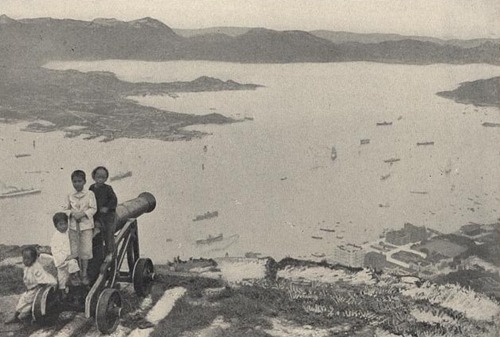
The U.S. Asiatic Fleet in Hong Kong
On April 22, 1898, the U.S. Asiatic Fleet, commanded by Commodore George Dewey, was stationed in Hong Kong. At this time, the U.S. was beginning to take military action, but war with Spain had not been officially declared. Dewey and his fleet were waiting for instructions from Washington.
War Declared: Dewey Receives Orders
On April 25, 1898, Dewey received a crucial message from the U.S. Navy. The message stated that the United States had officially declared war on Spain. Dewey was ordered to sail immediately to the Philippines and engage the Spanish fleet stationed there. His mission was clear: destroy or capture the Spanish ships and take control of the area.
Departure from Hong Kong
Due to British neutrality, the U.S. fleet had to leave Hong Kong shortly after receiving their orders. As Dewey’s ships sailed out of the port, British ships played “The Star-Spangled Banner,” and their crews cheered the Americans on.
Anchoring at Mirs Bay
Before heading to the Philippines, Dewey made an important stop. He violated China’s neutrality by anchoring his fleet at Mirs Bay, just off the Chinese coast. Here, the U.S. fleet prepared for the upcoming battle by conducting drills and getting their weapons ready. The Chinese government did not protest this violation, and Dewey used the time to finalize his battle plans.
On April 27, 1898, Dewey and his fleet left Mirs Bay and began their journey toward the Philippines, setting the stage for the Battle of Manila Bay.
Composition of the U.S. Squadron
Commodore George Dewey led a powerful squadron of ships into the Battle of Manila Bay. This fleet was well-prepared and well-armed, ready to take on the Spanish forces in the Philippines.
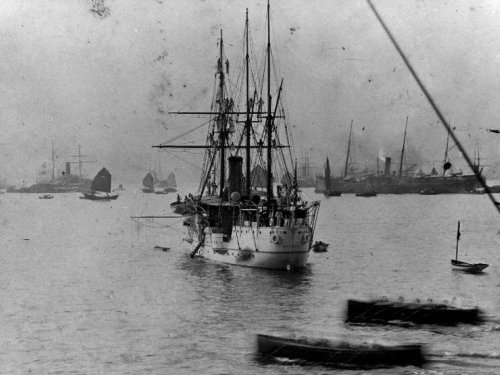
Ships in Dewey’s Fleet
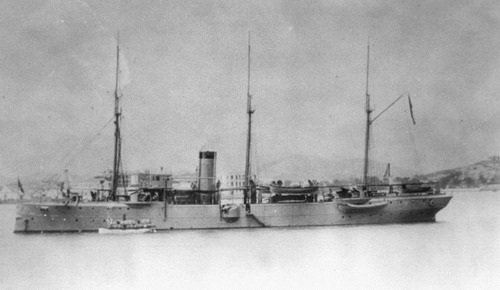
Dewey’s squadron was made up of nine ships and a total of 1,744 officers and men. The fleet included cruisers, gunboats, and support vessels, each with an important role to play in the mission.
Cruisers
- Olympia – The flagship of the fleet, this cruiser was heavily armed and carried the most firepower.
- Baltimore – Another powerful cruiser, ready for action.
- Raleigh – A smaller cruiser, but still an important part of the fleet.
- Boston – One of the older cruisers in the fleet, but still a valuable asset.
Gunboats
- Concord – A light gunboat, useful for its speed and agility.
- Petrel – Another light gunboat used to support the larger ships.
Support Vessels
- McCulloch – A revenue cutter that provided support and assistance to the fleet.
- Zafiro – A transport ship that carried supplies for the fleet.
- Nanshan – Another transport ship, mainly used for coal and other resources.
Preparations in Mirs Bay
Before heading to the Philippines, Dewey’s fleet anchored at Mirs Bay near China to make final preparations. Here, the crew trained for the upcoming battle. They practiced drills, prepared their guns, and ensured the ships were ready for combat. The men focused on quick-fire gun drills and torpedo training, ensuring they could respond quickly in battle.
After these preparations, Dewey felt confident his fleet was ready for the mission. On April 27, 1898, the fleet left Mirs Bay, setting sail for the Philippines and the coming clash with the Spanish forces.
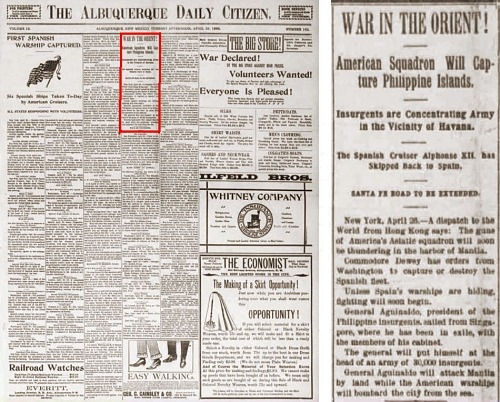
Journey to the Philippines
With the fleet fully prepared, Commodore George Dewey set sail for the Philippines. This journey marked the final step before the historic Battle of Manila Bay.
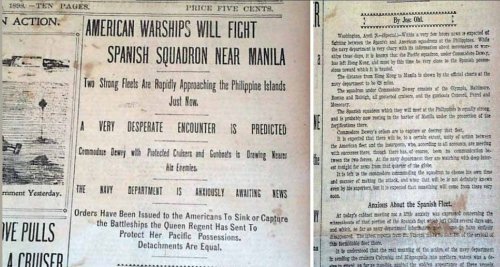
Departure from Mirs Bay
On April 27, 1898, Dewey’s fleet raised anchor and departed from Mirs Bay, heading toward the Philippines. The fleet had a long journey ahead, covering 628 miles (1,162 km) to reach their destination, but the men were in high spirits. The mission was clear, and they were eager to face the Spanish forces.
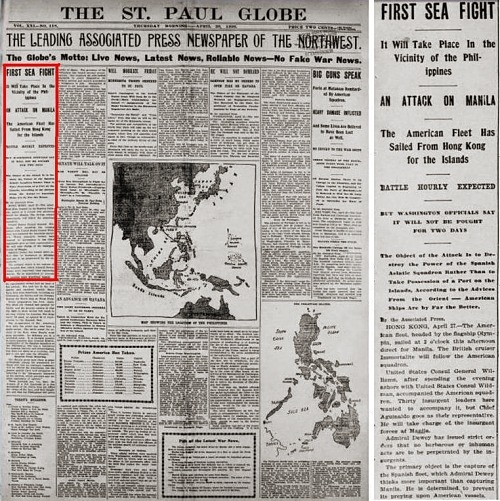
Boosting Morale
The crew’s morale was high as they embarked on their mission. A sense of purpose filled the air, and the sailors were determined to succeed. As the fleet set off, the band aboard Dewey’s flagship, the Olympia, played the lively march “El Capitan.” The music lifted the crew’s spirits, and the men cheered, shouting the famous battle cry, “Remember the Maine!”
This chant referred to the U.S. battleship USS Maine, which had been sunk in Havana Harbor earlier that year, sparking the war with Spain. The memory of that event drove the sailors forward, eager for victory.
Arrival in the Philippines
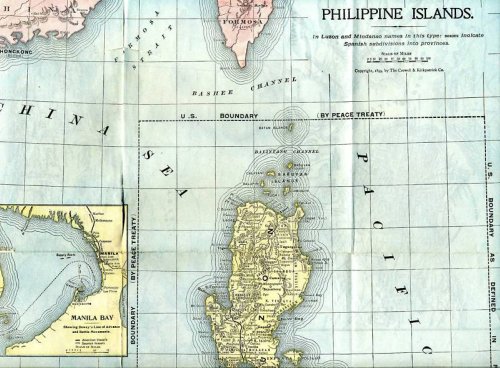
After several days at sea, the fleet arrived in the Philippines, ready to engage the Spanish forces. The stage was set for the battle that would unfold in Manila Bay. With the crew prepared and their spirits high, Dewey’s squadron was in position to launch their attack and change the course of the war.
The Battle of Manila Bay
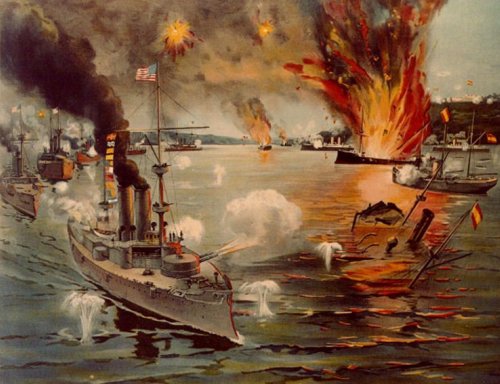
On May 1, 1898, the U.S. fleet under Commodore George Dewey engaged the Spanish squadron led by Admiral Patricio Montojo in Manila Bay. This clash would become one of the most decisive battles of the Spanish-American War.
Spanish Fleet Composition
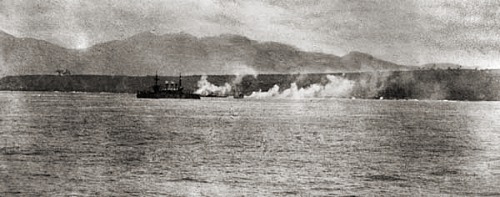
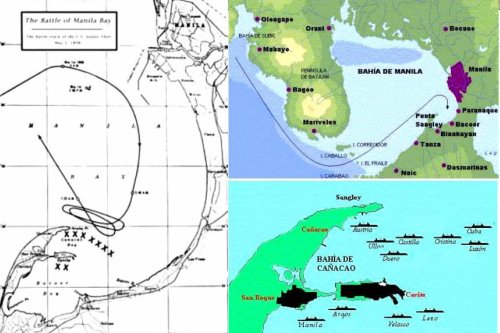
The Spanish fleet, though brave, was outdated and no match for Dewey’s modern warships. Admiral Montojo’s fleet consisted of several vessels, including:
- Reina Cristina – The flagship of the Spanish fleet.
- Castilla – One of the larger Spanish cruisers.
- Don Antonio de Ulloa – A smaller gunboat.
- Don Juan de Austria – Another key ship in the Spanish fleet.
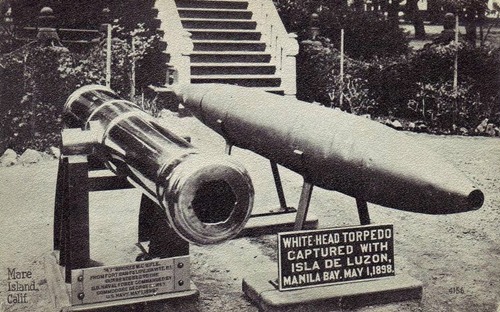
- Additional gunboats such as Isla de Cuba, Isla de Luzon, and others.
Despite their numbers, these ships were old and poorly maintained, putting the Spanish at a severe disadvantage.
The Battle Unfolds
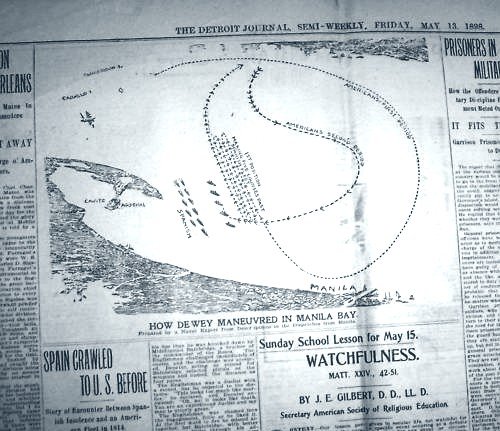
As the sun rose on May 1, Dewey’s fleet moved into position and launched a fierce attack on the Spanish ships anchored in Manila Bay. Dewey famously gave the command, “You may fire when ready, Gridley,” signaling the beginning of the battle.
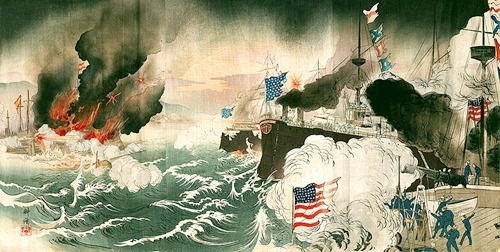
Within hours, the superior firepower and tactics of the U.S. fleet overwhelmed the Spanish. Dewey’s cruisers and gunboats pounded the Spanish ships, while the outdated Spanish vessels struggled to mount an effective defense.
Result of the Battle
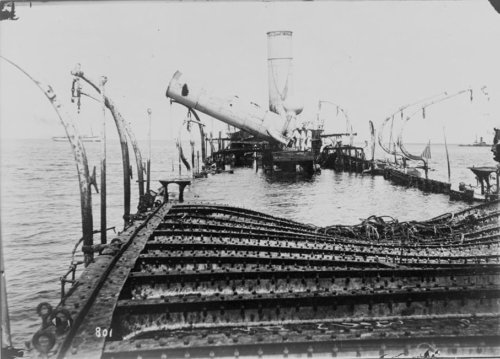
The battle ended in a complete victory for the United States. All eight of the major Spanish vessels were destroyed or sunk, leaving the Spanish fleet in ruins:
- 161 Spanish sailors were killed, and 210 were wounded.
- On the U.S. side, the casualties were minimal: only 8 Americans were wounded, and there was 1 non-combat fatality (a heart attack).
Despite the overwhelming defeat, Admiral Montojo managed to escape to Manila in a small boat, leaving his shattered fleet behind.
Aftermath of the Battle
The aftermath of the Battle of Manila Bay had far-reaching consequences for both Spain and the United States. While the victory secured American control in the Philippines, it also led to significant events in Spain and affected the course of the Spanish-American War.
Montojo’s Court-Martial in Madrid
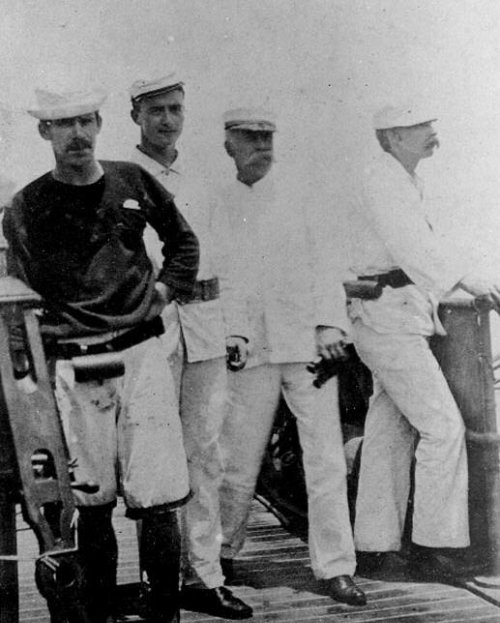
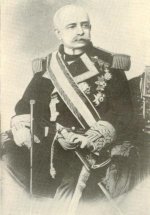
After the defeat, Admiral Patricio Montojo returned to Spain, where he faced severe consequences. He was summoned to Madrid to explain his loss at the Battle of Manila Bay. In March 1899, Montojo was tried by a Spanish Supreme Court-Martial. The Spanish government needed someone to blame for the devastating defeat, and Montojo became a scapegoat. He was initially imprisoned for his role in the battle, accused of negligence and poor leadership.
Dewey Defends Montojo
In an unexpected turn of events, Commodore George Dewey, the very man who had defeated Montojo, came to his defense during the trial. Dewey argued that Montojo had done everything he could with the outdated and poorly equipped ships at his disposal. Despite Dewey’s testimony, Montojo was ultimately discharged from the Spanish Navy, though his reputation was later somewhat restored.
U.S. Control of Manila Bay
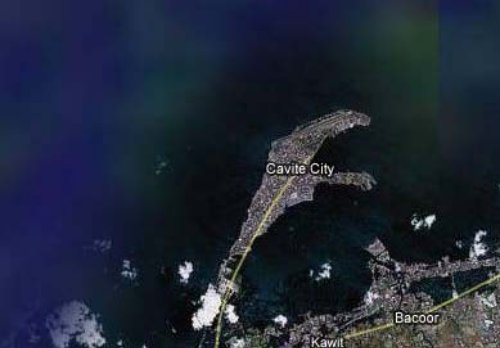
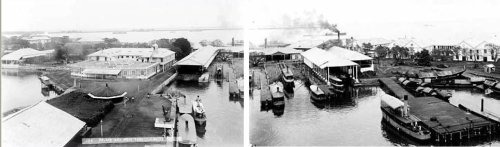
With the Spanish fleet destroyed, the United States gained complete control over Manila Bay and its vital naval facilities at Cavite and Sangley Point. This control was a major strategic advantage for the U.S., allowing them to establish a foothold in the Philippines and project naval power throughout the Pacific region.
Strategic Impact on the Spanish-American War
The victory at Manila Bay was a turning point in the Spanish-American War. It effectively eliminated Spain’s naval presence in the Pacific, ensuring that the U.S. could dominate the region. The success of Dewey’s fleet also boosted morale in the United States, where Commodore Dewey became an instant hero.
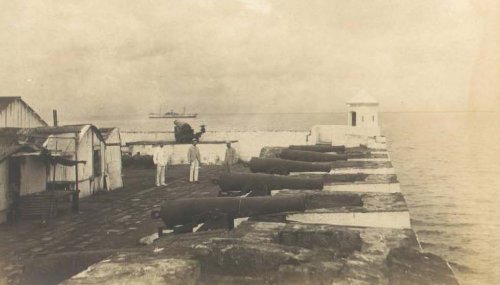
This battle paved the way for the eventual American occupation of the Philippines, which would have a lasting impact on the islands’ history. It also signaled the decline of Spain as a global colonial power, as they lost control of one of their most valuable territories in the Pacific. The victory set the tone for future U.S. victories and marked the beginning of American imperialism in Asia.
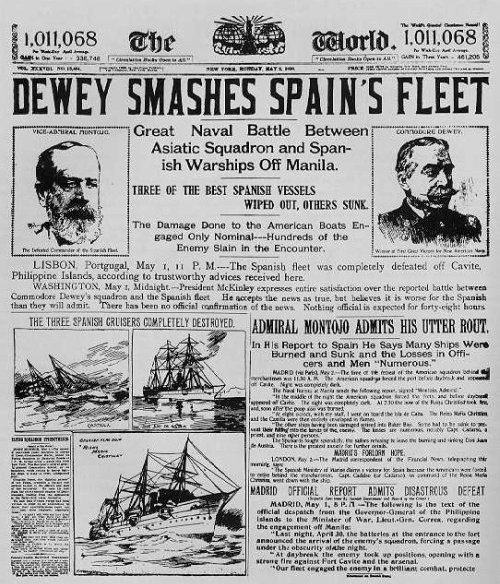
Dewey’s Rise to Fame
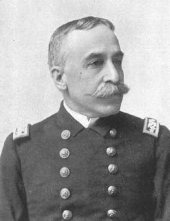
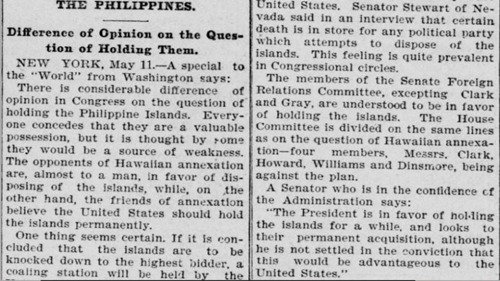
The news of Commodore George Dewey’s victory at the Battle of Manila Bay quickly spread across the United States, turning him into an instant national hero. His decisive defeat of the Spanish fleet captured the imagination of the American public and solidified his place in history.
Dewey Becomes a National Hero
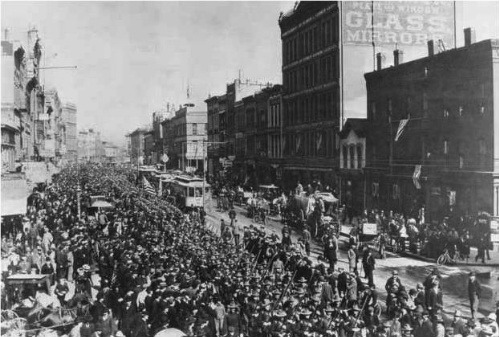
When word of Dewey’s triumph reached the U.S., the nation erupted in celebration. Americans, filled with patriotic pride, saw Dewey’s victory as a symbol of the country’s growing power on the world stage. His success in Manila Bay not only boosted morale but also gave the American people a figure to rally around during the Spanish-American War.
Public Reaction
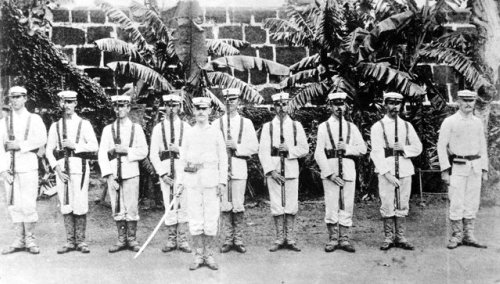
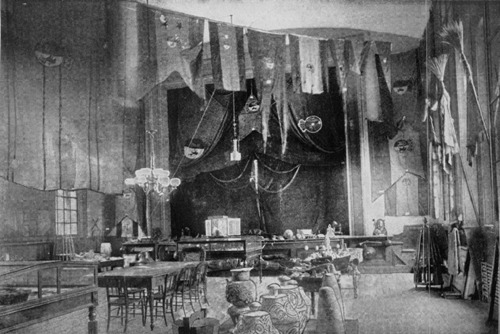
The public’s enthusiasm for Dewey was immense. His face appeared on merchandise ranging from plates to posters, and he became a household name. Items with Dewey’s image were sold in stores across the country, and parades were held in his honor. The commodore’s popularity soared, with streets and even children being named after him. The overwhelming public adoration turned Dewey into one of the most famous figures in American history at the time.
President McKinley’s Reflections
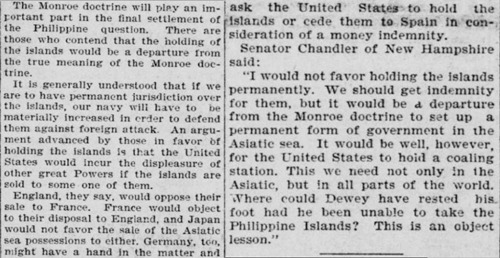
President William McKinley also reacted to Dewey’s success. He praised Dewey for his leadership and the strategic importance of the victory. However, McKinley was not entirely prepared for the new responsibility that came with controlling the Philippines. He famously remarked to his confidant, H.H. Kohlsaat, editor of the Chicago Times-Herald:
“When we received the cable from Admiral Dewey telling of the taking of the Philippines, I looked up their location on the globe. I could not have told where those darned islands were within 2,000 miles!”
This comment highlighted the fact that, while the U.S. had achieved a significant military victory, the long-term consequences of controlling the Philippines were not fully understood. McKinley later reflected on how Dewey’s actions, though necessary, had led the United States into an unexpected and complex involvement in the Pacific. He once quipped,
“If old Dewey had just sailed away when he smashed that Spanish fleet, what a lot of trouble he would have saved us.”
Despite McKinley’s reservations, Dewey’s rise to fame marked the beginning of a new era for the U.S. as a global power, with the Philippines at the center of that shift.
Cutting Communication
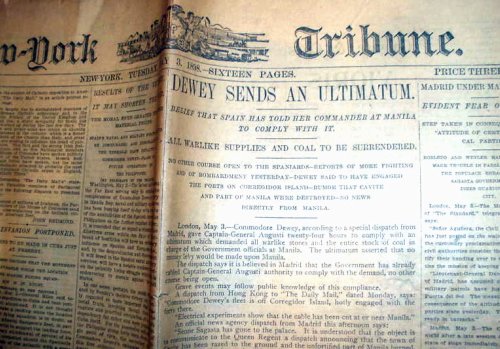
After securing a decisive victory at the Battle of Manila Bay, Commodore George Dewey took immediate steps to weaken Spanish control in the Philippines by cutting off their communication with the outside world.
Cutting the Telegraph Cable to Hong Kong
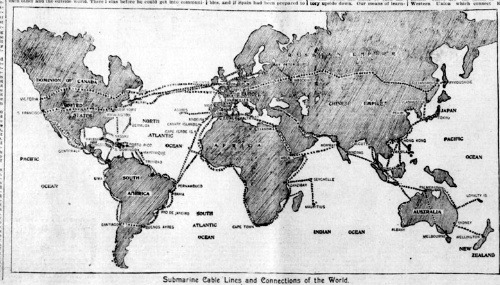
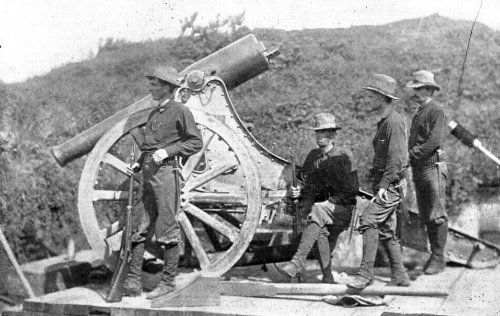
On May 2, 1898, just one day after the battle, Dewey targeted a crucial communication link between Manila and Hong Kong. The underwater telegraph cable that connected Manila to Hong Kong was the only direct means of sending messages to the Spanish government and receiving orders or reinforcements. Dewey understood the strategic importance of isolating the Spanish forces, so he ordered the cable to be cut, effectively severing Manila’s connection to the outside world.
By cutting the telegraph line, Dewey ensured that Spain would be unable to communicate with their officials in the Philippines, making it nearly impossible for them to organize a defense or request reinforcements.
Further Isolation of Spanish Forces
Dewey didn’t stop with the Hong Kong cable. Later in May 1898, he took additional steps to further isolate the Spanish forces by cutting other communication cables. On May 23, Dewey ordered the Manila-Capiz cable to be cut, which disconnected Manila from the central Philippine islands of Panay, Cebu, and Negros. This action disrupted internal communication within the Philippines, leaving the Spanish forces scattered and isolated.
By cutting these lines, Dewey effectively paralyzed the Spanish command structure in the Philippines. With no way to send or receive information, the Spanish forces were left in disarray, weakening their ability to respond to the growing American presence.
Strategic Impact
Dewey’s actions were a key part of his strategy to control Manila Bay and the surrounding areas. Isolating the Spanish forces by cutting their communication lines ensured that they would be unable to coordinate any significant resistance or receive reinforcements from Spain. This move further solidified Dewey’s hold over the Philippines and paved the way for the eventual American occupation of Manila.
The Spanish Surrender Offer
After the crushing defeat at the Battle of Manila Bay, the Spanish forces in the Philippines were left in a vulnerable position. Recognizing the hopelessness of their situation, the Spanish Governor-General, Basilio de Agustin, sought a way to end the conflict.
Governor-General’s Willingness to Surrender
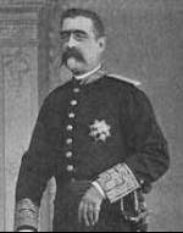
Governor-General Basilio de Agustin understood that the Spanish forces were in no position to continue fighting. With the destruction of the Spanish fleet and the isolation of Manila from the outside world, he sought a peaceful resolution. Through British intermediaries, particularly Edward H. Rawson-Walker, the British consul in Manila, de Agustin conveyed his willingness to surrender to the American forces under Commodore George Dewey.
Dewey’s Refusal to Accept the Surrender
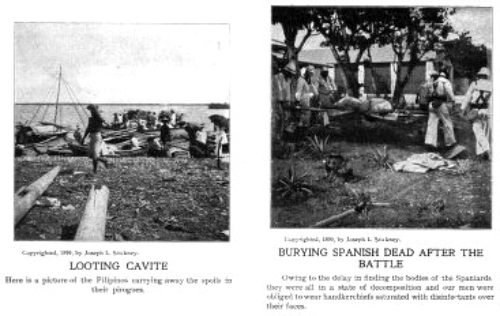
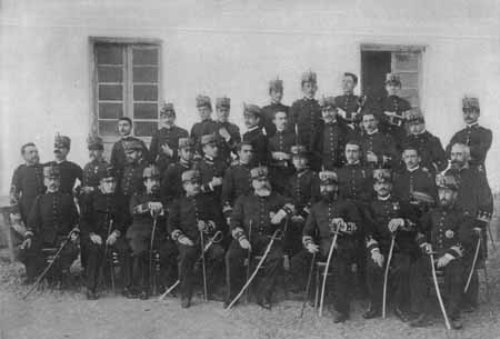
Despite the offer, Dewey could not immediately accept the surrender. While Dewey’s naval forces had won the battle at sea, he lacked the necessary ground troops to take control of Manila and enforce the terms of the surrender. Another concern was the growing presence of Filipino insurgent forces under Emilio Aguinaldo, who had begun fighting for independence from Spain. Dewey feared that if he accepted the surrender without American troops on the ground, the insurgents might take control of the city. He worried that this could lead to chaos, including possible looting and retaliation against the Spanish civilians in Manila.
In his refusal, Dewey said,
“I would not for a moment consider the possibility of turning it over to the undisciplined insurgents, who, I feared, might wreak their vengeance upon the Spaniards and indulge in a carnival of loot.”
Blockade of Manila Bay
With no ground forces to secure the city and the Spanish forces still in Manila, Dewey decided to implement a blockade of Manila Bay. The blockade was meant to prevent Spanish supplies or reinforcements from arriving by sea. Although Dewey had cut communication with the outside world, he remained concerned that Spain might attempt to send a relief expedition or that another European power might intervene in the conflict.
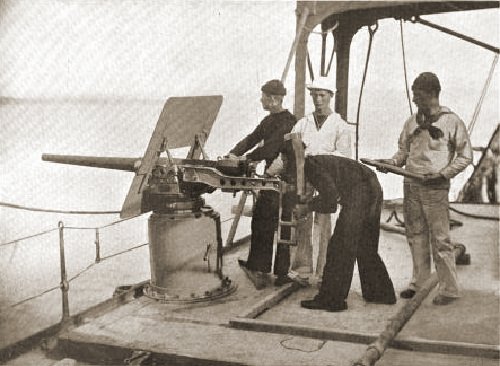
By maintaining the blockade, Dewey aimed to hold control of the bay while awaiting the arrival of U.S. Army reinforcements. This strategy bought time for the U.S. to prepare an occupation force, ensuring that when the surrender was eventually accepted, it would be on American terms, with sufficient troops on the ground to enforce order.
Reinforcements and the Aftermath
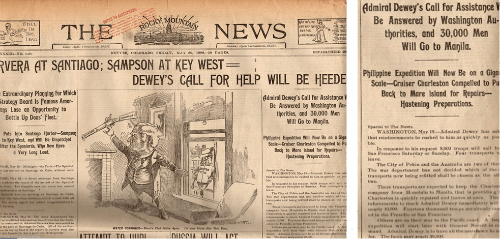
After his decisive victory at the Battle of Manila Bay, Commodore George Dewey realized that his naval success alone would not be enough to fully secure control of the Philippines. He needed ground troops to occupy Manila and complete the mission. This led Dewey to request reinforcements from Washington, setting the stage for the U.S. Army’s involvement in the Philippines.
Request for Reinforcements
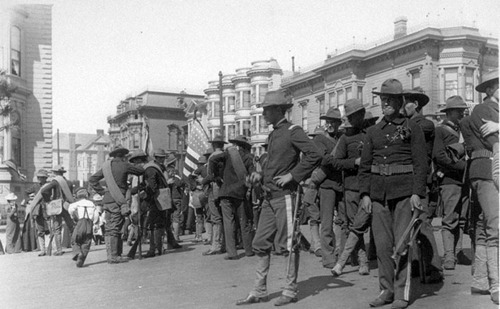
Following the battle, Dewey quickly cabled Washington, asking for ground forces to occupy Manila and prevent any disorder. He understood that the Spanish forces, though crippled, were still holding out in the city. More importantly, Dewey was concerned about the Filipino insurgents, who had been fighting for independence and might take control if American troops didn’t arrive soon.
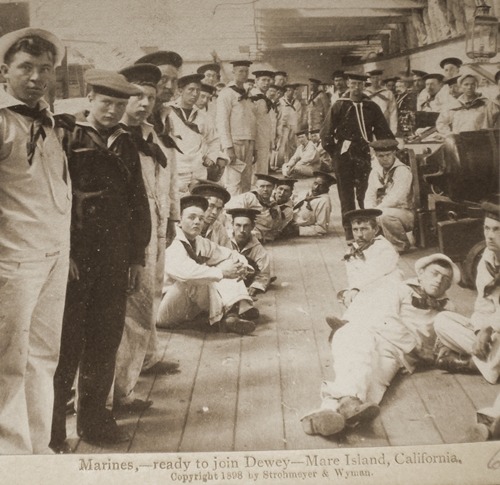
In response to Dewey’s request, the U.S. Army began assembling the Philippine Expeditionary Force at the Presidio in San Francisco, California. This force, under the command of Maj. Gen. Wesley Merritt, was tasked with traveling to the Philippines to support Dewey’s naval forces and occupy Manila.
Dewey Promoted to Rear Admiral
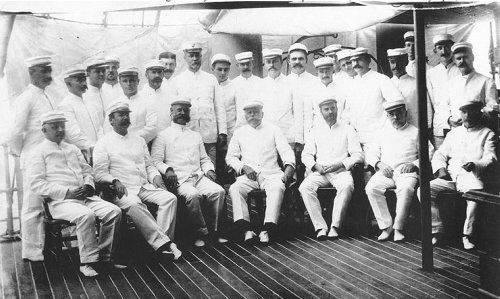
In recognition of his leadership and the overwhelming victory at Manila Bay, Dewey was promoted to the rank of Rear Admiral on May 11, 1898. This promotion marked Dewey as a key figure in the Spanish-American War and further solidified his status as a national hero.
Arrival of Additional Warships
As Dewey awaited the arrival of U.S. ground forces, additional warships were sent to reinforce his squadron. Among them was the cruiser Charleston, which brought much-needed ammunition and supplies to the fleet. Along with the Charleston, two monitors—the Monterey and Monadnock—were dispatched from California.
These slow-moving but heavily armed warships took nearly two months to reach the Philippines, but their arrival bolstered Dewey’s firepower and readiness for any future confrontations. The Monterey arrived just in time to assist in the final assault on Manila, while the Monadnock reached the Philippines shortly after the Spanish surrender.
Final Preparations for the Occupation of Manila
With the additional naval reinforcements and the imminent arrival of the U.S. Army’s 8th Corps, Dewey and his forces began making final preparations for the occupation of Manila. The blockade of Manila Bay remained in place, preventing any Spanish reinforcements or supplies from entering the city. Dewey also worked closely with General Merritt to coordinate the joint naval and ground assault on Manila.
These preparations would soon lead to the capture of Manila, securing American control over the Philippines and ending the Spanish colonial rule in the islands. Dewey’s successful coordination of naval power and ground reinforcements ensured that the U.S. would achieve its objectives with minimal resistance. The aftermath of the battle and the subsequent occupation laid the foundation for American governance in the Philippines, setting the stage for the country’s complex relationship with the U.S. in the years to come.
Conclusion
The Battle of Manila Bay was a turning point in the Spanish-American War, giving the United States control over the Philippines and marking the end of Spanish naval power in the Pacific. Commodore George Dewey’s victory not only made him a national hero but also set the stage for the American occupation of the Philippines. With reinforcements arriving and Manila secured, the U.S. established a lasting presence in the region, shaping the future of both the Philippines and American foreign policy.