

The Mock Battle of Manila took place on August 13, 1898, during the Spanish-American War. Although it was called a battle, it was actually a staged event between the American and Spanish forces. The goal was to make it look like the Spanish were fighting back while secretly planning to surrender. This allowed them to save face and hand over Manila to the Americans instead of the Filipino revolutionary forces.
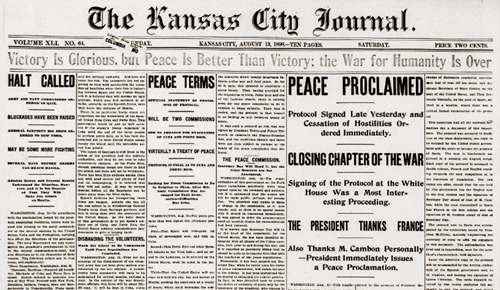
At the time, neither side knew that a peace agreement had already been signed a day earlier. The Americans cut the communication cable, so news of the war’s end didn’t reach them. As a result, both armies went ahead with the mock battle. This event played a key role in ending Spain’s rule in the Philippines, but it left the Filipino forces frustrated, as they were not included in the plan.
Background
Spanish-American War Context
The Spanish-American War started in April 1898, mainly due to rising tensions between Spain and the United States. These tensions grew from issues such as the U.S.’s support for Cuba’s fight for independence and the mysterious sinking of the USS Maine in Havana Harbor. The war quickly spread to other Spanish colonies, including the Philippines.
Tensions Between Spain and the United States
In the late 1800s, the U.S. was looking to expand its influence and saw Spain’s weakening empire as an opportunity. Spain, which had ruled over the Philippines for centuries, was struggling to maintain control of its colonies. The U.S. wanted to remove Spain from power and establish its own presence in the Pacific.
Admiral Dewey’s Victory at the Battle of Manila Bay
One of the most important moments of the war happened on May 1, 1898, when Admiral George Dewey led the U.S. Navy to a decisive victory at the Battle of Manila Bay. Dewey’s fleet destroyed the Spanish fleet, gaining control over the waters surrounding the Philippines. This victory gave the U.S. a strategic advantage and paved the way for its occupation of Manila.
The Broader Goals of the War for Both the U.S. and Spain
For the U.S., the goal of the war was to remove Spain from its colonies in the Caribbean and the Pacific. By doing so, the U.S. could expand its influence, gain control over key territories like the Philippines, and boost its position as a global power. Spain, on the other hand, wanted to hold onto its colonies and preserve what little remained of its once vast empire. However, it became clear that Spain was losing its grip, and the war was a final effort to maintain control.
The Filipino Revolutionary Struggle
While the U.S. and Spain were fighting, Filipinos had their own battle for independence. The Filipino revolutionary movement, led by General Emilio Aguinaldo, had been fighting Spanish colonial rule since 1896. By 1898, Aguinaldo and his forces had gained significant ground, and many believed that true independence was within reach.
The Role of Filipino Forces Led by General Emilio Aguinaldo
General Emilio Aguinaldo played a key role in the fight against Spain. His leadership helped unite various revolutionary groups across the Philippines. As Spanish forces weakened, Aguinaldo worked closely with the Americans, believing they were allies in the struggle for freedom. However, as events unfolded, it became clear that the U.S. had different plans.
The Strained Relationship Between Filipino Forces and American Occupiers
At first, the Filipino revolutionaries welcomed the U.S. as partners in their fight for independence. But as the Americans began to occupy the Philippines and take control of key areas like Manila, tensions grew. The U.S. did not intend to give the Philippines full independence, which led to a growing sense of betrayal among Filipino leaders. The strained relationship eventually turned into conflict, sparking the Philippine-American War shortly after the Mock Battle of Manila.
Setting the Stage for the Mock Battle
The Mock Battle of Manila on August 13, 1898, was not a traditional battle, but a carefully planned encounter between the American and Spanish forces. Both sides had pre-arranged the conflict to appear like a real fight, while the true intention was to peacefully transfer control of Manila to the United States without involving the Filipino forces, who had been fighting for their own independence. Several factors led to this staged event, including communication breakdowns and secret negotiations.
Cut Off from Communication
In the months leading up to the battle, the lines of communication between Manila and the rest of the world were intentionally cut. On May 2, 1898, just a day after his stunning naval victory at the Battle of Manila Bay, Admiral George Dewey severed the only undersea cable connecting Manila to the outside world. This move isolated the Spanish forces in Manila from receiving any updates on the ongoing peace negotiations between Spain and the U.S.
By the time the Mock Battle took place, neither Admiral Dewey nor Spanish General Fermin Jaudenes, the commander of the Spanish forces in Manila, had any idea that a peace protocol had been signed in Washington D.C. on August 12, 1898, effectively ending the war. This lack of knowledge set the stage for the events that followed, as both sides proceeded with the mock battle under the assumption that the conflict was still ongoing.
Preparations for a Staged Encounter
Even though the U.S. and Spain were still in the dark about the peace agreement, secret negotiations had been taking place between their military leaders in Manila. Spanish commanders, knowing they were outmatched and unable to win against the Americans, wanted to find a way to surrender while preserving their honor. At the same time, the Americans were eager to take control of Manila but did not want to share the victory with Filipino revolutionaries, who were also fighting to liberate the city.
In these secret talks, both sides reached an understanding. The Americans would make a show of attacking the city, and the Spanish forces would offer minimal resistance before surrendering. This allowed the Spanish to maintain some dignity in defeat, as it would appear they had put up a fight. The Americans, in turn, would gain control of Manila without the involvement of the Filipino forces, ensuring that the city would not fall into the hands of the revolutionaries.
The Goal: A Controlled Takeover Without Filipino Involvement
The key aim of the mock battle was to stage a transition of power that excluded the Filipino forces from the final capture of Manila. American commanders wanted to avoid a scenario where Filipino revolutionary forces, led by General Emilio Aguinaldo, could claim victory and potentially demand independence. By staging the battle and taking control themselves, the U.S. could avoid any claims from the Filipinos and assert its own authority over the city.
For the Spanish, this arrangement allowed them to surrender with a degree of honor, as they would not have to admit outright defeat to the Filipino revolutionaries, whom they had been fighting for years. Instead, they could claim they had been overwhelmed by the superior American forces.
The Battle Unfolds
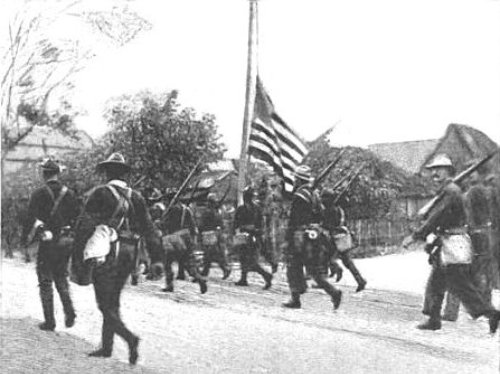
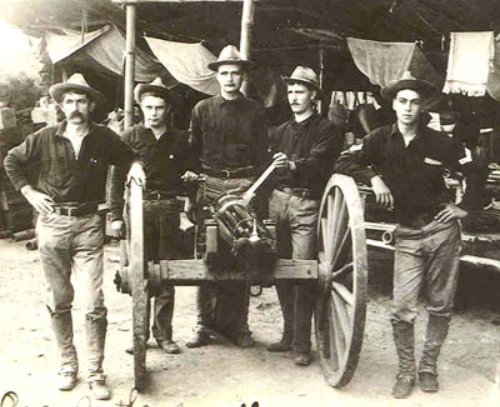
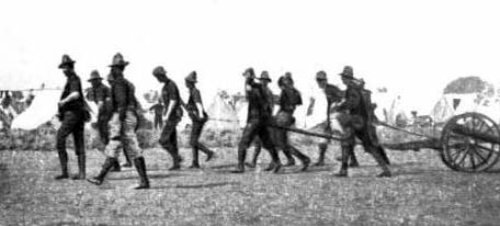
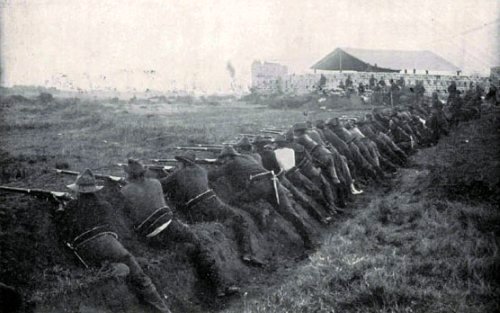
On the morning of August 13, 1898, the Mock Battle of Manila began as American forces made their carefully planned advance toward the city. Although the battle had been staged as part of a secret agreement between Spanish and American commanders, it still unfolded with precision and order on the American side.
The Spanish, too, played their part by offering only token resistance to make the encounter seem legitimate. However, the unexpected entry of Filipino forces into the battle created confusion, complicating the staged nature of the event.
The Initial Movements (Morning of August 13, 1898)
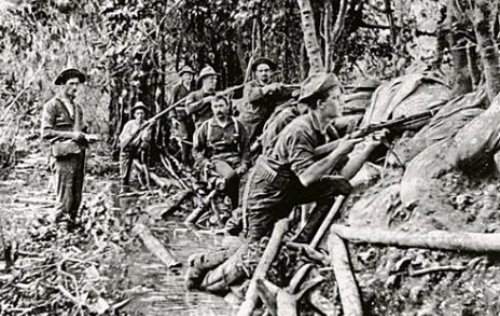
At 7:30 a.m., with no knowledge that peace had already been declared, American forces began their advance on Manila. The battle plan involved two main movements, each led by different brigades:
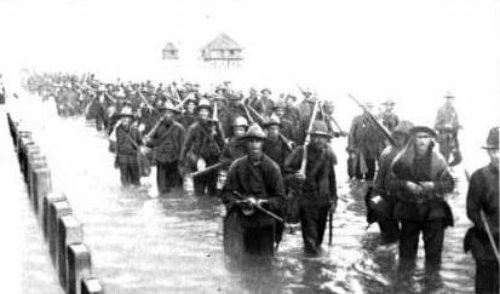
- General MacArthur’s 1st Brigade advanced toward Pasay, navigating through muddy, swampy terrain. Despite the difficult conditions, the troops reached their positions by 8:05 a.m., ready to engage the Spanish forces.
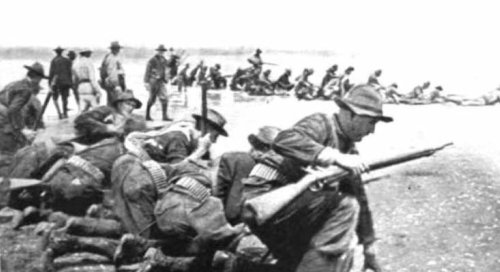
- General Greene’s 2nd Brigade moved along the beach toward Malate, leading with the 1st Colorado Volunteer Infantry Regiment, followed by regiments from California, Nebraska, Utah, Pennsylvania, and Oregon. Their objective was to take the Spanish fortification at Malate, Fort San Antonio de Abad.
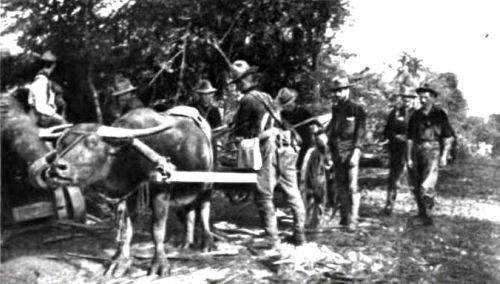
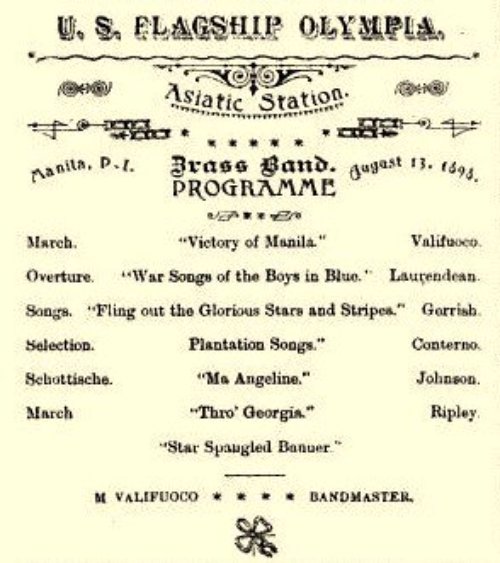
At 9:45 a.m., two of Admiral Dewey’s ships, the cruiser Olympia and the gunboat Petrel, began bombarding Fort San Antonio de Abad. The fort offered minimal resistance, with only sporadic return fire from the Spanish defenders. As the 1st Colorado Volunteers approached the walls of the fort, the naval bombardment ceased, signaling the end of the supposed battle for the area.
- Minimal Resistance from the Spanish: Inside the fort, the Americans found only two dead and two wounded Spanish soldiers. The rest of the Spanish forces had already retreated, leaving the fort deserted. At 10:35 a.m., Captain Alexander M. Brooks of Denver, Colorado, raised the American flag over the captured fort, marking the symbolic victory for the U.S.
Filipino Forces Enter the Battle
While the Americans and Spanish were following a carefully staged script, Filipino revolutionary forces were unaware of the agreement and believed the battle was genuine. Having fought for years to liberate their country from Spanish rule, the Filipinos saw the opportunity to join what they thought was a real battle to free their capital city, Manila.
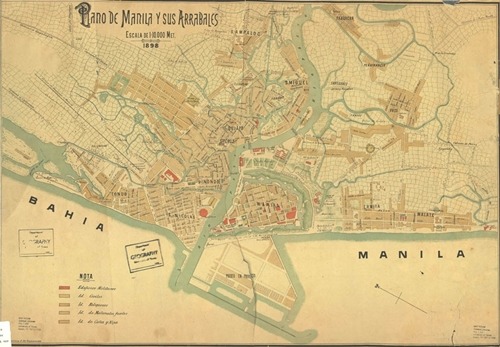
- Generals Pio del Pilar, Gregorio del Pilar, and Others: Various Filipino generals led their forces into the city from multiple directions. General Pio del Pilar’s column advanced on the Sampaloc district, while General Gregorio del Pilar’s forces took the Tondo district. General Mariano Noriel captured the Singalong and Paco districts, and General Artemio Ricarte routed the Spanish in the Sta. Ana district.
As the Filipino forces made their way through Manila, they expected to fight alongside the Americans to liberate the city from Spanish rule. However, the Americans had no intention of sharing the victory with the Filipinos.
- Confusion and Chaos: As the Filipinos entered different parts of the city, they encountered American forces who prevented them from advancing further. The Filipinos, believing the battle to be real, became confused and frustrated by the American resistance. In some areas, Filipino forces engaged both Spanish and American troops, creating chaotic skirmishes. One such incident occurred when the 13th Minnesota Volunteers found themselves caught in a crossfire between the retreating Spanish forces and the advancing Filipino troops.
The confusion highlighted the deepening divide between the American and Filipino forces, as the Filipinos felt betrayed by their supposed allies. While the Americans moved forward with their staged plan to take Manila, the Filipinos were sidelined from the victory they had long fought for.
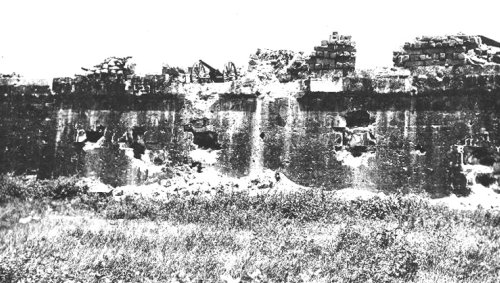
Climax and Surrender
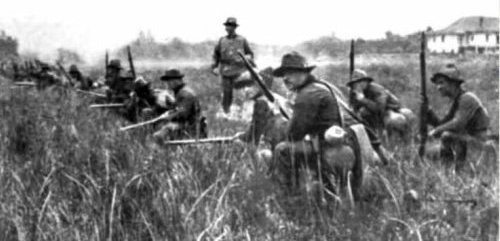
As the Mock Battle of Manila progressed, the final act unfolded at Intramuros, the walled city that had long been the seat of Spanish power in the Philippines. Both American forces and the remaining Spanish troops were converging on this historic stronghold, marking the climax of the orchestrated battle. Meanwhile, tensions rose as Filipino forces, unaware of the planned surrender, continued to engage, adding uncertainty to the situation.
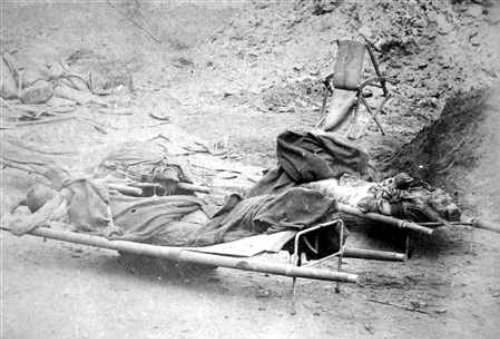
The Convergence at Intramuros
By late morning on August 13, 1898, American forces from both General MacArthur’s and General Greene’s brigades advanced toward Intramuros. The Spanish defenders inside the walled city had been expecting a formal attack, though they were in on the arrangement to surrender the city without much resistance. However, the presence of Filipino revolutionaries nearby complicated the carefully staged plan.
- Sniping from Filipino Forces: As American troops approached the city walls, occasional sniping from Filipino forces at the outskirts added an element of unpredictability. The Spaniards inside Intramuros, already suspicious of the American intentions, feared that they might be double-crossed, possibly allowing the Filipinos to overrun the city. These skirmishes led the Spanish to hesitate in raising the white flag, prolonging the tense standoff.
- Tension Among American and Spanish Commanders: Admiral George Dewey, stationed on the U.S. flagship Olympia in Manila Bay, awaited the Spanish surrender with growing concern. The longer the Spanish hesitated, the more Dewey worried about potential complications. He was particularly anxious that Filipino forces might seize the opportunity to attack the city, upsetting the planned handover of Manila to the Americans.
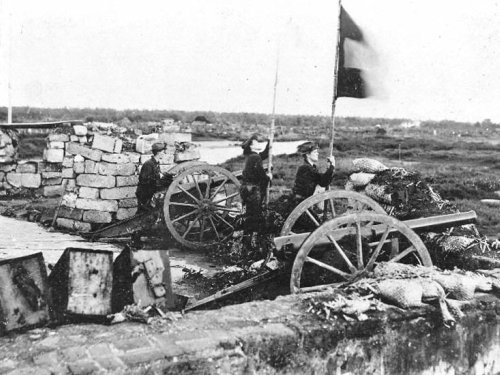
Negotiation and Final Surrender
With the situation growing increasingly tense, a diplomatic intervention became necessary to facilitate the surrender. The Belgian consul to Manila, Edouard Andre, stepped in to mediate between the American and Spanish commanders. His involvement helped smooth the way for the Spanish to formally surrender while ensuring their safety from the advancing Filipino forces.
- Terms of Surrender: By early afternoon, an agreement was reached. The Spanish would officially surrender the city to the Americans under the condition that enough U.S. troops would occupy Intramuros to protect the Spanish from Filipino attacks. This was a crucial point for the Spanish, who feared retribution from the Filipino revolutionaries.
At 2:33 p.m., Lieutenant Thomas Brumby, Dewey’s flag lieutenant, returned from negotiations with the news that the Spanish were ready to surrender as soon as American troops entered Intramuros. Dewey, eager to avoid further delays, immediately agreed to the terms.
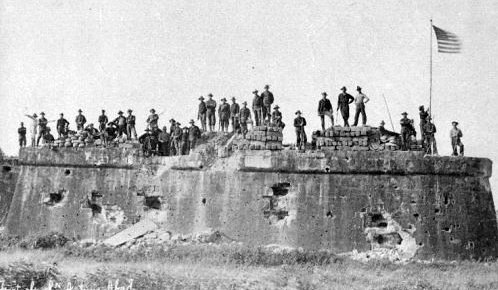
American Occupation of Intramuros
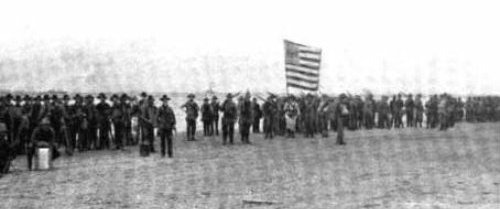
With the agreement in place, American forces quickly moved into the heart of the walled city. By 5:45 p.m., the Spanish flag was lowered from the walls of Intramuros, and Lieutenant Brumby raised a large American flag in its place. As the Stars and Stripes flew over the city, the U.S. fleet in Manila Bay saluted the new flag with a series of 21-gun salutes, marking the official transfer of power.
Inside the city, the transition was peaceful. American troops took control of Intramuros and immediately began to fraternize with their Spanish counterparts. Meanwhile, the Filipino forces were kept at bay, unable to claim any role in the victory. This outcome, though planned, left Filipino revolutionaries feeling increasingly betrayed, setting the stage for future conflicts between the U.S. and Filipino forces.
The Mock Battle of Manila ended with American forces in control of the city, marking the end of Spanish rule in the Philippines and signaling the start of a new chapter under U.S. occupation.
Aftermath and Significance
The Mock Battle of Manila ended with a highly symbolic act: at 5:45 p.m. on August 13, 1898, the Spanish flag was formally lowered from the walls of Intramuros, the historic walled city of Manila. In its place, Lieutenant Thomas Brumby raised the American flag, signaling the official transfer of power.
This act was followed by a 21-gun salute from the U.S. fleet anchored in Manila Bay, celebrating the American victory. For the Americans, this marked the successful occupation of Manila, while for the Spanish, it was the final moment of their centuries-long rule over the Philippines.
Long-term Consequences
While the Mock Battle appeared to be a decisive American victory, it had deeper strategic implications. The battle was staged to ensure that the Americans, not the Filipino revolutionaries, would gain control of Manila. By sidelining Filipino forces, the U.S. effectively blocked them from sharing in the victory and any potential claim to the capital city. This led to rising tensions between the U.S. and Filipino leaders, as it became clear that the U.S. intended to maintain control over the Philippines, rather than grant it the independence that many Filipinos had fought for.
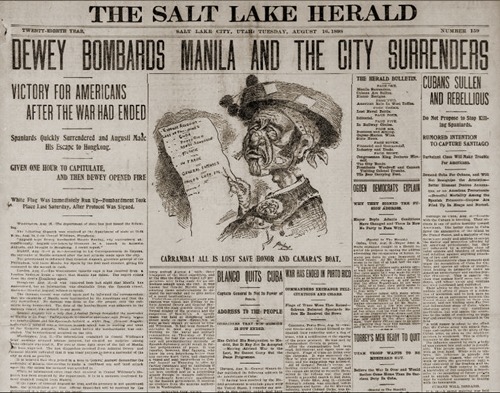
The Mock Battle also marked the official end of Spanish colonial rule in the Philippines, but it did not signal the independence that Filipino revolutionaries had long sought. Instead, the event set the stage for a new phase of conflict, as tensions between the U.S. and Filipino forces escalated into the Philippine-American War. The staging of the battle, while successful in maintaining peace between the U.S. and Spain, left a lasting impact on U.S.-Filipino relations and shaped the future of the Philippines as a U.S. territory, rather than a fully independent nation.


Conclusion
The Mock Battle of Manila was a carefully staged event that allowed the U.S. to take control of the city without a real fight. While the Spanish surrendered to the Americans, Filipino forces, who had fought for independence, were left out of the victory. This moment marked the end of Spanish rule in the Philippines but also set the stage for future tensions between the U.S. and the Filipinos, who continued to seek their own freedom.