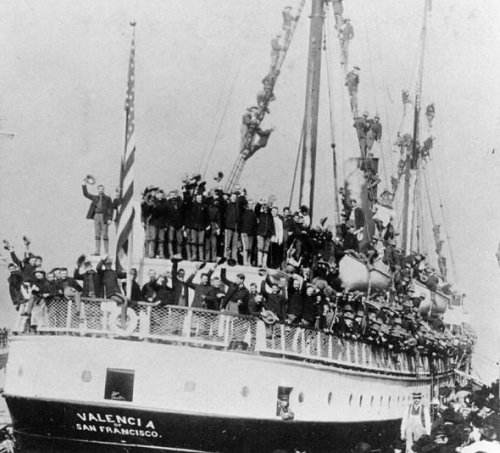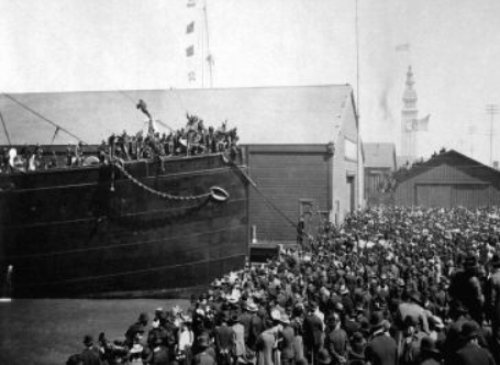

The Spanish-American War, which began in 1898, saw the United States emerge as a new imperial power. Following the initial conflicts with Spain, the U.S. set its sights on the Philippines, a Spanish colony in Southeast Asia. The conflict quickly evolved into the Philippine-American War as Filipinos fought to resist American colonization. To secure control over the Philippines, the U.S. military needed to dispatch reinforcements across the Pacific. The journey of these troops from San Francisco to Manila, spanning from May 25 to June 29, 1898, was a significant logistical and military operation that set the stage for the fierce battles to come.
The Presidio: Assembly Point for the Invasion Force
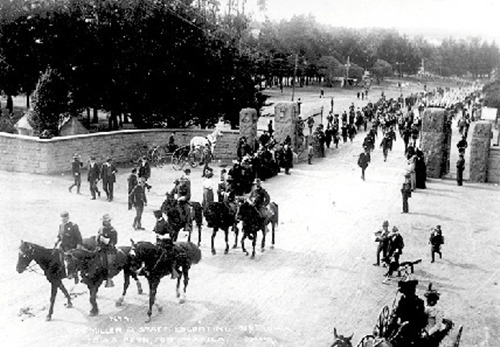
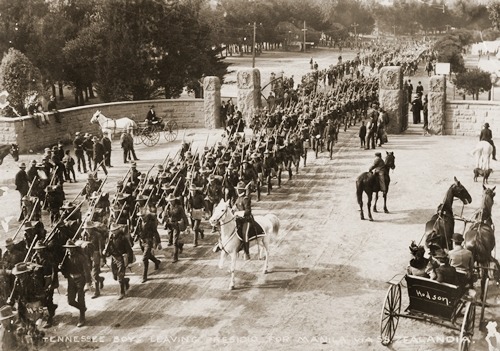
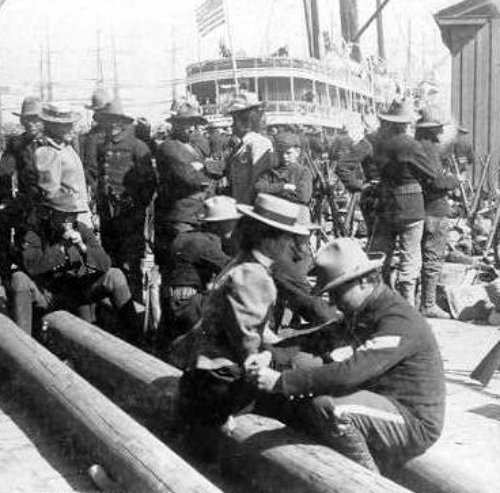
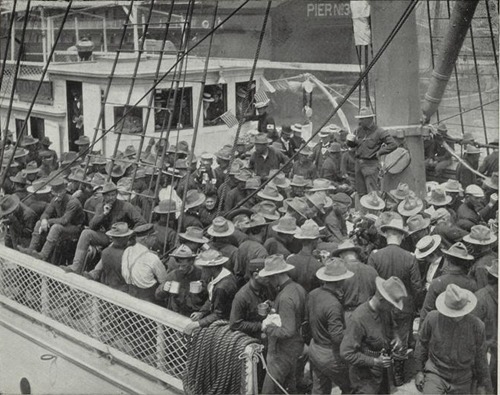
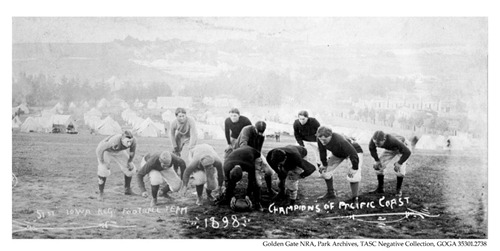
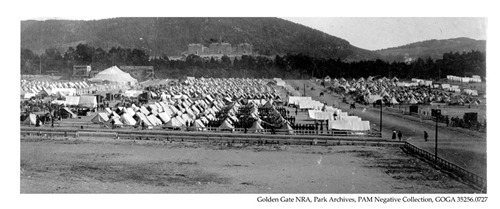
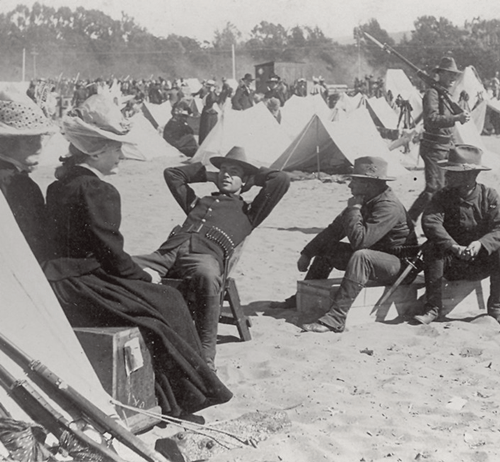
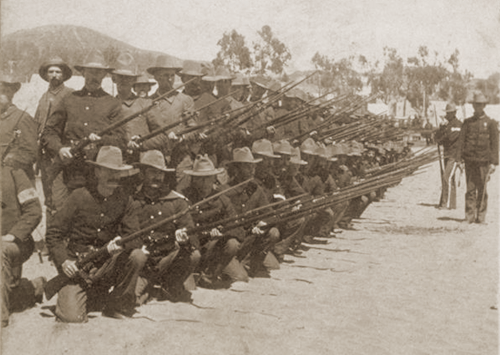
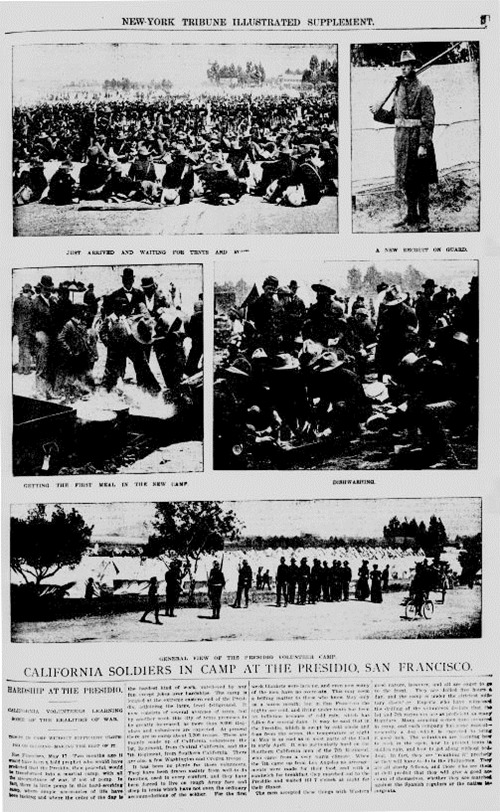
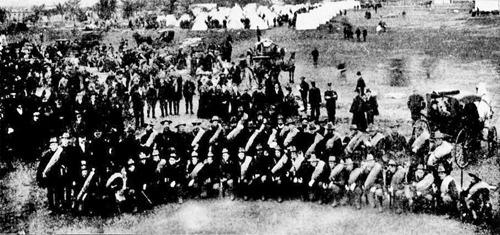
The US Army forces that invaded the Philippines in the Spanish-American and Philippine-American Wars assembled at the Presidio (ABOVE, in 1898) on the northern tip of the San Francisco Peninsula, California.

The Presidio, located at the northern tip of the San Francisco Peninsula, served as the main assembly point for U.S. forces bound for the Philippines. Originally built as a Spanish fort in 1776, the Presidio had a long military history, including its role in most of America’s engagements in the Pacific. By 1898, it had become the staging ground for the 8th Army Corps, the unit responsible for the U.S. invasion of the Philippines.
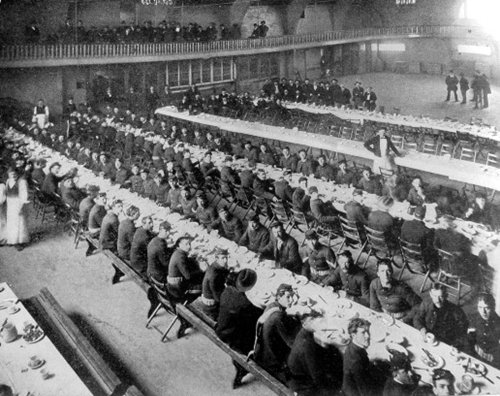
Troops from across the country, including the 51st Iowa and 1st New York Volunteers, set up camps at the Presidio in preparation for their deployment. However, only the 51st Iowa would ultimately proceed to the Philippines, as not all units were needed immediately.
Brigadier General Arthur C. MacArthur, Jr., a key figure in the Philippine-American War, was among the leaders stationed at the Presidio during this period. The site also hosted recreational activities for the troops, such as football games, as they awaited their orders.
The Logistics of Deployment: A Challenging Operation
The lack of transport accommodation, which was corrected by sending vessels from the Atlantic coast of the United States, coupled with the imperative necessity for dispatching troops immediately to the Philippines, resulted in the movement of the 8th Army Corps by 7 installments, extending over a period from May to October.
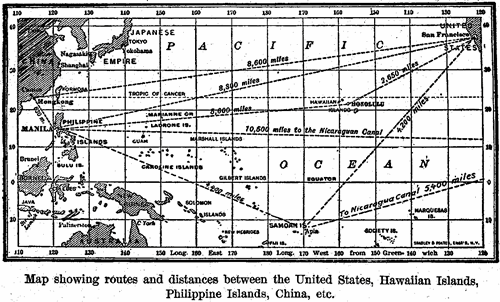
Only 3 of these expeditions [470 officers and 10,464 men] reached Manila in time to take part in the assault and capture of that city on August 13.
They were:
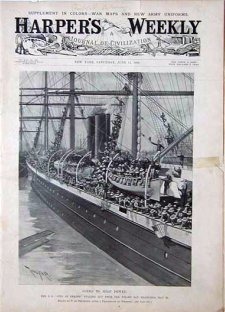
First Expedition, 115 officers and 2,386 men, commanded by Brig. Gen. Thomas M. Anderson:
1st California Volunteer Infantry Regiment; 2nd Oregon Volunteer Infantry Regiment; 14th United States Infantry Regiment (5 companies); California Volunteer Artillery (detachment).
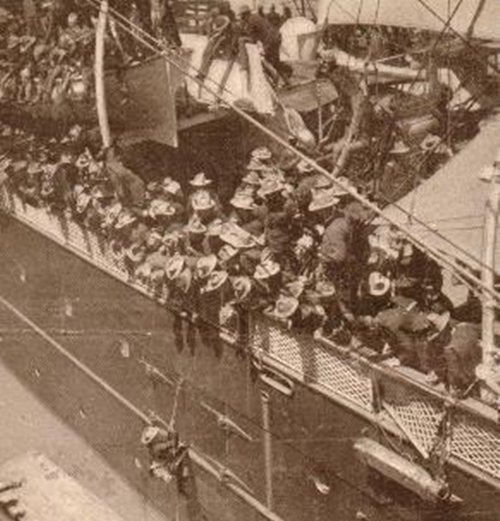
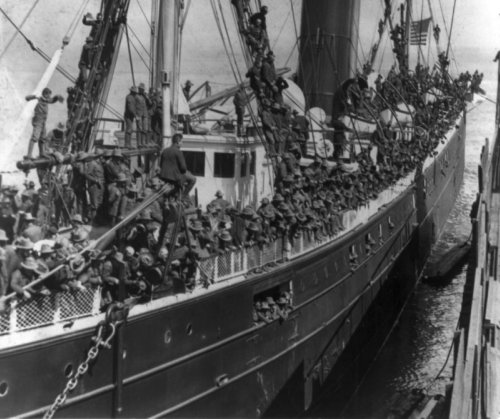
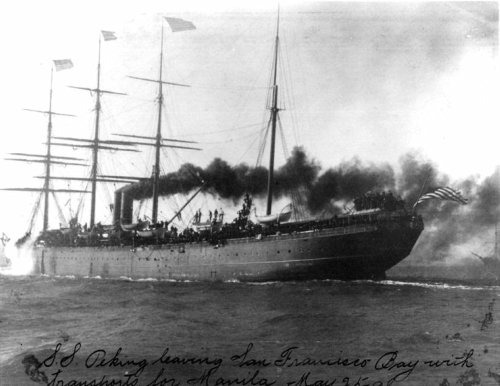
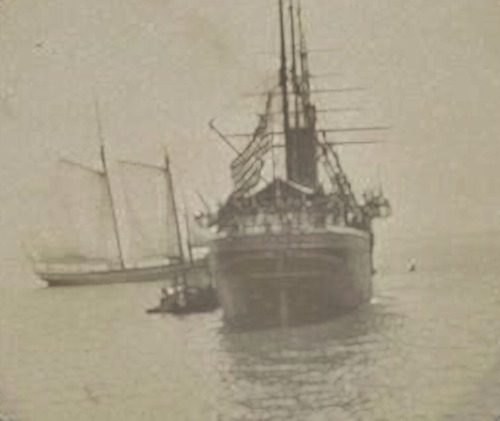
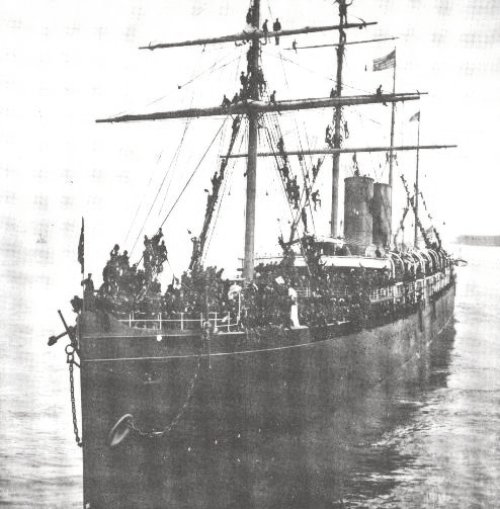
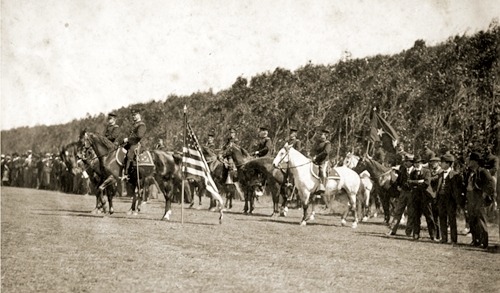
Steamships: City of Sidney, Australia, and City of Peking [RIGHT, Harper’s Weekly, June 11, 1898 issue].
Sailed May 25, arrived Manila June 30.
Second Expedition, 158 officers and 3,428 men, commanded by Brig. Gen. Felix V. Greene:
1st Colorado Volunteer Infantry Regiment; 1st Nebraska Volunteer Infantry Regiment; 10th Pennsylvania Volunteer Infantry Regiment; 18th United States Infantry Regiment (4 companies); 23rd United States Infantry Regiment (4 companies); Utah Volunteer Artillery (2 batteries); United States Engineers (detachment).
Steamships: China, Colon, Senator, and Zealandia.
Sailed June 15, arrived Manila July 17.
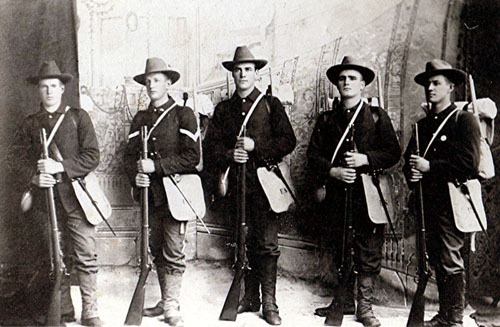
Third Expedition, 197 officers, 4,650 men, commanded by Brig. Gen. Arthur C. MacArthur, Jr., Maj. Gen. Wesley Merritt accompanying:
18th United States Infantry Regiment (4 companies); 23rd United States Infantry Regiment (4 companies); 3rd United States Artillery acting as Infantry (4 batteries); United States Engineers Battalion (1 company); 1st Idaho Volunteer Infantry Regiment; 1st Wyoming Volunteer Infantry Regiment; 13th Minnesota Volunteer Infantry Regiment; 1st North Dakota Volunteer Infantry Regiment; Astor Volunteer Artillery; Hospital and Signal Corps (detachments).
Steamships: Morgan City, City of Para, Indiana, Ohio, Valencia, and Newport.
Sailed June 27 and 29, arrived Manila July 25 and 31.
Life at Camp Merritt and the Farewell March
Camp Merritt, established just outside the Presidio on May 29, 1898, served as the departure point for many of the troops heading to the Philippines. The camp, however, was plagued by disease, particularly measles and typhoid, leading to its abandonment on August 27, 1898. The remaining troops were relocated to Camps Merriam and Miller, slightly north at the Presidio.
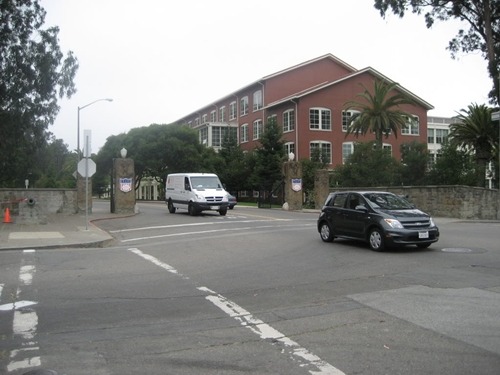
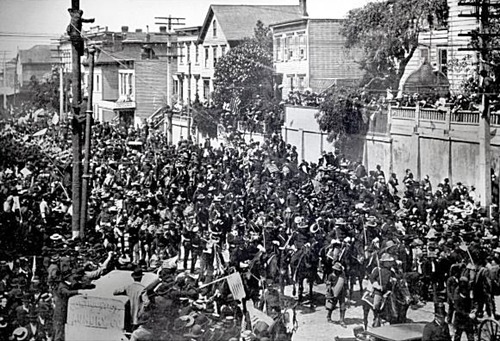
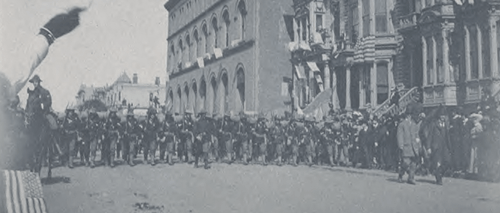
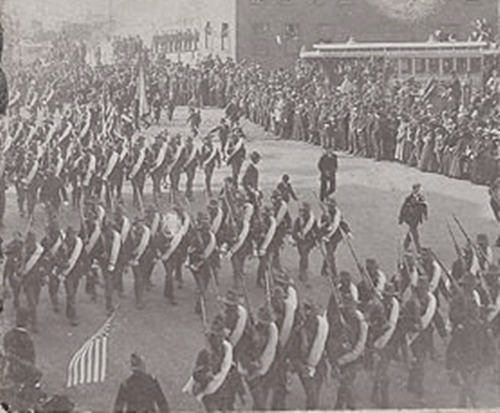
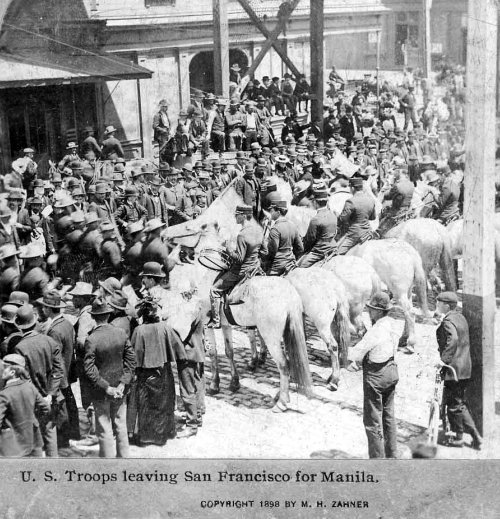
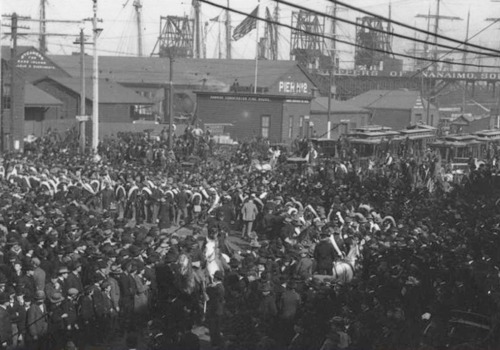
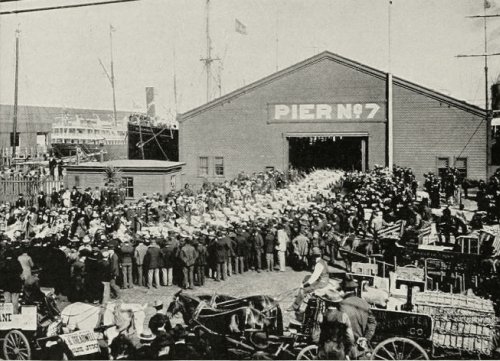
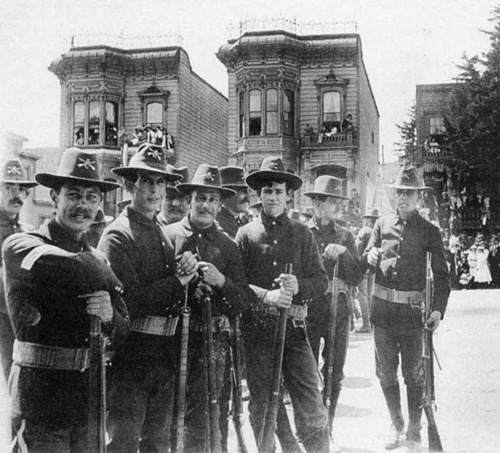
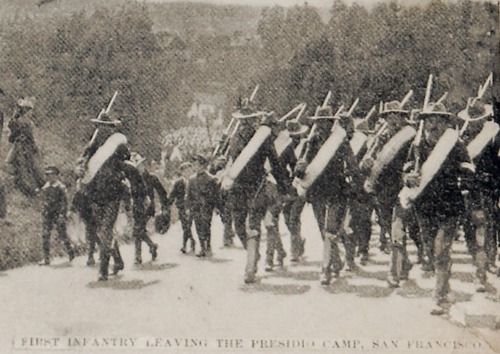
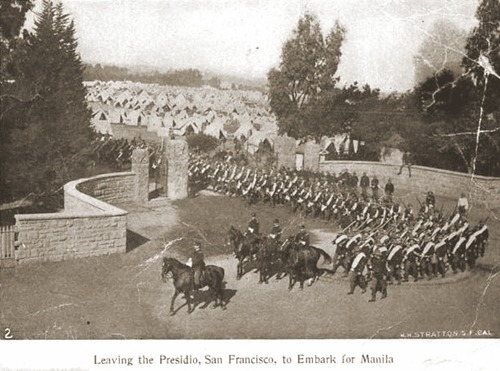
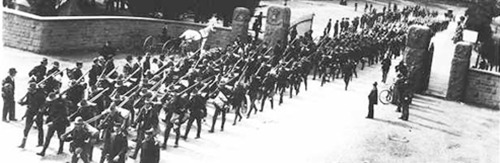
As the soldiers prepared to leave, they marched down Lombard Street to Van Ness, then to Market Street, before finally boarding ships at the docks. This procession was a poignant moment, filled with farewells from loved ones who gathered to see them off. The Lombard Gate, built in 1896, was the main entrance to the Presidio and the last landmark many soldiers saw before embarking on their journey.
The Voyage Across the Pacific: Stops and Convoys
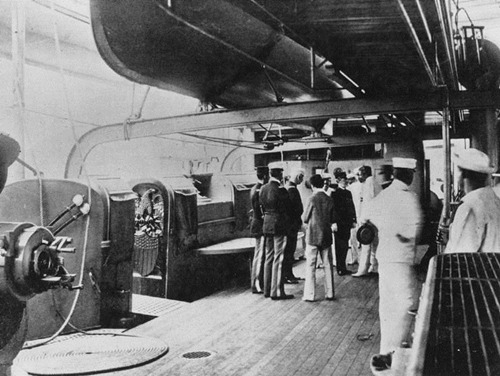
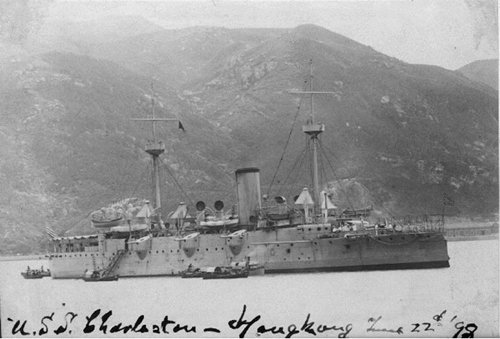
The journey to the Philippines was not a direct one. The first expedition, for instance, made a stopover in Honolulu, Hawaii, from June 1-4, 1898, before continuing on to Manila. Brigadier General Thomas M. Anderson visited the USS Charleston during the stop, a cruiser that would convoy the expedition to Manila.
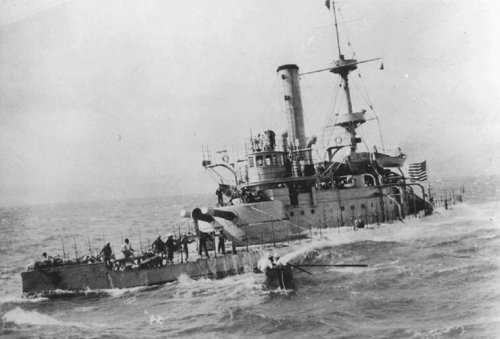
The USS Charleston later played a significant role in the Philippine-American War, bombarding Filipino positions and participating in the capture of Subic Bay in September 1899. Unfortunately, the cruiser met its end when it grounded and was wrecked near Camiguin Island north of Luzon on November 2, 1899.
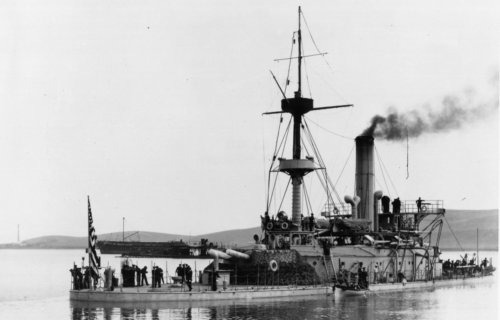
Other ships, like the USS Monadnock and USS Valencia, also played crucial roles in transporting troops and providing support during the Philippine campaign.