

Marcelo H. del Pilar was a key figure in the Filipino reform movement of the late 19th century. Born on August 30, 1850, in Bulakan, Bulacan, he became a prominent writer, lawyer, and journalist who fought against Spanish colonial rule. Del Pilar used the pen name Pláridel in his writings, which often criticized the oppressive practices of Spanish friars in the Philippines.
Del Pilar’s life was marked by his tireless efforts to bring about change in his homeland. He studied at prestigious institutions like the University of Santo Tomas but faced challenges due to his outspoken nature. In 1888, he moved to Spain to continue his fight for reforms, where he took over as editor of La Solidaridad, a newspaper that became a voice for Filipino interests. Despite facing hardships and illness, Del Pilar remained committed to his cause until his death in Barcelona on July 4, 1896, at the age of 45.
Growing Up in Bulacan (1850-1880)
Marcelo H. del Pilar was born on August 30, 1850, in Bulacan, Philippines. His birthplace was a family home in San Nicolas. Del Pilar came from a well-off family. His parents owned farms, fish ponds, and a mill.
Del Pilar’s father, Julian, was an important person in Bulacan. He served as town leader three times. His mother, Blasa, came from a noble Tagalog family. Del Pilar had nine siblings.
As a child, del Pilar learned music. He played the violin, piano, and flute. He also became skilled with a rattan cane. His early schooling came from his uncle Alejo.
Del Pilar went to Colegio de San Juan de Letran for high school. He studied poetry, religion, Spanish, Latin, and other subjects. In 1865, he briefly studied in Binondo under Jose Flores.
Next, del Pilar enrolled at the University of Santo Tomas. He studied philosophy from 1867 to 1871. His grades ranged from fair to very good in subjects like psychology, logic, and physics.
In 1869, del Pilar got into trouble with a priest over baptism fees. This led to him spending a month in jail. After his release, he went back to his studies.
Del Pilar earned his bachelor’s degree in philosophy in 1871. He then started studying law. While in school, he worked as a clerk in Pampanga and Quiapo.
Del Pilar’s law studies went from 1871 to 1881, with some breaks. He took classes in topics like Roman law, civil law, and criminal law. His grades were often very good or excellent.
After finishing law school, del Pilar worked as a lawyer in Manila. He used this time to learn about life in the Philippines. He went to many local events and talked to people from all walks of life.
Del Pilar began sharing his ideas about the country with young students. He held meetings at his house in Tondo. Some of his listeners, like Mariano Ponce and Apolinario Mabini, became his followers.
By 1880, del Pilar had gained a solid education and started to build a following. His experiences during these years shaped his future as a writer and activist.
Reformist Movement in Spain (1888-1895)
Marcelo del Pilar arrived in Barcelona on January 1, 1889. He quickly became a key figure in the Hispanic Filipino Association of Madrid, leading its political section. This group brought together Filipino and Spanish liberals to push for reforms.
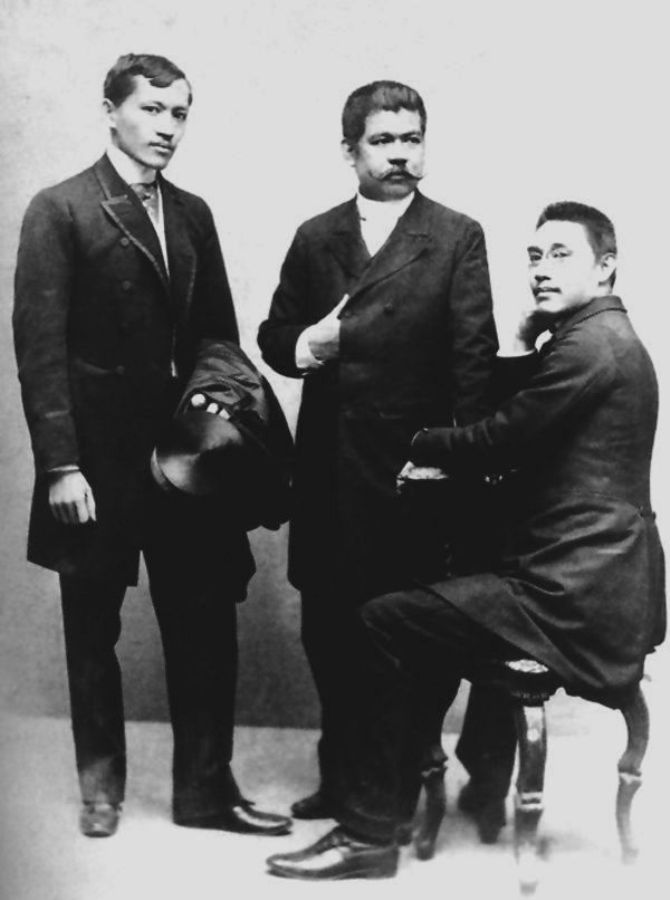
Del Pilar worked closely with José Rizal and other Filipino expatriates in Spain. They used the newspaper La Solidaridad as their main platform to advocate for changes in the Philippines. The paper called for:
- Making the Philippines a province of Spain
- Removing friars from positions of power
- Allowing freedom of speech and assembly
- Ensuring equal treatment under the law
- Giving the Philippines representation in the Spanish parliament
Del Pilar took over as editor of La Solidaridad in December 1889. He was a prolific writer, using over 20 pen names to author articles. Some of his pseudonyms included:
- Pláridel
- Dolores Manapat
- Piping Dilat
- Siling Labuyo
- Cupang
The reformists built alliances with sympathetic Spanish politicians. In 1890, they worked with Francisco Calvo y Múñoz to propose giving the Philippines seats in the Spanish parliament. While this effort ultimately failed, it helped raise awareness of Filipino issues.
There was tension at times between different factions of the reform movement. In early 1891, Filipino expatriates in Madrid held elections for a leader. This led to a rivalry between supporters of del Pilar and Rizal. After some maneuvering, Rizal won but declined the position. He then left for France, reducing his involvement with La Solidaridad.
Key Spanish allies of the Filipino reformists included:
- Miguel Morayta y Sagrario – A liberal history professor who supported Filipino causes
- Manuel Becerra – Overseas minister under the liberal government
- Antonio Ramos Calderón – Member of the Liberal Party
The reformists held banquets and events to build relationships with these Spanish politicians. They hoped to gain support for their agenda of expanding rights and representation for Filipinos.
Over time, del Pilar’s views evolved. He initially supported assimilation of the Philippines as a Spanish province. But in his later years, he moved away from this position toward a more nationalist stance.
The reform movement faced challenges as Spanish politics shifted. In July 1890, a more conservative government came to power, making it harder to achieve reforms. Despite setbacks, del Pilar and his colleagues continued their activism and writing throughout the early 1890s.
Final Years and Passing (1895-1896)
Marcelo H. del Pilar’s health took a turn for the worse in late 1895 when he got tuberculosis. He planned to go back to the Philippines to lead a revolt, but his sickness got so bad he had to cancel the trip.
On June 20, 1896, del Pilar went to the Hospital de la Santa Cruz in Barcelona for care. Sadly, he passed away there on July 4, 1896 at 1:15 in the morning. This was just weeks before a key event in Philippine history.
Before dying, del Pilar said goodbye to his friends. He asked them to tell his family he was thinking of them. He also urged everyone to keep working for the good of their country.
Del Pilar was laid to rest the next day in Barcelona’s Southwest Cemetery. In his final days, he turned away from his past ties to Masonry and got the church’s blessings.
Praise and Recognition After Death
Del Pilar’s impact was widely acknowledged after his passing. A major Spanish newspaper praised him as the top Filipino journalist of his time. This recognition came just days after his death, highlighting his skill and influence.
A high-ranking Spanish official also spoke highly of del Pilar. He called him the smartest Filipino leader and the driving force behind the independence movement. The official even ranked del Pilar above other well-known figures.
Del Pilar’s fellow reformists admired him too. One described him as a ceaseless worker for their cause. His sharp mind earned respect from both allies and rivals alike.
Return and Final Resting Place of del Pilar’s Remains

In 1920, efforts began to bring Marcelo H. del Pilar’s remains back to the Philippines. Norberto Romuáldez led the search, aided by Joaquín Pellicena y Camacho. They found and exhumed del Pilar’s body, placing it in an urn for transport.
The ship Alicante carried del Pilar’s remains to Manila, arriving on December 3, 1920. The urn was moved from Pier 3 to Funeraria Nacional. On December 6, it traveled to Malolos, Bulacan. The next day, it reached del Pilar’s birthplace in Bulakan, Bulacan.
A public viewing took place at the Manila Grand Opera House on December 11. The following day, a memorial service was held at Salon de Marmol. Many important Filipino leaders attended:
- Manuel C. Briones (Cebu representative)
- Rafael Palma (senator)
- Teodoro M. Kalaw (government secretary)
- Trinidad Pardo de Tavera and Dominador Gómez (del Pilar’s colleagues)
- Victorino M. Mapa (Chief Justice)
- Manuel L. Quezon (senate president)
- Sergio Osmeña (House Speaker)
Del Pilar’s wife and daughters were also present. After the service, his remains were buried at the Mousoleo de los Veteranos de la Revolución in Manila North Cemetery.
On August 30, 1984, del Pilar’s remains made their final journey. They were moved back to his birthplace in Bulakan, Bulacan. A monument was built to honor him, and his remains were laid to rest beneath it.
Today, visitors can pay their respects at the National Shrine of Marcelo H. del Pilar in San Nicolás, Bulacán, Bulacan. The shrine features a statue of del Pilar and serves as a reminder of his contributions to Philippine history.
Family and Personal Struggles
Marriage and Descendants
Marcelo H. del Pilar tied the knot with his second cousin Marciana in 1878. They had seven kids together – five girls and two boys. Only their oldest and youngest children, Sofía and Ana, lived to be adults. Ana got married to Vicente Marasigan Sr., a businessman, in 1912. They had six children of their own.
Challenges in Spain

Del Pilar faced tough times while living in Spain. He often didn’t have enough money for food or smokes. He wrote to his wife about having to borrow money from friends just to eat. He even picked up cigarette butts from the streets to smoke.
Del Pilar missed his family a lot. He had dreams about his daughters that made him cry. In 1893, his family sent him money to come back home. But his friends told him to stay in Spain. He worried that leaving might cause problems for others, like what happened when Rizal made a mistake that hurt people in Calamba.
Medical Issues
Del Pilar’s health got worse over time. Before he got tuberculosis in 1895, he had trouble sleeping. He also dealt with:
- Dengue fever
- The flu
- Joint pain
- A lump on his neck
These health problems made life even harder for del Pilar during his last years in Spain.
Links to the Katipunan
The Katipunan, a secret society that sparked the Philippine Revolution, had ties to Marcelo H. del Pilar. As a key figure in the Propaganda Movement and Philippine Masonry, del Pilar’s ideas shaped the group’s formation and goals.
Many Katipunan founders were freemasons like del Pilar. The group’s rituals and ranks mirrored masonic practices. Andres Bonifacio, who led the Katipunan, saw del Pilar’s writings as crucial to the revolution.
Statements from Katipunan Members
Some Katipunan members claimed del Pilar helped start the group. These claims are debated by historians.
- Pío Valenzuela said del Pilar led Katipunan members in Spain.
- José Dizon stated Moisés Salvador brought del Pilar’s instructions from Madrid to start the Katipunan.
- Águedo del Rosario claimed del Pilar began the Katipunan from Barcelona.

Del Pilar’s brother-in-law, Deodato Arellano, served as the Katipunan’s first president. This family link added to beliefs about del Pilar’s role.
The Katipunan aimed to free the Philippines from Spanish rule. It grew from a small group to a large movement that fought for Philippine independence.
While del Pilar’s exact role is unclear, his ideas clearly influenced the Katipunan. His push for reforms and Filipino rights matched the group’s goals. The revolution the Katipunan started changed the course of Philippine history.
Historical Recognition
Journalism Pioneer
Marcelo H. del Pilar made significant contributions to Philippine journalism. He wrote many essays and editorials for La Solidaridad, a key publication for reform advocates. His work tackled important issues and helped shape public opinion.
A group of experienced journalists formed Samahang Plaridel in 2003. This organization aims to uphold del Pilar’s values and promote cooperation among Filipino journalists.
Masonic Leader
Del Pilar played a major role in Philippine Freemasonry. He joined the Revolución lodge in Barcelona in 1889. Later that year, he became part of the Solidaridad lodge in Madrid. He rose to a leadership position there.
Del Pilar worked to set up Filipino Masonic lodges. He sent someone to create Nilad, the first Filipino lodge, in 1891. Two years later, he formed a national group for Filipino Masons.
The main Masonic building in Manila is named after del Pilar. It’s called the Plaridel Masonic Temple and serves as the headquarters for Filipino Freemasons.
Honoring a Filipino Hero
Marcelo H. del Pilar’s impact on Philippine history lives on through many tributes. His image graced Philippine money, appearing on 5-peso bills from 1951 to 1974 and 50-centavo coins in the late 20th century. A 1963 postage stamp also featured his likeness.
The Marcelo H. del Pilar Shrine stands as a key memorial. This site includes a 10-foot statue, family mausoleum, and museum. Several towns across the Philippines bear his pen name “Plaridel” in his honor.
Cities have named streets after del Pilar. In Manila, Marcelo H. del Pilar Street links Ermita and Malate. Silay City has a Plaridel Street. A major expressway once carried his name too.
Schools pay tribute to del Pilar’s legacy. Marcelo H. del Pilar National High School educates students in Malolos. University buildings bear his name at the Polytechnic University of the Philippines and University of the Philippines Diliman.
The U.P. Gawad Plaridel award recognizes top media professionals, inspired by del Pilar’s work. This reflects his lasting influence on Philippine journalism and free speech.
Public spaces also remember del Pilar. Monuments stand in several cities. A corner of Plaza Miranda in Manila bears a plaque with his pen name. It includes a famous quote about defending free speech.
In 2022, the Philippine government took a big step. It named del Pilar’s birthday as National Press Freedom Day. This links his memory to an ideal he fought for during his life.
These tributes span money, stamps, buildings, awards, and holidays. They keep del Pilar’s name alive for new generations of Filipinos. His work as a writer, lawyer, and advocate for his country lives on through these many forms of recognition.
Major Literary Works
Writings Published During His Lifetime
Marcelo H. del Pilar wrote many influential works as a journalist and activist. He published articles in La Solidaridad under pen names like Pláridel. Some key pieces include:
- “Who Rules the Philippines?” (1887)
- “Monasticism in the Philippines” (1888)
- “The Greatness of God” (1888)
- “Prayers and Mockeries” (1888)
Del Pilar wrote sharp critiques of Spanish colonial rule. His 1888 pamphlet “Long Live Spain! Long Live the King! Long Live the Army! Out with the Friars!” gained wide readership.
He translated José Rizal’s “Love for the Native Land” into Tagalog in 1882. This helped spread nationalist ideas.
Del Pilar used satire to mock Spanish friars. His “Passion That Should Inflame Hearts” (1888) parodied religious texts. “Be as Slippery as an Eel” (1888) urged Filipinos to resist Spanish control.
Works Released After Death
Some of del Pilar’s writings came out after he died in 1896. These include:
- “Poetical Contest in Narrative Sequence, Psalms, Riddles” (1907)
- “Special Page for the Filipino Woman” (1909)
Unfinished Projects
Del Pilar left behind some incomplete works:
- “To My Fellow Countrymen Who Are Reading This”
- Spanish translation of “Outlines of an International Code”
- “Proposed By-Laws of the Financial Society for Mutual Aid, Entitled Peace”
He also drafted speeches and essays that were never published. These touched on topics like Filipino independence and Spanish policies.