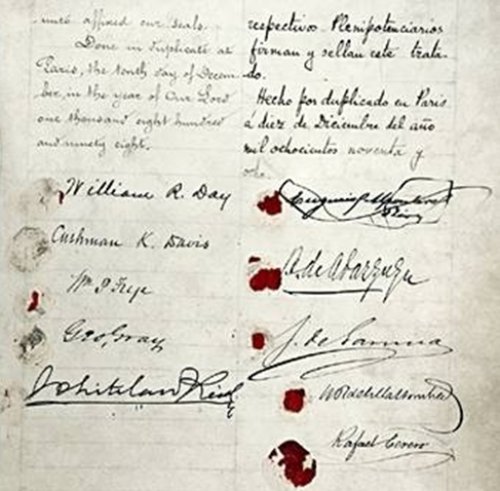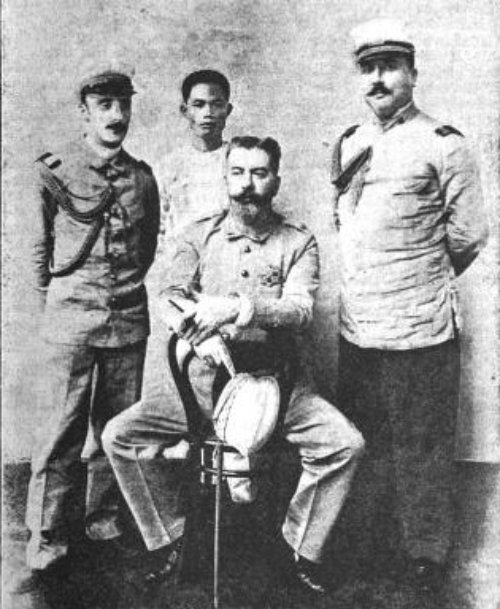

The Treaty of Paris, signed on December 10, 1898, marked the official end of the Spanish-American War. However, the treaty also set the stage for a new and bitter conflict—the Philippine-American War. The negotiations that led to the treaty were fraught with tension, as Filipino aspirations for independence clashed with American imperial ambitions. The events surrounding the treaty highlight the complexities and contradictions of American foreign policy at the turn of the century, as well as the deep frustrations felt by Filipino leaders who saw their hopes for self-determination dashed.
The Paris Peace Talks: October 1 – December 10, 1898
On Oct. 1, 1898, American and Spanish delegates opened discussions in Paris to end the Spanish-American War. The American commission consisted of Judge William R. Day, Sen. Cushman K. Davis, Sen. William P. Frye, Sen. George Gray, and Whitelaw Reid.
The Spanish commission included the Spanish diplomats Eugenio Montero Ríos, Buenaventura de Abarzuza, José de Garnica, Wenceslao Ramírez de Villa-Urrutia, and Gen. Rafael Cerero, as well as a French diplomat, Jules Cambon.

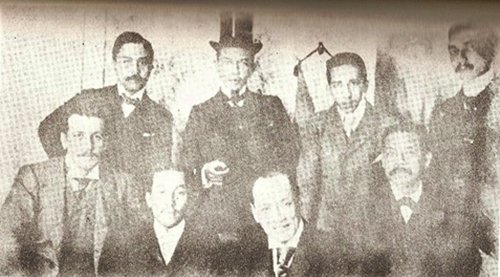
On the same day, at Washington, D.C., Philippine ambassador Felipe Agoncillo and his secretary, Sixto Lopez, met with President William McKinley but his request that Filipinos be represented at the Paris peace talks was rejected.
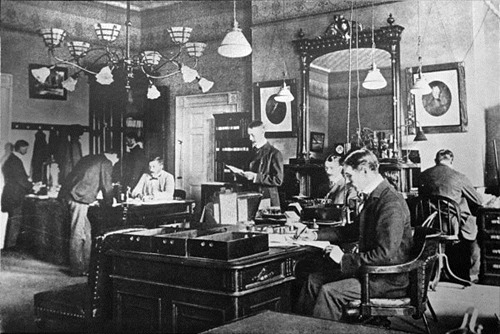
Filipino Frustration and Exclusion
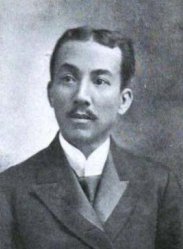
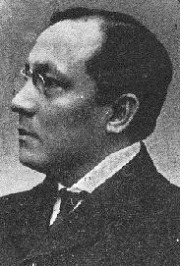
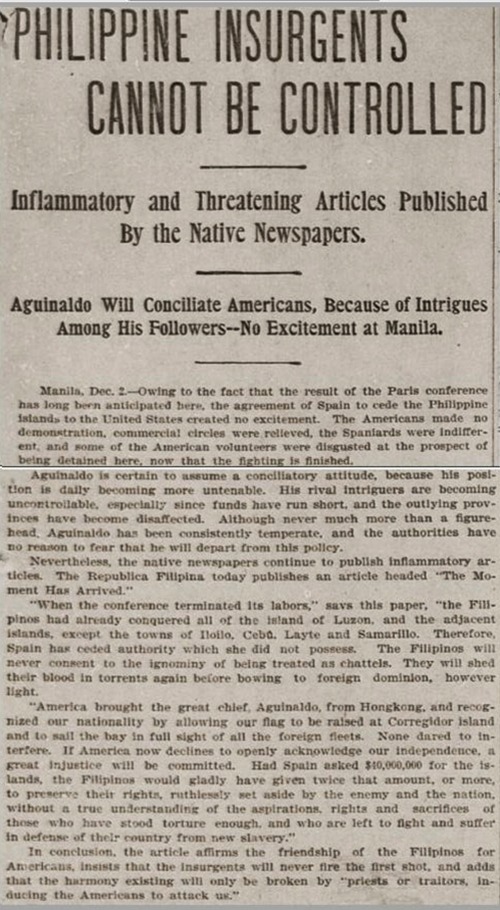
The snub irked Filipino leaders, whose troops effectively controlled the entire archipelago except Muslim areas in Mindanao and the capital city of Manila.
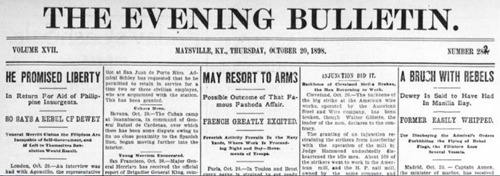
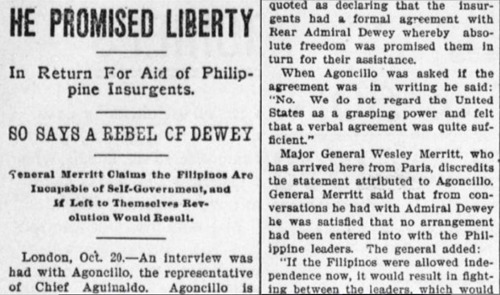
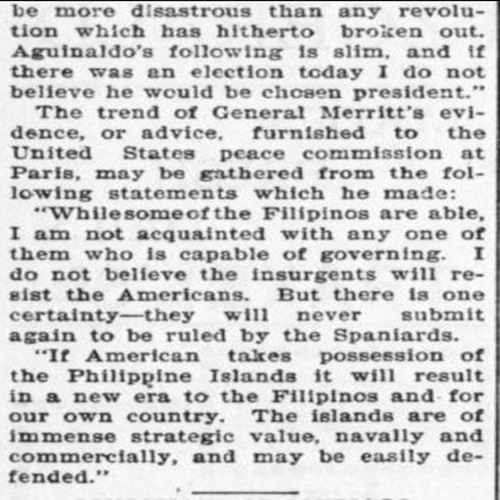
Tension and ill feelings were growing between American and Filipino troops in Manila and the suburbs. In addition to Manila, Iloilo, the main port on the island of Panay, also was a pressure point. The Revolutionary Government of the Visayas was proclaimed there on Nov. 17, 1898, and an American force stood poised to capture the city. Upon the announcement of the treaty, the radicals, Apolinario Mabini and General Antonio Luna, prepared for war, and provisional articles were added to the constitution giving President Aguinaldo dictatorial powers in times of emergency.
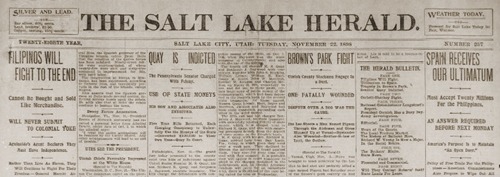
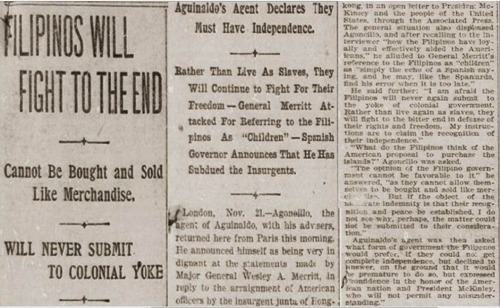
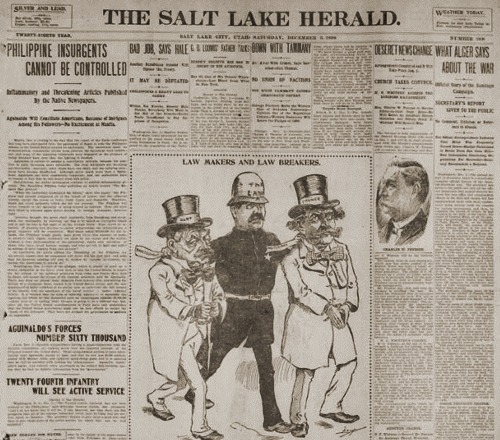
LEFT TO RIGHT: Felipe Agoncillo, Sixto Lopez, and two other Filipinos poring over documents in Paris; they were trying to prevent the cession of the Philippines to the United States and to secure recognition of the new Philippine Republic.
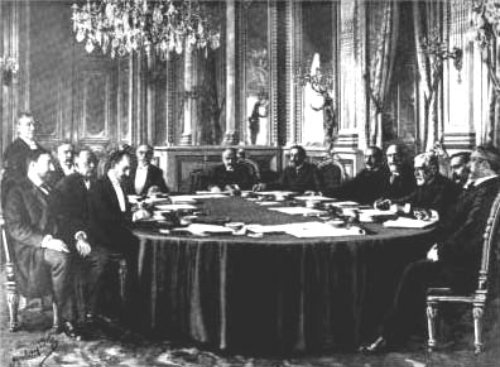
The Signing of the Treaty of Paris
On December 10 the Treaty of Paris was signed, thus ending the Spanish-American War. Spain ceded the Philippines, Guam, and Puerto Rico (Cuba was granted its independence); in return, the US paid Spain the sum of US$20 million for the Philippines.(The Philippine-American War, which broke out two months later, cost the United States $200 million).