

The children of American presidents often grow up under intense public scrutiny, but some have managed to carve out remarkable careers in their own right. From politics and business to journalism and philanthropy, these individuals have made lasting contributions beyond their famous family names. Their achievements showcase how influence, opportunity, and personal ambition can shape success in different fields. Keep reading to learn about some of the most accomplished children of U.S. presidents.
John Quincy Adams

Although John Quincy Adams is often remembered as the son of a president, his own legacy in diplomacy and politics stands out distinctly. As the sixth president, Adams was already renowned for his diplomatic prowess, particularly in the Treaty of Ghent, ending the War of 1812. His extensive experience as a U.S. ambassador to the Netherlands and Russia solidified his understanding of international relations. John Quincy Adams was also instrumental in formulating the Monroe Doctrine, a cornerstone of American foreign policy that would shape the nation’s approach to international affairs.
After his presidency, Adams’s commitment to public service didn’t wane; instead, he became a fervent advocate against slavery in the House of Representatives. His speeches championed human rights, earning him the nickname “Old Man Eloquent.” Through his political legacy, John Quincy Adams influenced future leaders, highlighting the importance of diplomacy and advocating for civil liberties.
George W. Bush

Born into a family with a strong political heritage, George W. Bush, the son of George H. W. Bush, forged his path to the presidency through dedication and strategic leadership. As governor of Texas from 1995 to 2000, he made a name for himself by implementing educational reforms and tax cuts, setting the stage for his presidential ambitions. His successful bid in the 2000 election led him to become the 43rd president of the United States.
During his tenure, the September 11 attacks defined his presidency, prompting the War on Terror and military actions in Afghanistan and Iraq. Re-elected in 2004, he faced a mixed legacy, marked by early economic growth but overshadowed by the 2008 financial crisis.
Charles Francis Adams

During the turbulent years of the American Civil War, Charles Francis Adams emerged as a crucial diplomatic force, representing the United States as Minister to the United Kingdom from 1861 to 1868. As the son of President John Quincy Adams, he played a critical role in maintaining British neutrality, preventing them from recognizing the Confederacy. His efforts in negotiating with British shipbuilders stopped the sale of warships to the Confederate Navy, influencing naval engagements markedly.
Besides diplomacy, Adams contributed to the U.S. Navy’s strategy by advocating for blockades against Confederate ports. After the war, he continued his public service, becoming a U.S. Congressman and an influential writer on historical and political topics, solidifying the Adams family’s legacy in American politics.
Robert Lincoln

Following the legacy of influential political figures like Charles Francis Adams, Robert Lincoln carved his own path in law and politics. As the only surviving son of President Abraham Lincoln, he became a successful lawyer and businessman. He served as the U.S. Secretary of War from 1881 to 1885 under President James Garfield, playing a significant role in military administration. Robert Lincoln was also an influential figure in the business sector, leading the Pullman Company and directing several prominent companies like the Illinois Central Railroad.
His efforts in establishing the Lincoln Memorial helped preserve his father’s political legacy. Active in politics, he attended Republican National Conventions and supported diverse candidates, continuing his family’s influential political presence. Additionally, like President Zachary Taylor, Robert Lincoln faced significant political challenges during his career, although under different circumstances.
Teddy Roosevelt III (Teddy Roosevelt Jr.)

As the grandson of President Theodore Roosevelt, Teddy Roosevelt III displayed extraordinary courage and leadership during one of history’s most vital moments. Serving as a U.S. Army officer in World War II, he played a significant role in the D-Day invasion at Normandy on June 6, 1944. Landing at Utah Beach with the 4th Infantry Division, he showed remarkable bravery, earning the Medal of Honor posthumously.
His actions not only demonstrated his dedication to military service but also solidified his place in American military history. Teddy Roosevelt III’s legacy reflects his family’s historical significance and his own personal contributions. Achieving the rank of brigadier general, his story remains a reflection of courage and leadership in times of war. Like his grandfather, who was recognized as the father of the modern U.S. Navy, Teddy Roosevelt III’s military contributions have left a lasting impact on American defense strategy and legacy.
James A. Garfield Jr.
James A. Garfield Jr., son of President James A. Garfield, made significant contributions to American history through his legal and business prowess. He pursued a career in law and business to uphold the family legacy. After graduating from Williams College and obtaining a law degree from the University of Michigan, he developed a thriving legal practice in Cleveland. His business ventures further showcased his acumen.
Beyond his professional achievements, Garfield Jr. demonstrated social responsibility by engaging in community organizations and civic initiatives. He also played a key role in estate management, particularly in preserving his father’s memory through the Garfield Memorial Association. Despite personal challenges, including fathered children, his dedication to his father’s legacy remains remarkable.
Alice Roosevelt
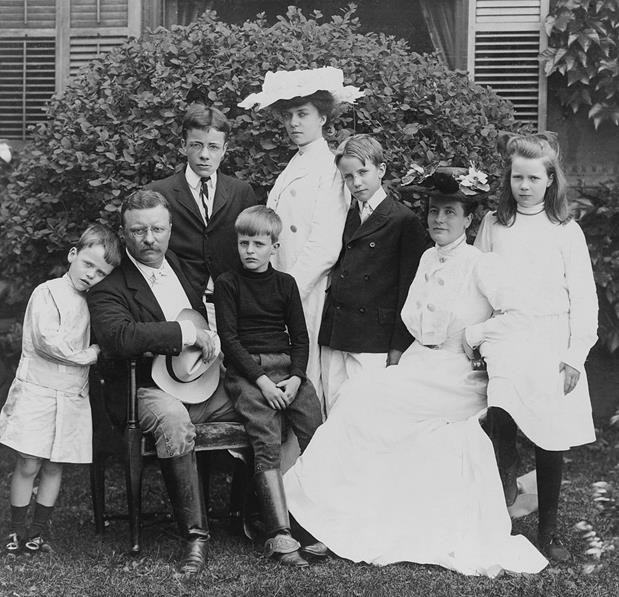
Alice Roosevelt blazed her own trail as the eldest daughter of President Theodore Roosevelt, enchanting the nation with her rebellious spirit. Known for defying social norms, she captured public attention by smoking and attending late-night parties. Her daring antics and witty remarks made her a prominent socialite, influencing political conversations and setting a new standard for presidential children.
Alice’s legacy extended beyond the White House years. She actively engaged in politics and social issues, writing articles and books that reflected her bold views. Through her unique charisma and outspoken nature, Alice Roosevelt left an indelible mark on history, inspiring future generations.
Chelsea Clinton

Though she grew up in the White House under the public eye, Chelsea Clinton has carved her path as a dedicated advocate for global change. Armed with a Doctorate in Public Health from Columbia University, Chelsea focuses on education and children’s rights through her philanthropic work.
Her contributions extend to the Clinton Foundation, where she co-founded the Clinton Global Initiative University, empowering young leaders to tackle global issues. Chelsea’s odyssey from presidential child to influential advocate highlights her impressive commitment to social change and global advocacy.
Wrapping Up
The children of American presidents have made significant contributions in various fields, proving that a famous last name is just the beginning of their journeys. Some followed in their parents’ political footsteps, while others thrived in business, media, and philanthropy. Their successes highlight the impact of upbringing, opportunity, and personal ambition in shaping their paths.