

Date Masamune, the formidable “One-Eyed Dragon of Oshu,” remains one of Japan’s most captivating historical figures. Known for his fearless military campaigns, commanding presence, and the iconic crescent-moon kabuto adorning his armor, Masamune carved a lasting legacy in the turbulent Sengoku era. His leadership reshaped the Tōhoku region, blending martial strength with diplomatic foresight.
At the heart of his legend lies the Yagenbori, a sword steeped in symbolism and masterful craftsmanship. His life is a compelling narrative of strategy, resilience, and cultural impact.
Explore the life, alliances, and enduring influence of a warlord who helped shape Japan’s samurai legacy.
Key Takeaways
- Date Masamune, known as the “One-Eyed Dragon,” overcame early adversity to become a powerful and strategic daimyō in the Tōhoku region of Japan.
- He skillfully navigated alliances, first with Toyotomi Hideyoshi and later with Tokugawa Ieyasu, securing his status and expanding the Sendai Domain.
- Masamune supported cultural and diplomatic exchange, notably sponsoring the 1613 embassy to the Vatican, demonstrating rare openness to foreign relations.
- His legendary crescent-moon kabuto and symbolic sword, the Yagenbori, represent both his personal legacy and samurai craftsmanship—though the sword’s direct historical link remains partly symbolic.
- Masamune’s story lives on in popular culture, from NHK dramas to anime and video games, continuing to inspire as a bold and visionary figure in Japanese history.
Early Life and Family Background
Date Masamune, born Bontenmaru in September 1566, came from a distinguished samurai lineage based at Yonezawa Castle. As the eldest son of Date Terumune and Yoshihime, he was raised with the expectations of leadership and martial excellence.
At the age of five, he lost sight in his right eye due to smallpox, a defining event that earned him the enduring nickname, the “One-Eyed Dragon.” Despite this adversity, Masamune displayed exceptional resilience and determination from an early age.
He marked his coming of age at just eleven—a significant milestone in samurai tradition. In 1579, his politically strategic marriage to Megohime further strengthened the Date clan’s regional alliances.
By seventeen, he succeeded his father as head of the clan, swiftly entering the volatile arena of feudal politics. These formative years laid the foundation for his rise as one of Japan’s most iconic and influential daimyō.
Rise to Power and Military Campaigns
Date Masamune assumed leadership of the Date clan at just 17 in 1584, following the death of his father, Date Terumune. His rise was marked not merely by inheritance, but by bold military action and strategic ambition.
Masamune demonstrated his military prowess during the Battle of Suriagehara in 1589, where he decisively defeated the Ashina clan, solidifying his dominance over the Tōhoku region. This victory established him as a powerful force in northern Japan.
Though he initially resisted the authority of Toyotomi Hideyoshi, Masamune eventually submitted to avoid losing further influence. After Hideyoshi’s death, he skillfully aligned with Tokugawa Ieyasu, playing a key role in the Sekigahara Campaign of 1600, which helped reshape Japan’s political landscape.
Renowned for his calculated use of psychological warfare, Masamune inspired fierce loyalty among his troops while instilling fear in his enemies. These campaigns cemented his reputation as a shrewd and commanding daimyō during one of Japan’s most turbulent eras.
Alliance With Toyotomi Hideyoshi
Although initially defiant, Date Masamune’s relationship with Toyotomi Hideyoshi evolved into a calculated alliance that demonstrated his political adaptability. During the Siege of Odawara in 1590, Masamune hesitated to submit to Hideyoshi, a delay that resulted in punishment—his territorial holdings were reduced, and by 1591, he was forced to relinquish his ancestral lands in a significant setback that provoked unrest among his retainers.
Despite this early conflict, Masamune later aligned with Hideyoshi during the Korean invasions (1592–1598), earning recognition for his loyalty and military contribution. This pivot reflected his strategic awareness and ability to reconcile ambition with survival in a rapidly centralizing Japan.
His alliance with Hideyoshi, though born of necessity, marked Masamune as a shrewd political operator. He secured a place among Japan’s elite daimyō while preparing for future shifts in power. Following Hideyoshi’s death, Masamune’s timely support for Tokugawa Ieyasu further solidified his authority in the Tōhoku region and reinforced his legacy as a master of realpolitik in the Sengoku era.
Partnership With Tokugawa Ieyasu
Following the death of Toyotomi Hideyoshi in 1598, Date Masamune astutely shifted his allegiance to Tokugawa Ieyasu, a decision that proved essential in shaping his legacy.
By providing military support during the Sekigahara Campaign of 1600, Masamune’s loyalty helped solidify Ieyasu’s power. In return, he was granted the lordship of the Sendai Domain, elevating him to one of Japan’s most powerful daimyō.
His participation in the Osaka campaigns against the Toyotomi Clan further demonstrated his commitment to Ieyasu’s rule. Despite initial reservations, his effective governance gained trust during Ieyasu’s grandson Iemitsu’s reign.
Masamune’s partnership with Tokugawa markedly contributed to Japan’s political landscape, stabilizing the Tōhoku region and fostering economic growth in Sendai.
The Siege of Odawara and Its Aftermath
After the death of Toyotomi Hideyoshi in 1598, Date Masamune made a decisive and strategic shift in allegiance to Tokugawa Ieyasu—a move that would significantly shape his legacy. By lending military support during the pivotal Sekigahara Campaign in 1600, Masamune helped secure Tokugawa’s path to national power.
In recognition of his loyalty, Masamune was granted control of the Sendai Domain, elevating him to the ranks of Japan’s most influential daimyō. His subsequent involvement in the Osaka campaigns against the remaining Toyotomi forces further affirmed his dedication to the Tokugawa shogunate.
Despite earlier tensions, Masamune earned the trust of the Tokugawa leadership, including under the rule of Tokugawa Iemitsu, Ieyasu’s grandson. His governance contributed to the stabilization of the Tōhoku region, and under his leadership, Sendai flourished economically and culturally.
Masamune’s alliance with the Tokugawa not only secured his clan’s prosperity but also positioned him as a key player in the transition to early Edo-period Japan.
The Unique Legacy of the One-Eyed Dragon
The legacy of Date Masamune is defined by resilience, strategic vision, and lasting cultural influence. His distinctive black armor and crescent-moon helmet remain enduring symbols of his presence in Japanese history.
- Yagenbori sword: Attributed to swordsmith Osafune Yoshikage, this blade reflects Masamune’s personal story and the refined artistry of the samurai era.
- Sendai’s transformation: Under his leadership, Sendai emerged as a thriving economic and cultural center in northern Japan.
- Cultural impact: Masamune’s life continues to inspire literature, anime, and video games, sustaining his status in modern imagination.
- Enduring legacy: His ability to merge tradition with innovation ensures his place as one of Japan’s most iconic historical figures.
The stories of legendary swordsmiths like Masamune and Muramasa have also contributed to the cultural fascination with Japanese swords, adding layers of mystique and artistry to Masamune’s legacy.
Contributions to Culture and Diplomacy
While Date Masamune is best remembered for his military and political achievements, his contributions to culture and diplomacy reveal a broader dimension of his leadership. He played a pivotal role in expanding trade and cultural exchange in the Tōhoku region, positioning it as a gateway for foreign relations.
In 1613, Masamune sponsored Japan’s first official diplomatic mission to Europe, led by Hasekura Tsunenaga, which sought to establish ties with Spain and the Vatican. This bold initiative, which included a meeting with Pope Paul V, underscored Masamune’s openness to international alliances and his willingness to engage with Christianity despite the increasing pressures of religious suppression in Japan.
Masamune also supported Christian missionaries, allowing them to operate freely within his domain, and notably intervened to secure the release of Padre Sotelo, a Franciscan friar. His diplomatic acumen extended to the ceremonial gifting of swords to European dignitaries, reinforcing alliances and elevating his standing among both foreign powers and fellow samurai lords.
Through these efforts, Masamune demonstrated a rare fusion of cosmopolitan vision and strategic diplomacy in an era of growing isolationism.
Date Masamune’s Iconic Sword: The Yagenbori
A masterpiece of both craftsmanship and history, the Yagenbori katana stands as a lasting symbol of Date Masamune’s legacy and the artistry of its reputed creator, the renowned swordsmith Osafune Yoshikage.
The sword’s name, inspired by a mortar and pestle, is said to reflect a personal story from Masamune’s youth—symbolizing his mother’s care during a childhood illness. This connection imbues the blade with deep familial and emotional significance.
Far more than a decorative weapon, the Yagenbori is a cultural artifact that embodies the ideals of the samurai era:
- Represents the refined standards of samurai craftsmanship
- Merges aesthetic beauty with combat functionality
- Continues to inspire modern sword-making traditions
- Reflects rich familial and cultural symbolism
The Yagenbori endures as a tribute to the spirit of the samurai, preserving both the personal story of Masamune and the timeless legacy of Japanese swordsmithing.
Influence on Japanese History and Samurai Culture
Date Masamune’s legacy extends far beyond the battlefield, shaping both the political and cultural fabric of early modern Japan. His leadership in establishing the Sendai Domain solidified his influence in the Tōhoku region, while his bold military strategies—including targeting enemy leadership and using psychological tactics—secured his status as a formidable warlord.
Masamune’s openness to foreign diplomacy, especially his missions to the Vatican and Spain, distinguished him during a period of growing isolation. His era also reflects a high standard of sword craftsmanship, seen in works like the Yagenbori, symbolizing both artistic and martial excellence.
His enduring influence continues to shape Japan’s historical narrative, bridging tradition, innovation, and international engagement.
Representation in Popular Culture
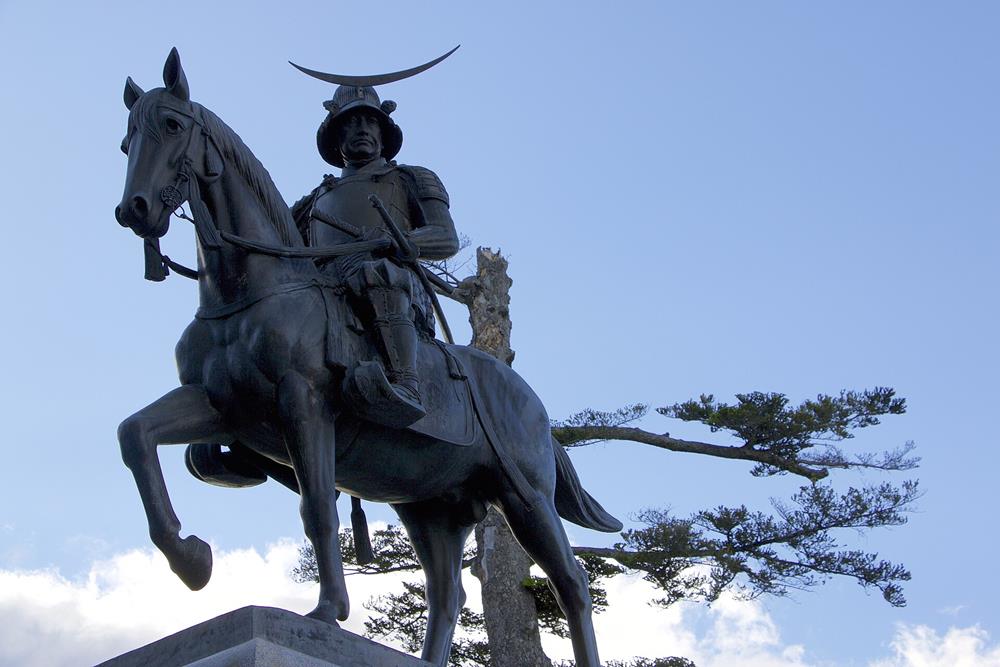
Centuries after his time, Date Masamune’s legendary status continues to captivate global audiences through a wide range of popular media. His dramatic life, distinct appearance, and strategic brilliance have made him an enduring cultural icon.
The 1987 NHK Taiga drama Dokuganryū Masamune, featuring a powerful performance by Ken Watanabe, brought renewed attention to his story, immersing viewers in the complexities of the Sengoku era. Video games such as Samurai Warriors and Sengoku Basara feature Masamune as a playable character, complete with his iconic crescent-moon kabuto, offering players a stylized glimpse into his battlefield persona. His presence extends into anime as well, notably in Masamune Datenicle, which explores his leadership and legacy in a historical-fantasy context.
Even in Western media, his influence is felt—his iconic helmet is said to have inspired the design of Darth Vader’s mask, illustrating his impact on global pop culture.
- NHK Taiga drama – Dokuganryū Masamune (Ken Watanabe)
- Video games – Samurai Warriors, Sengoku Basara
- Anime – Masamune Datenicle
- Cultural references – Influence on Darth Vader’s helmet design
From the battlefields of feudal Japan to the screens and stages of modern culture, Date Masamune’s legacy transcends time. His fusion of bold leadership, diplomatic insight, and cultural sophistication defines him not only as a powerful daimyō but as a timeless symbol of samurai spirit and innovation. Whether studied through history, admired in art, or reimagined in media, Masamune’s story continues to inspire across generations.