

Francisco Macías Nguema, the first president of Equatorial Guinea, presided over one of the most repressive and surreal regimes in modern African history. His eleven-year rule was marked by paranoia-fueled decrees, a ruthless cult of personality, and policies that devastated the nation’s population and economy.
From outlawing the word “intellectual” to renaming the country after himself, his actions blended tyranny with irrationality. Read on to explore how Nguema’s descent into madness left a lasting scar on Equatorial Guinea.
Key Takeaways
- Francisco Macías Nguema ruled Equatorial Guinea from 1968 to 1979, establishing a brutal dictatorship following independence from Spain.
- His regime was marked by paranoia, extreme repression, and a cult of personality, including the banning of the word “intellectual” and persecution of the educated.
- An estimated one-third of the population was killed or fled, making his rule one of the most devastating in African post-colonial history.
- He renamed the country after himself and forced citizens to adopt African names, while suppressing Spanish and indigenous languages to consolidate control.
- His erratic decrees and violent purges crippled the economy and society, creating a climate of terror that left lasting trauma across the nation.
The Rise of a Paranoid Tyrant: Macías Nguema’s Path to Power
When Equatorial Guinea gained independence from Spain in 1968, few anticipated the brutal dictatorship that would emerge under Francisco Macías Nguema. His ascent to power was marked by swift and violent suppression of political opposition, including mass executions, and the cultivation of a personality cult that approached religious fervor.
As he consolidated control, Nguema’s paranoia intensified. He banned the word “intellectual” and reportedly ordered executions of individuals wearing glasses, believing that education posed a threat to his authority. His intolerance for dissent drove nearly one-third of the population into exile, as he reshaped the nation into a repressive regime centered entirely around his will.
His paranoid leadership style reflected the opposite of James Buchanan’s analytical and deliberative approach to governance and political challenges.
Avian Enemies of the State: The Woodpecker War Campaign
In 1973, Francisco Macías Nguema reportedly declared woodpeckers enemies of the state, reflecting the extent of his growing paranoia. Though it may sound satirical, the dictator is said to have believed that these birds were being used to transmit coded messages to his political enemies.
This alleged campaign against birds mirrored his escalating obsession with conspiracy. Security forces were instructed to shoot woodpeckers on sight, and civilians were expected to report any “suspicious avian activity.” Some officials purportedly presented dead birds to Nguema as evidence of their loyalty and vigilance.
Whether fact or folklore, the so-called woodpecker war became emblematic of Nguema’s mental deterioration and erratic governance. While state forces pursued imaginary threats in the treetops, actual opposition figures faced imprisonment, torture, or execution. The episode joined a growing list of surreal decrees that defined his reign of terror during the 1970s.
His approach to perceived threats resembled Andrew Jackson’s volatile temper when defending his wife Rachel’s honor against perceived insults.
The Presidential Palace of Horrors: Feeding Enemies to Crocodiles
Beneath the presidential palace’s manicured exterior lurked a grotesque menagerie that reflected Macías Nguema’s sadistic imagination. You’d find yourself walking past glass cases filled with enemies’ skulls before reaching the most terrifying attraction: the crocodile pit.
The dictator didn’t merely keep these reptiles as pets. He orchestrated crocodile feeding spectacles where political prisoners faced horrific executions. You’d witness guards forcing bound captives toward the water’s edge while Nguema watched from a viewing platform, often drinking champagne as the creatures thrashed and fed.
These weren’t random acts of cruelty but calculated demonstrations of power. If you questioned his authority, you’d risk becoming part of his collection—either as reptile food or as a skull displayed to remind visitors of the consequences of disloyalty.
Bizarre Economic Policies: The Banned Lubricant Disaster
Nguema’s erratic economic decisions devastated Equatorial Guinea’s infrastructure and economy. While no official documentation confirms a blanket ban on lubricants, his distrust of foreign influence and technocratic processes led to widespread neglect of machinery and infrastructure. The alleged ban fits within a broader pattern of decisions rooted in paranoia rather than strategy.
As a result, industry collapsed, transportation systems failed, and agriculture suffered irreparably. Foreign investment evaporated, and the economy contracted sharply. Nguema’s governance did not merely mismanage resources—it appeared designed to dismantle functioning systems out of fear and suspicion.
Linguistic Tyranny: Outlawing Words and Renaming a Nation
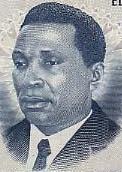
Francisco Macías Nguema exerted control over language as a means of thought control. He renamed the country “Equatorial Guinea Macías Nguema Biyogo Ñegue Ndong”, requiring its usage in formal communication. He also banned words like “intellectual” and persecuted those who appeared educated—often targeting people simply for wearing glasses.
Beyond Spanish, the colonial language, Nguema suppressed local languages and traditions not aligned with his personal identity. By weaponizing language, he severed communities from their cultural roots and entrenched his authority through forced silence and linguistic erasure.
Death Penalties for Mundane Acts: The Footwiping Decree
Nguema’s regime enforced death sentences for seemingly trivial infractions. Though documentation on specific decrees such as mandatory foot-wiping is anecdotal, such reports are consistent with the unpredictable violence and absurd regulations that characterized his rule.
These decrees created a landscape of fear where no act was too small to provoke lethal punishment. By criminalizing the ordinary, Nguema turned routine behaviors into mechanisms for enforcing submission, replacing legal consistency with arbitrary terror.
Cultural Revolution: The Forced Adoption of African Names
n 1976, as part of his campaign to erase colonial influence, Nguema mandated the replacement of Spanish and Christian names with African ones. This measure, framed as cultural restoration, was enforced with threats of imprisonment or execution. Paradoxically, Nguema himself retained his Christian baptismal name, Francisco.
While he claimed to champion African identity, the policy disrupted familial continuity and erased genealogical history, revealing that the initiative served more as a tool of control than of cultural preservation.
Rule Through Unpredictability: The Method Behind Macías’s Madness
Nguema did not govern through laws so much as through calculated unpredictability. He would publicly praise officials one day and have them executed the next. Laws changed without warning. Mass pardons were followed by arrests. Entire villages were subject to random violence or generosity depending on his mood.
This deliberate instability prevented any organized resistance, forcing citizens to focus on survival rather than opposition. His rule exemplified chaos as a political weapon—instilling terror not only through violence but through the impossibility of anticipating his next move.
The Human Cost: One-Third of a Nation Decimated
The toll of Macías Nguema’s rule was catastrophic. By the end of his eleven-year presidency in 1979, an estimated 50,000 people had been executed, and tens of thousands more had fled, amounting to approximately one-third of the national population.
His policies decimated agriculture, eliminated intellectual life, and replaced functioning institutions with personal loyalists. Entire communities were uprooted, and cultural continuity was shattered. The trauma of his regime left scars that continue to shape Equatorial Guinea’s national memory.
Francisco Macías Nguema’s reign stands as a grim chapter in post-colonial African history—defined by paranoia, brutality, and the deliberate dismantling of a nation. His legacy endures not only in the lives lost and communities shattered, but as a stark warning of the consequences when absolute power is wielded without restraint.