

The bastard sword, often referred to as a hand-and-a-half sword, is celebrated for its exceptional versatility on the medieval battlefield. Bridging the functional gap between the swift, one-handed arming sword and the powerful, two-handed greatsword, it features a blade typically measuring between 30 and 45 inches, with a hilt designed to accommodate both single- and dual-handed grips.
This adaptable weapon gained prominence during the Hundred Years War, valued for its effectiveness in penetrating armor and delivering decisive blows. Forged from durable high-carbon steel, the bastard sword also demands regular maintenance to preserve its structural integrity and performance.
Beyond its practical utility, the sword has endured as a potent symbol of chivalry and heroism, prominently featured in historical fiction, cinema, and modern fantasy. This guide explores its historical roots, combat applications, and enduring cultural legacy.
Key Takeaways
- Versatile Design: The bastard sword’s hand-and-a-half grip and 30–45 inch blade made it adaptable for both one- and two-handed combat.
- Battlefield Utility: Favored during the Hundred Years War, it was effective for piercing armor and performing both slashes and thrusts.
- Craftsmanship and Materials: Traditionally forged from high-carbon steel, it balanced strength, durability, and maneuverability.
- Cultural Legacy: The sword appears in literature, film, and games—most famously as Andúril in The Lord of the Rings and in Braveheart.
- Symbol of Chivalry: Beyond combat, it remains a lasting symbol of knighthood, valor, and medieval martial tradition.
The History and Evolution of the Bastard Sword
Emerging in the late 14th century, the bastard sword developed as a highly adaptable weapon, bridging the functional divide between the one-handed arming sword and the larger, more cumbersome two-handed greatsword. As the nature of medieval warfare became increasingly dynamic, so too did the need for a weapon capable of meeting varied tactical demands—particularly in close combat against increasingly sophisticated armor.
With blade lengths typically ranging from 30 to 45 inches, the bastard sword was crafted to deliver both speed and striking force. Renowned centers of weapon craftsmanship—most notably in Germany and Italy—were instrumental in refining its design and ensuring superior balance, durability, and performance.
Beyond its practical role on the battlefield, the bastard sword came to symbolize chivalry and knightly virtue, echoing the legacy of earlier bladed weapons such as the Roman spatha. Its development represents a pivotal advancement in both medieval martial tradition and the broader history of European sword-making.
Design Characteristics and Anatomy

The bastard sword typically features a blade length from 30 to 45 inches, allowing for effective slashing and thrusting attacks. Its hilt offers versatile gripping options, accommodating both one-handed and two-handed usage. The double-edged blade tapers to a point, making it adept at piercing armor and delivering powerful cuts.
A pronounced crossguard provides critical hand protection and stability during combat, while the pommel acts as a counterweight, enhancing balanced maneuverability.
Constructed from high-carbon steel, the blade guarantees durability and strength. The crossguard and pommel, often made from steel or iron, further contribute to the weapon’s robust design characteristics.
Techniques and Combat Usage
Mastering the bastard sword requires both technical skill and strategic adaptability, as the weapon’s design supports a wide range of combat techniques suited to diverse battlefield conditions. Its hand-and-a-half grip allows the wielder to fluidly transition between one-handed and two-handed stances, enabling a tailored response to various offensive and defensive scenarios.
Key combat applications include:
- Thrusting Accuracy: Practitioners often employ half-swording—gripping the blade near the tip—to gain greater control and precision when targeting armored opponents.
- Powerful Slashes: A two-handed grip unleashes devastating overhead and sweeping strikes, maximizing both reach and momentum in close combat.
- Adaptability in Melee: In confined or unpredictable encounters, the pommel may serve as a blunt-force weapon, allowing for improvised strikes in grappling situations.
- Engagement Versatility: Whether on foot or mounted, the bastard sword’s balanced weight and length make it effective in both close-quarters and mid-range combat.
Favored by knights and men-at-arms, the bastard sword’s dynamic capabilities made it a staple of medieval martial strategy, well-suited for the demands of the evolving battlefield.
Maintenance and Care
To guarantee your bastard sword remains as effective as your technique, proper maintenance and care are paramount.
Preserving the functionality and longevity of a bastard sword requires consistent and attentive maintenance. As with any finely crafted weapon, routine care ensures the blade remains both battle-ready and historically authentic.
Begin with regular cleaning, particularly after handling or exposure to moisture, to prevent rust and surface degradation. Once the blade is clean, apply a light coat of lubricant—typically a non-acidic oil—to protect against environmental wear and maintain its structural integrity.
For storage, keep the sword in a dry, climate-controlled environment, preferably within a sheath or padded sword bag, to guard against scratches and corrosion. Periodically inspect the weapon for loose fittings, such as the hilt or pommel, and examine the blade for any signs of wear or damage.
Owners of historical replicas or valuable collector pieces should consider professional maintenance to preserve craftsmanship and historical accuracy. Thoughtful care not only extends the lifespan of the weapon but also ensures it remains a reliable representation of medieval martial heritage.
The Bastard Sword vs. Other Medieval Swords
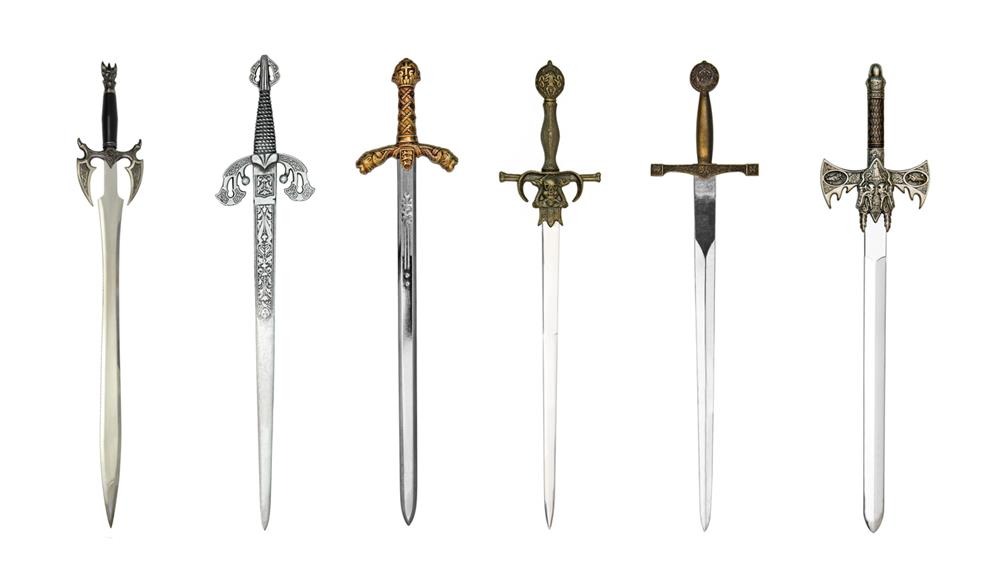
Among the diverse array of medieval weaponry, the bastard sword distinguishes itself through its exceptional balance of versatility, reach, and control. With a blade typically ranging from 30 to 40 inches and a weight between 2 to 3.5 pounds, it occupies the ideal middle ground between the agility of a one-handed sword and the raw power of a two-handed weapon.
A comparative overview highlights its unique advantages:
- Arming Sword: Designed exclusively for one-handed use, it offers speed and maneuverability but lacks the bastard sword’s extended reach and two-handed adaptability.
- Greatsword: Significantly larger and heavier, the greatsword delivers overwhelming force in sweeping motions but often sacrifices speed and versatility.
- Longsword: Typically employed with two hands, the longsword emphasizes reach and leverage, though it does not offer the same flexibility in grip and technique as the bastard sword.
- Bastard Sword: Its hand-and-a-half design and optimized weight distribution support a wide range of combat styles, making it one of the most adaptable and well-rounded swords of its era.
This combination of functional design and combat versatility contributed to the bastard sword’s enduring popularity among medieval knights and professional soldiers.
Famous Examples of Bastard Swords
Several notable bastard swords have left a lasting imprint on both historical imagination and modern popular culture, celebrated for their symbolism, craftsmanship, and narrative significance.
- Andúril, wielded by Aragorn in The Lord of the Rings, represents courage, royal lineage, and the fulfillment of destiny. Reforged from the shards of Narsil, this sword serves as a powerful emblem of kingship and unity.
- In Braveheart, William Wallace’s sword—a broad, imposing bastard sword—has become an enduring symbol of rebellion and the unyielding quest for freedom.
- Siegfried’s sword in the Nibelungenlied, one of the most influential works of medieval German literature, reflects the bastard sword’s role in myth and legend, portraying themes of heroism, tragedy, and adventure.
- In the Dark Souls video game series, the bastard sword is widely used by players for its versatility in both offense and defense, echoing its historical reputation as an adaptable battlefield weapon.
Historical replicas of these iconic swords showcase the artistry behind their design. Intricately crafted hilts, balanced blades, and attention to historical accuracy highlight their significance not only as weapons but as enduring representations of medieval martial heritage.
The bastard sword, like the longsword with its cruciform hilt, was a staple of medieval knights and emblematic of the era’s martial prowess.
The Cultural Impact and Legacy
Though often eclipsed by more widely recognized sword types, the bastard sword has nonetheless secured a lasting place in cultural memory. Its influence spans literature, film, video games, and martial arts, where it is consistently celebrated as a symbol of versatility, chivalry, and heroic tradition.
The bastard sword’s enduring legacy is a reflection of its role as a symbol of valor and honor. In mythology, dragons represent powerful and awe-inspiring forces, and the bastard sword’s symbolic connection to heroism parallels the eternal struggle between swords and dragons.