

What started with Ferdinand Magellan’s arrival in 1521 eventually turned into full-scale colonization, transforming the islands through religion, governance, and trade. From the encomienda system to the powerful Galleon Trade, Spanish influence spread across the archipelago, but it was met with resistance from Filipinos determined to fight for their freedom.
Spanish Arrival and Initial Conquests

When Ferdinand Magellan landed in the Philippines in March 1521, he sparked Spain’s enduring interest in the archipelago. His arrival marked the beginning of a significant chapter in history, although Magellan himself met his end in the Battle of Mactan.
It wasn’t until Miguel López de Legazpi‘s expedition in 1565 that the Spanish truly began their conquest. Legazpi successfully established the primary permanent settlement in Cebu, overcoming local resistance and setting the stage for further expansion.
Despite facing challenges, such as Portuguese blockades, Legazpi’s efforts paved the way for Spanish dominance. By the late 16th century, the Spanish had solidified control over key coastal regions, with Manila’s founding in 1571 anchoring their influence in the Philippines.
Establishment of Colonial Governance
You’d see the encomienda system as a cornerstone, established in 1568, allowing Spaniards to extract tribute and labor from local populations while offering some protection. Governor-generals wielded immense power, akin to monarchs, overseeing military, civil, and ecclesiastical domains with minimal oversight from Spain.
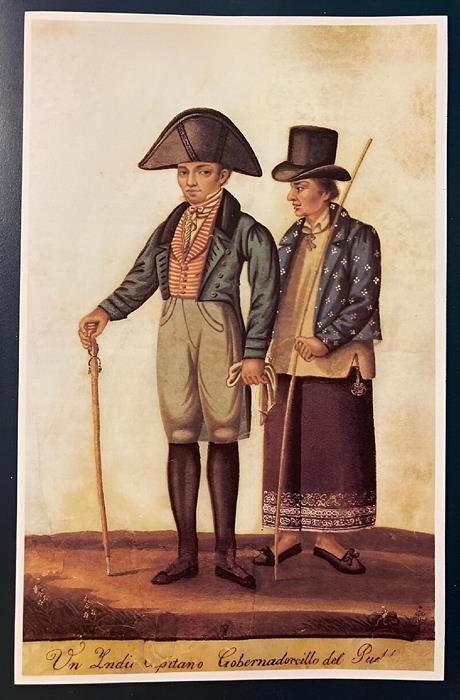
In Manila, a medieval government structure took shape, while local governance relied on gobernadorcillos and cabezas de barangay to enforce laws and collect taxes. The introduction of pueblos, centered around stone churches, consolidated indigenous communities, reinforcing Spanish rule. Additionally, the American takeover of the Philippines brought about significant changes, including land reforms that aimed to reduce the church’s influence and promote secular governance.
The Encomienda System and Its Impact
Despite its initial promise of protection and Christianization, the encomienda system quickly devolved into a tool of exploitation and control.
You’d find that, legalized in 1568, it allowed Spanish colonizers to extract tribute and forced labor from indigenous populations under the guise of offering protection.
Encomenderos, the local leaders, wielded immense power, often abusing their roles and treating native Filipinos harshly. Although slavery was abolished, the system perpetuated servitude akin to the pre-colonial alipin system. By the end of the 17th century, widespread grievances against these abuses led to the system’s decline, deemed unsustainable and oppressive.
As the encomienda system waned, shifts in local governance and new social hierarchies emerged, deepening class distinctions in Filipino society.
Religious Conversion and Missionary Efforts
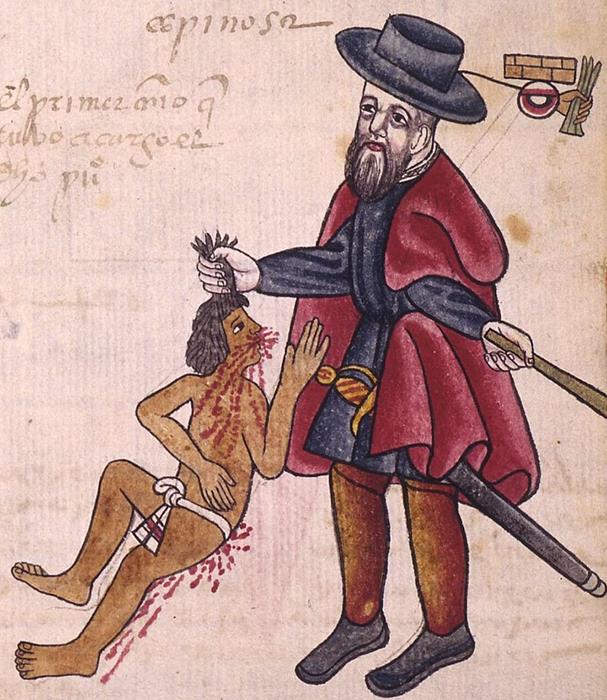
As the encomienda system waned, Spanish influence found another avenue through religious conversion and missionary efforts. Spanish colonial authorities, with the help of missionaries from four major Catholic orders, aimed to convert the indigenous population to Roman Catholicism.
They implemented strategies like “conquista espiritual” to assert societal control and achieve religious dominance. The process of “reducción” relocated communities, centralizing governance and facilitating conversion, often encountering resistance and violence.
Despite these efforts, Islam persisted in Mindanao and Sulu, underscoring the challenges of complete conversion. Over time, a syncretism evolved where local customs influenced Catholic rituals, allowing indigenous beliefs to persist within Spanish Catholicism’s framework.
Consequently, the Spanish colonial project intertwined religious and cultural dimensions, leaving a lasting legacy.
Economic Developments and the Galleon Trade

The Galleon Trade, established in 1565, was an essential development that transformed Manila into a thriving commercial hub. This trade route connected Manila and Acapulco, Mexico, facilitating a lively exchange of goods. Chinese silks were swapped for Mexican silver, enriching the local economy and cementing Manila’s status as a fundamental commercial hub in the Spanish colonial empire.
The trade spurred the growth of a large Chinese community in Manila, contributing considerably to commerce despite facing periodic violence due to Spanish suspicions. Wealth concentrated among the Spanish colonial elite and the Catholic Church, reinforcing class distinctions.
Moreover, Western agricultural techniques influenced a shift from shifting cultivation to sedentary farming, with friars playing a considerable role in managing lands and enhancing agricultural productivity. Despite the Spanish colonial presence, the Fall of Ilocos and Cagayan during the Philippine-American War marked a significant shift in control over the region, illustrating the ongoing power struggles in the archipelago.
Resistance and Revolts Against Spanish Rule
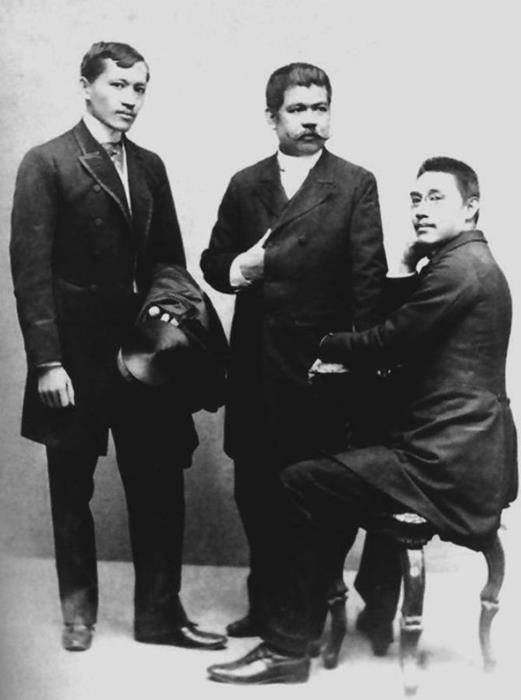
Amidst growing discontent with Spanish colonial rule, the Philippines saw a surge of resistance and revolts that would ultimately shape its path to independence.
In 1892, the Katipunan, led by Andrés Bonifacio, emerged as a vital force, organizing efforts for the Philippine Revolution. Earlier, the Cavite Mutiny of 1872 had already stirred anti-Spanish sentiment, leading to harsher colonial repression.
The execution of José Rizal on December 30, 1896, further united Filipinos in their struggle for freedom. Despite internal conflicts, including Bonifacio’s execution, Emilio Aguinaldo assumed leadership in March 1897, continuing the fight.
The revolution gained substantial local support, culminating in the declaration of independence on June 12, 1898, despite facing challenges against Spanish forces. However, the Treaty of Paris signed later in 1898 prevented full independence, leading to further conflict with the Americans.
The Rise of Filipino Nationalism
The educated Ilustrado class emerged in the 19th century, advocating for reforms and equality with Spaniards, sparking a significant shift in local sentiment.
- José Rizal’s influential works, especially “Noli me tángere,” exposed the deep-rooted corruption and injustices, galvanizing Filipinos to adopt a national identity.
- In 1892, the Katipunan, led by Andrés Bonifacio, mobilized Filipino revolutionaries from all social classes to resist colonization.
- Rizal’s execution on December 30, 1896, intensified the revolutionary fervor, uniting the populace.
- The Philippine Revolution began that same year, culminating in the declaration of independence on June 12, 1898.
Key Figures and Movements in the Fight for Independence

While Spain’s grip on the Philippines tightened, key figures and movements emerged to challenge colonial rule and fight for independence. Driven by the desire for Philippine independence, José Rizal became a leading figure in the Propaganda Movement. Through his poignant writings like “Noli me tángere,” he exposed Spanish corruption and inspired Filipinos to join the cause.
Meanwhile, Andrés Bonifacio founded the Katipunan in 1892, a secret society aimed at organizing a mass uprising. By 1896, it had grown considerably, preparing for revolution. Emilio Aguinaldo rose to prominence, taking leadership in March 1897. His decisive act came on June 12, 1898, when he proclaimed Philippine independence, establishing himself as the head of government and continuing the struggle against Spanish rule.
The Philippine Revolution and Its Challenges
As the Philippine Revolution ignited in 1896, the drive for independence was fueled by growing discontent with over three centuries of Spanish colonial rule.
A crucial moment where educated Filipinos, inspired by leaders like José Rizal and Andrés Bonifacio, rallied against oppression. Rizal’s “Noli me tángere” exposed Spanish corruption, while Bonifacio’s Katipunan led the charge. Here, Emilio Aguinaldo emerges, taking command in March 1897 and proclaiming independence on June 12, 1898.
Despite initial successes, the revolution faced challenges. Internal conflicts and a lack of resources hindered progress against well-equipped Spanish troops. The pact of Biak-na-Bato in December 1897 marked a setback. The struggle was further complicated by U.S. intervention, altering the revolution’s trajectory.
Transition to American Control and the End of Spanish Rule
After the Spanish-American War, the change of power in the Philippines marked a significant shift from Spanish to American rule. The shift to American control officially began with the Treaty of Paris on December 10, 1898. Spain ceded the Philippines to the United States for $20 million, despite Filipino revolutionaries, led by Emilio Aguinaldo, having already proclaimed independence on June 12, 1898.
However, their aspirations for freedom faced a new colonial power, leading to the Philippine-American War from 1899 to 1902. This conflict resulted in heavy casualties, with over 20,000 Filipino insurgents and 4,000 American soldiers dead. Aguinaldo’s capture in 1901 marked the decline of resistance.
The Commonwealth of the Philippines in 1935 paved the way for eventual independence in 1946.
Final Thoughts
From the initial conquests to the establishment of colonial institutions, the Spanish reshaped the archipelago through trade, religion, and strict governance. Yet, Filipinos never stopped resisting, and their fight for independence grew stronger with time. The rise of nationalism, revolutionary movements, and key figures like José Rizal and Andrés Bonifacio paved the way for change.
While Spanish rule eventually ended, it was replaced by American control, prolonging the struggle for true freedom. The resilience of the Filipino people throughout these centuries shaped the nation’s identity, leading to the eventual realization of independence in 1946.