

Although Fort Santiago‘s origins date back to 1571, its significance has only grown over the centuries. Founded by Miguel López de Legazpi, this military defense fortress was essential during the Spanish colonial period. It served as a protective bastion within Intramuros, safeguarding the city from foreign invasions and local uprisings.
The fort’s historical significance is further underscored by its connection to national hero José Rizal, who was imprisoned here before his execution in 1896. This event marked a critical moment in the struggle for Philippine independence. On June 12, 1898, General Emilio Aguinaldo declared Philippine independence, which was a pivotal step in the country’s fight for sovereignty.
Recognized as a National Shrine and National Monument in 1951, Fort Santiago reflects the resilience of Filipino heritage under changing colonial rule, enduring as a symbol of national pride and identity.
Architectural Features and Design
Fort Santiago’s historical significance is deeply intertwined with its impressive architectural features and design.
You’ll notice its nearly triangular shape, with formidable walls standing 22 feet high and 8 feet thick, showcasing the defensive architecture of the Spanish colonial period. Constructed from volcanic tuff, the fort was built to endure sieges.
The Fort Santiago Gate, rising 40 feet, captivates with intricate reliefs, including scenes from the Battle of Clavijo. A surrounding moat, linked to the Pasig River, served as a vital defensive measure.
Inside, you’ll find the Baluartillo de San Francisco Javier, illustrating evolving architectural usage with modern facilities added in 1773, all of which highlight the fort’s enduring historical significance and strategic design.
Role During World War II
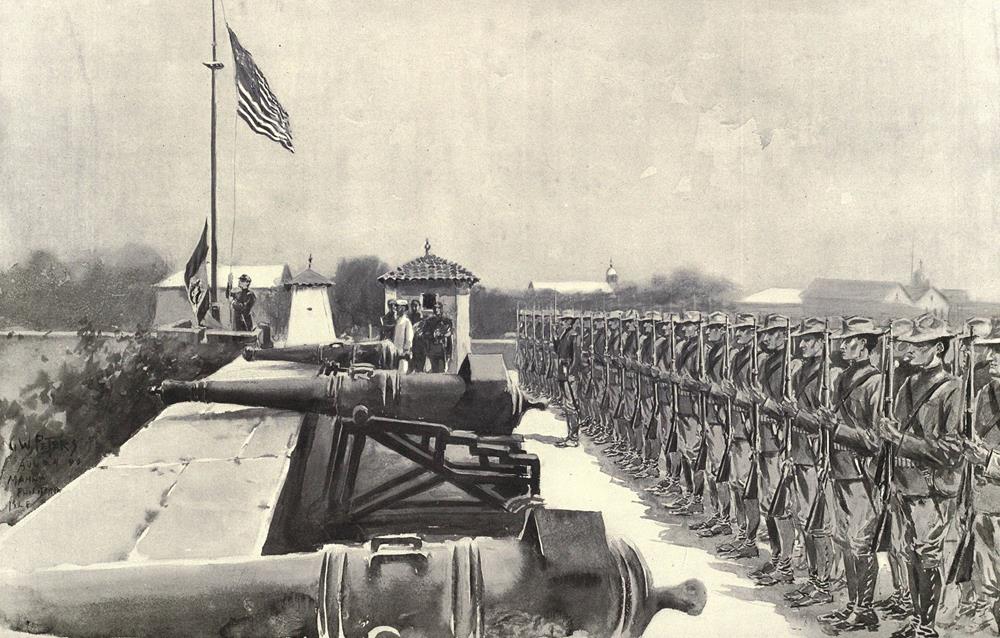
During World War II, Fort Santiago played an essential role, particularly during the intense Battle of Manila in February 1945. The Japanese Imperial Army used Fort Santiago as a stronghold and prison, where they committed horrific atrocities against over 100,000 local civilians.
As a prison camp, the fort held American and Filipino prisoners of war, underscoring the brutal conditions they faced during the Japanese occupation. The magnitude of the suffering endured here adds to the fort’s historical significance.
After the liberation of Manila, Fort Santiago lay in ruins, prompting extensive restoration efforts to preserve its storied past. Understanding its role during World War II helps you appreciate the fort’s importance and the sacrifices made for the city’s freedom.
Visitor Experience and Tips
Ever wondered how to make the most out of your visit to Fort Santiago? Start by planning a weekday trip to this historical landmark in Intramuros, when it’s less crowded.
Allocate around two hours to fully absorb its historical significance and lush gardens. The entrance fee is 150 pesos for adults, with discounts for kids, students, and seniors. To deepen your understanding of Philippine history, especially the legacy of José Rizal, a guided tour is highly recommended. He was imprisoned and executed here in 1896.
Fort Santiago’s clean environment includes exhibits, a gift shop, and nearby toilets to improve your visitor experience.
Don’t forget small cash for fees and a portable fan to stay cool in the warm climate.
Accessibility and Getting There

Planning your visit to Fort Santiago involves considering how you’ll get there and navigate the area.
Located in Intramuros, Fort Santiago is easily accessible via public transport such as the LRT and jeepneys. Though taxis are an option, they can be hard to find. For those driving, a private car park is available a street away.
The entrance fee is 150 pesos for adults, with discounts for students and free entry for children under 7 and government employees in uniform. The fort’s open hours are from 8:00 AM to 6:00 PM, Tuesday to Sunday. While its compact layout makes it easy to investigate, initial-time visitors might want a guide to fully appreciate its historical significance.
Guided Tours and Nearby Attractions

Although Fort Santiago stands as a memorial to Manila’s rich history, it’s the guided tours that truly bring its past to life.
In about two hours, these tours offer in-depth historical insights, focusing on the significance of José Rizal’s imprisonment and execution.
Augment your visit with organized options like the “Intramuros Walking Tour with Transportation,” which boasts 100% positive reviews and includes other historical sites.
Nearby attractions such as San Agustin Church, the oldest in the Philippines, and Casa Manila, a 19th-century Spanish colonial museum, are within walking distance.
For a broader experience, join the “Manila Old and New” sightseeing tour, which covers Intramuros and Fort Santiago for $60.00. Free guided tours also provide educational opportunities, celebrating the area’s cultural heritage.
Final Thoughts
Fort Santiago stands as a powerful reminder of Manila’s rich and complex history. Its walls have witnessed centuries of colonial rule, heroic struggles, and moments that shaped the nation’s identity. From the days of Spanish conquests to the sacrifices made during World War II, this fortress tells a story of resilience and courage.