

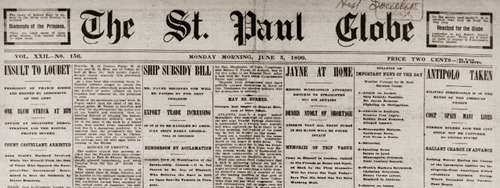
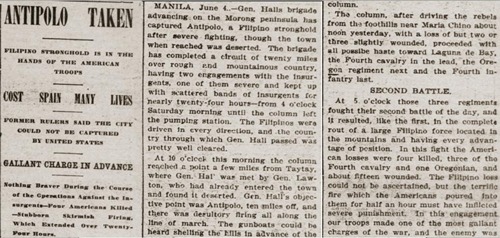
The Capture of Antipolo was an important event during the Philippine-American War. On June 4, 1899, American forces took control of the town of Antipolo, located 26 kilometers east of Manila in Morong Province. While the Americans were chasing Emilio Aguinaldo in the north, they also targeted other Filipino forces in the area. General Pio del Pilar and his men were defending Antipolo, but the Americans, led by Brigadier General Robert H. Hall, launched an attack.
This article will discuss the events leading up to the battle, the challenges both sides faced, and the significance of the town’s capture during the war.
Before the Battle
During the Philippine-American War, the Americans focused on weakening Filipino forces in different parts of the country. One of their main goals was to capture Emilio Aguinaldo, the leader of the Filipino resistance. While they were pursuing Aguinaldo in the northern part of the Philippines, they also launched other military campaigns to crush Filipino forces in nearby areas.
One of these areas was Morong Province, located east of Manila. Antipolo, a mountain town in this province, became a key target for the Americans. It was a stronghold for Filipino forces and strategically important because of its location. By taking Antipolo, the Americans hoped to disrupt Filipino movements in the region and gain more control.
General Pio del Pilar’s Defense
General Pio del Pilar was a key leader in the Filipino resistance. He and his men were stationed in Antipolo, where they prepared to defend the town from the advancing American troops. Del Pilar knew the area well and used the town’s rough, mountainous terrain to his advantage. He positioned his forces in strategic locations around Antipolo, hoping to slow down the American advance.
Even though his troops were fewer in number compared to the Americans, General del Pilar was determined to hold off the enemy. His forces were entrenched in the approaches to Antipolo, ready for battle. Despite facing a well-equipped and larger enemy, del Pilar’s men were prepared to put up a fight to protect their town and continue the Filipino struggle for independence.
The American Assault on Antipolo
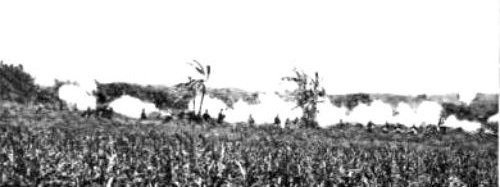
On June 3, 1899, American forces, under the command of Brigadier General Robert H. Hall, began their assault on Antipolo. Their goal was to capture the town and defeat the Filipino forces led by General Pio del Pilar. The American troops were well-equipped and outnumbered the Filipinos, but they faced many challenges during the operation.
Brig. Gen. Robert H. Hall’s Campaign
Brig. Gen. Robert H. Hall led a strong force of 2,500 American soldiers in the attack on Antipolo. His men came from both regular army units and volunteer regiments. The force was composed of:
Regular Troops:
- 4th US Cavalry Regiment
- 4th US Infantry Regiment
- 9th US Infantry Regiment
Volunteer Troops:
- 1st Colorado Volunteer Regiment
- 2nd Oregon Volunteer Regiment
- Wyoming Volunteer Regiment
In addition to the infantry and cavalry units, the Americans brought heavy firepower to support their attack. They had two mountain battery guns and two Hotchkiss guns, which were used to bombard Filipino positions. These guns gave the Americans a significant advantage in firepower.
Difficulties in the Terrain
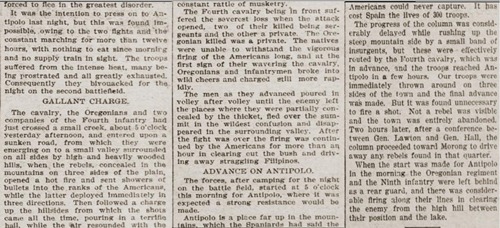
Despite their strong force, the Americans faced significant challenges as they moved toward Antipolo. The town was located in a mountainous region with rough terrain that made it hard for troops and artillery to move quickly. The steep hills and rocky ground slowed the advance of the soldiers.
Adding to these difficulties, the intense heat of June made conditions even worse. Soldiers had to march under the hot sun, which exhausted them and reduced their speed. The combination of rough terrain and harsh weather made the operation more difficult than expected, causing delays in the assault.
Despite these challenges, Brig. Gen. Hall and his men pushed forward, determined to capture Antipolo and defeat the Filipino forces defending it.
The Battle at the Base of the Mountains
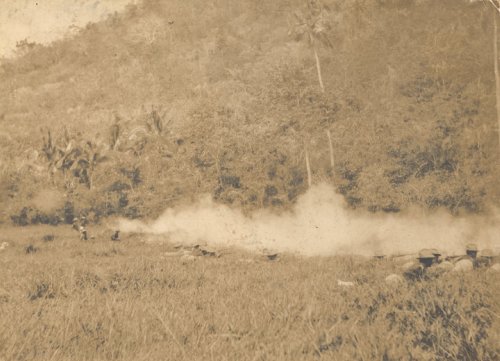
As Brig. Gen. Robert H. Hall’s forces approached Antipolo, they encountered stiff resistance from a small Filipino force stationed at the base of the mountains. About 300 Filipino troops, determined to defend their position, stood in the way of the advancing Americans.
The Filipino soldiers, though outnumbered and outgunned, fought bravely against the larger American force. The battle took place in difficult terrain, with steep hills and thick vegetation adding to the challenge. Despite the overwhelming firepower of the Americans, the Filipinos held their ground for as long as they could.
Casualties
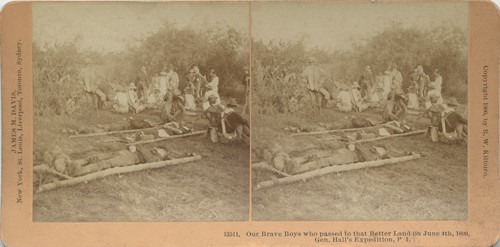
The battle resulted in casualties on both sides. The Americans lost two soldiers and had nine others wounded during the skirmish. The exact number of Filipino casualties is not known, but given the intensity of the fight and the smaller size of their force, it is likely that they suffered significant losses.
After this initial engagement, the Americans continued their push toward Antipolo, determined to complete their mission despite the resistance they faced.
The Capture of Antipolo
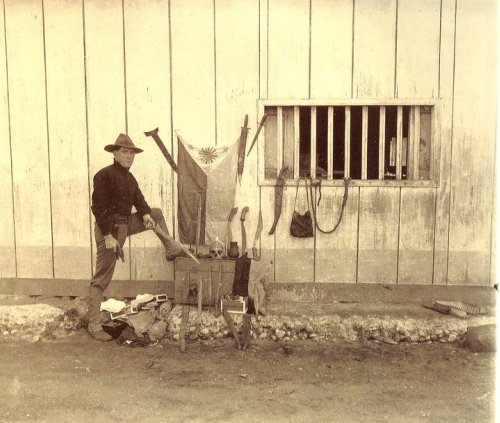
On the morning of June 4, 1899, at around 10:00 a.m., American forces under Brig. Gen. Robert H. Hall successfully entered the town of Antipolo. After days of battling rough terrain and Filipino resistance at the base of the mountains, the Americans found the town eerily quiet. It soon became clear that the Filipino forces, led by General Pio del Pilar, had retreated to the nearby town of Tanay. Antipolo was left deserted, with no civilians or soldiers in sight.
The Americans, having faced resistance earlier, had expected a more difficult fight for the town itself. However, the withdrawal of the Filipino forces meant that they took Antipolo without further conflict.
Discovery of Ammunition and Supplies
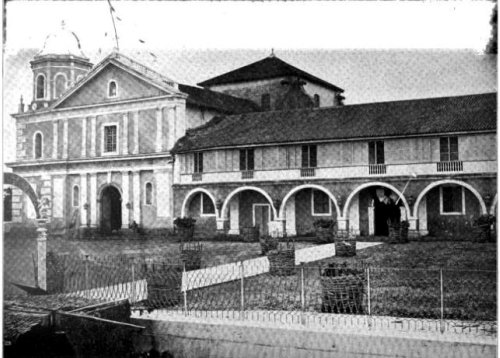
As the American soldiers secured the town, they searched for anything left behind by the retreating Filipino forces. Inside Antipolo’s church, they made a significant discovery. They found a large stockpile of ammunition, including around 1,000 Mauser cartridges, 2,500 Remington cartridges, and several shells. There were also improvised canisters, likely meant to be used in battle.
To prevent the ammunition from falling into Filipino hands again, the Americans disposed of the supplies. They dumped the cartridges, shells, and canisters into a well, ensuring they couldn’t be recovered or used in future attacks. With Antipolo secured, the Americans had achieved an important victory in their campaign to weaken Filipino resistance in Morong Province.
Cultural Significance of Antipolo’s Church
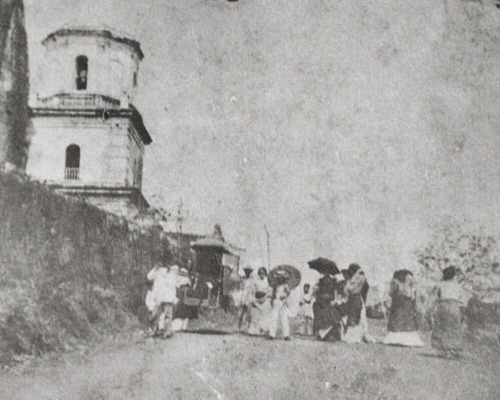
Antipolo’s church is home to the Shrine of Nuestra Señora de la Paz y Buen Viaje (Our Lady of Peace and Good Voyage), a Marian statue that holds deep cultural and religious importance in the Philippines. The statue, known as the Lady of Peace and Good Voyage, has been a symbol of protection for centuries. Filipinos, especially those traveling abroad or embarking on long journeys, pray for the statue’s blessing, hoping for a safe trip.
Over time, this devotion expanded, and the statue became particularly significant to overseas workers and even new car owners, who visit the shrine to ask for protection during their travels or on the road. The belief that the Lady of Peace and Good Voyage can bring good fortune and safety has made Antipolo a popular pilgrimage site.
Historical Link to the Galleon Trade
The statue’s significance goes back to the era of the Manila-Acapulco Galleon Trade, which lasted from 1565 to 1815. During this time, Spanish ships made the perilous journey between the Philippines and Mexico, often facing dangerous weather, pirate attacks, and enemy blockades. The Nuestra Señora de la Paz y Buen Viaje was brought aboard the galleons, and many believed the statue protected the ships and their crews from harm.
Because of its association with safe travel, the statue became an enduring symbol of protection for Filipino travelers, and this tradition continues today. Antipolo’s church remains a destination for pilgrims seeking the blessings of the Lady of Peace and Good Voyage.
Aftermath of the Battle
After the Americans entered Antipolo on June 4, 1899, the Filipino forces, led by General Pio del Pilar, had already retreated to the nearby town of Tanay in Morong Province. Rather than engaging in a direct and costly battle for the town, the Filipino forces chose to regroup in Tanay, which offered more strategic advantages for further resistance.
The withdrawal allowed them to conserve their remaining strength and avoid further casualties. This tactical retreat was part of a broader strategy of guerrilla warfare, where Filipino forces would hit and run, then retreat to fight another day.
Impact of the Capture on the Philippine-American War
The capture of Antipolo was an important moment in the Philippine-American War. By taking control of the town, the Americans gained a strategic foothold in Morong Province, further tightening their grip on the surrounding areas. The victory weakened the local Filipino resistance and disrupted their supply lines. The capture also boosted American morale as it demonstrated their continued success in capturing key towns and strongholds across the Philippines.
However, while the fall of Antipolo was a setback for the Filipino forces, it did not end the resistance. The withdrawal to Tanay and the adoption of guerrilla tactics allowed Filipino fighters to continue resisting American forces in the region. Still, the capture of Antipolo was a significant step for the Americans in their campaign to suppress Filipino resistance and take control of more territory in the province. It also contributed to the eventual weakening of organized Filipino defenses in the war.
Conclusion
The capture of Antipolo on June 4, 1899, was an important victory for the Americans in the Philippine-American War. Although Filipino forces, led by General Pio del Pilar, put up strong resistance, they were eventually forced to retreat. The town’s fall gave the Americans more control in Morong Province, but Filipino resistance continued in other areas. The battle was a key moment in the larger conflict, showing both the strength of the American advance and the determination of the Filipinos to keep fighting for their freedom.