

François “Papa Doc” Duvalier ruled Haiti with a chilling blend of violence, superstition, and authoritarian control from 1957 until his death in 1971. Rising to power as a populist champion of Haiti’s Black majority, Duvalier transformed into a ruthless dictator who weaponized Vodou beliefs, deployed a paramilitary death squad, and cultivated a cult of personality that demanded absolute obedience.
Through midnight executions, psychological terror, and calculated repression, he turned Haiti into a state gripped by fear. His brutal tactics and enduring legacy would leave scars on the nation that persist to this day.
Key Takeaways
- François Duvalier rose to power in 1957, exploiting racial tensions and Cold War politics, and consolidated control through rigged elections and a brutal paramilitary force.
- The Tonton Macoutes, Duvalier’s 9,000-strong secret police, used public terror, executions, and Vodou symbolism to suppress dissent and control the population.
- Duvalier weaponized Vodou and psychological fear, projecting a mystical, invincible image while using persecution, torture, and propaganda to maintain absolute authority.
- Haiti’s economy collapsed under his rule, as Duvalier misappropriated foreign aid, suppressed business, and deepened poverty to keep citizens too weak to resist.
- Duvalier’s legacy of fear and repression continues to haunt Haiti, with enduring political instability, economic stagnation, and generational trauma rooted in his regime.
The Rise of a Despot: How Papa Doc Seized Control of Haiti
While pledging liberation for Haiti’s Black majority, François “Papa Doc” Duvalier engineered one of the most calculated and enduring power grabs in modern history. Once a modest country doctor, he transformed himself into a despotic ruler through ruthless political manipulation and cultural exploitation.
Duvalier’s rise was rooted in his ability to weaponize Haitian Vodou traditions and craft a powerful cult of personality. He went beyond rigged elections, establishing the Tonton Macoutes—a paramilitary force that operated outside the law, brutally suppressing dissent and instilling widespread terror.
His political cunning was amplified by Cold War dynamics. Duvalier skillfully played rival factions against one another while securing U.S. support, which prioritized his anti-communist credentials over human rights. In doing so, he consolidated total control, amassing personal wealth as Haiti plunged into economic ruin and authoritarian darkness.
Much like Fidel Castro who survived numerous failed assassination plots orchestrated by his enemies, Duvalier maintained power through paranoia and intimidation tactics.
The Tontons Macoutes: Papa Doc’s Personal Terror Squadron
At the core of François Duvalier’s authoritarian rule stood his most feared creation—the Tontons Macoutes, a paramilitary force designed to enforce his will through terror. These brutal enforcers patrolled Haitian neighborhoods with absolute impunity, holding power over life and death without accountability.
Duvalier established the 9,000-strong force outside the formal military and police structures, ensuring their loyalty lay solely with him. What made them especially formidable was their strategic use of Vodou symbolism—they often incorporated ritualistic elements into their appearance and actions, reinforcing the dictator’s image as a mystical, untouchable figure. This psychological manipulation magnified the terror they inflicted.
The Tontons Macoutes became the regime’s most lethal tool for silencing dissent. By authorizing them to loot, rape, torture, and execute at will, Duvalier institutionalized fear and turned Haiti into a police state. This reign of violence and impunity stands among the darkest chapters in Haitian history, with the Tontons Macoutes serving as the embodiment of Duvalier’s ruthless grip on power.
Their methods mirror the cultural and religious factors that drove the Moro Rebellion, where distinct ethnic identity and faith unified resistance against oppressive rule.
Vodou as a Political Weapon: Duvalier’s Mystical Power Plays
Throughout his ruthless reign, François “Papa Doc” Duvalier masterfully weaponized Vodou to create an aura of supernatural invincibility that paralyzed opposition. You couldn’t escape the psychological terror as he regularly invited voodoo priests to the Presidential Palace, cementing his mystical image in the black Republic of Haiti.
With a mother rumored to be a Vodou priestess herself, Papa Doc Duvalier’s connection to the spiritual practice wasn’t merely political—it was personal. He exploited these associations to enhance the frightening reputation of his secret police, the Tontons Macoutes, who were widely believed to possess otherworldly powers.
The cruel irony? While embracing Vodou as a control mechanism, Duvalier’s regime simultaneously persecuted many genuine practitioners, transforming a cultural tradition into a feared instrument of state power.
Midnight Executions and Public Displays of Violence
Many who dared oppose Papa Doc’s regime met their fate at the end of a gun barrel, often in the dead of night or before horrified onlookers. In Haiti, you’d witness Papa Doc’s brutality firsthand as he personally led the firing squad that executed 19 army officers accused of plotting against him.
The Tontons Macoutes, Duvalier’s secret police, jailed, tortured, and killed hundreds of political opponents—sometimes slitting their throats and displaying their bodies in public places. When teenagers dared paint “Down with Duvalier” signs, they were executed without trial.
Under the guise of “national security,” Papa Doc’s opponents faced swift elimination. Even journalists weren’t spared; opposition newspapers were bombed while editors were jailed and tortured for criticizing the dictator’s bloody reign.
Psychological Warfare: How Duvalier Cultivated Fear in Everyday Life
Beyond his regime’s physical brutality, François “Papa Doc” Duvalier conducted a relentless campaign of psychological warfare that infiltrated every aspect of Haitian life. The ever-present threat of the Tonton Macoutes, clad in black and empowered to arrest, torture, or kill without warning, created a climate of constant, paralyzing fear.
Even the presidential palace became a symbol of terror. Guarded by savage attack dogs and shrouded in superstition, it served as both a seat of power and a site of intimidation. Duvalier surrounded himself with Vodou symbols, wore protective amulets, and engaged in rituals that bolstered his reputation as a mystical, near-divine figure.
No space was safe from his influence. Churches were co-opted for propaganda; priests who refused to praise the regime were exiled or silenced. The regime’s use of mutilated bodies displayed in public served as haunting reminders of Duvalier’s omnipresence, a visceral warning that dissent would be met with gruesome consequences.
Through this calculated fusion of violence, superstition, and spectacle, Duvalier manufactured obedience not just through force, but through fear itself—turning Haiti into a nation held hostage by its own collective dread.
The Palace of Horrors: Papa Doc’s Personal Torture Chambers
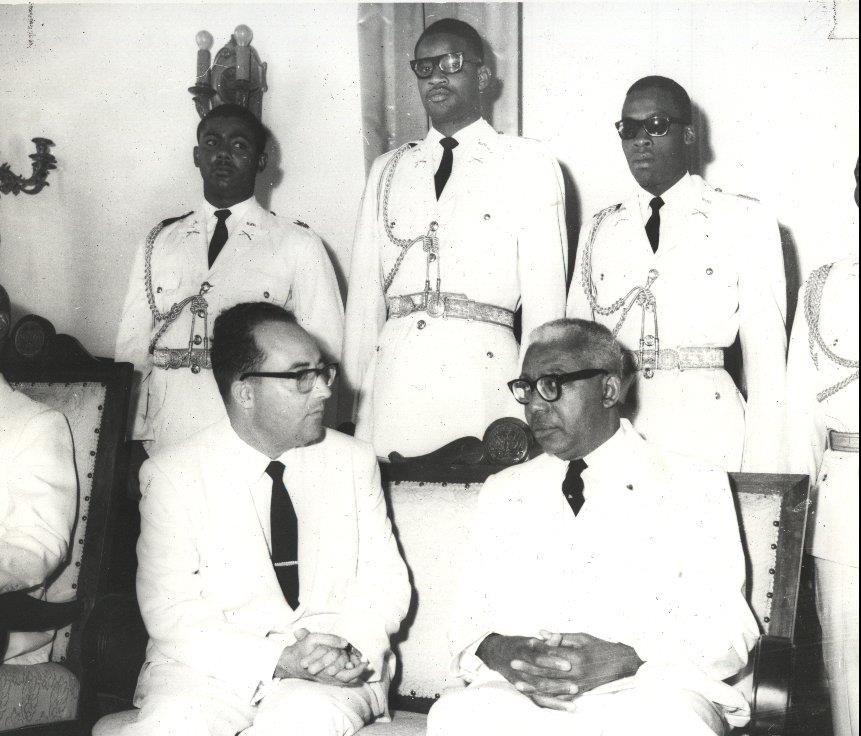
Hidden beneath the opulent presidential palace, Papa Doc Duvalier’spersonal torture chambers became the epicenter of his reign of terror. The Haitian President would descend into this basement nightmare where he’d personally administer electric shocks and waterboarding to those who dared oppose him.
Visitors to the palace faced another level of intimidation: vicious attack dogs patrolling the corridors. Meanwhile, the President of Haiti surrounded himself with voodoo amulets and charms, believing they’d shield him from enemies while his network of informants maintained his grip on power.
Canine Sentries and Bizarre Security Measures at the Presidential Palace
Dogs at the presidential palace served a dual purpose for Papa Doc Duvalier: vicious guardians against physical threats and psychological weapons to terrorize visitors. The dictator kept these ferocious animals strategically positioned throughout the grounds, ready to attack on command.
Duvalier’s paranoia extended beyond canine sentries. He wore Vodou amulets constantly, believing they granted him supernatural powers to intimidate enemies. His security forces maintained relentless surveillance, sometimes firing randomly at approaching vehicles to cultivate fear.
Perhaps most disturbing was the secret stairwell in the palace basement leading to a torture chamber where Papa Doc personally interrogated prisoners. This combination of guard dogs, supernatural beliefs, and violent unpredictability created an atmosphere of constant terror that helped maintain his brutal grip on power.
The Cult of Personality: Rewriting History and Religion to Glorify Duvalier
François Duvalier’s reign of terror extended far beyond physical intimidation at the presidential palace. Papa Doc manipulated both politics and religion to cement his status as Haiti’s supreme ruler, even rewriting the Lord’s Prayer to glorify himself instead of God.
As President for Life, Duvalier forced the Haitian people to participate in mandatory demonstrations where they sang and danced in his honor after being transported from rural masses. You’d witness him parading through streets in a bulletproof limousine, scattering money to create an illusion of benevolence.
His megalomania merged with voodoo practices in disturbing ways. Duvalier claimed occult powers that allowed him to communicate with the dead, once reportedly interrogating a deceased guerrilla leader. His personal involvement in basement torture sessions completed his image as an omnipotent, inescapable force controlling Haiti.
Economic Terrorism: How Duvalier Weaponized Poverty to Maintain Control
While many dictators amass wealth through corruption, Papa Doc Duvalier uniquely transformed Haiti’s poverty into a deliberate control mechanism. He deliberately kept the population destitute, with Haiti’s per capita income at a mere $75 compared to Latin America’s $400 average.
Duvalier squandered international aid on vanity projects like Duvalierville while extracting heavy taxes from businesses and peasants alike. His regime became the definition of kleptocracy as he systematically looted state resources.
Duvalier exploited Vodou beliefs to manipulate the impoverished rural masses, attacking practitioners who challenged him. He leveraged Haiti’s urban-rural divide and racial tensions, ensuring different groups remained too divided and desperate to mount effective resistance. By weaponizing poverty, he created a population too concerned with survival to organize against his brutal rule.
The Bloody Legacy: How Papa Doc’s Tactics Shaped Modern Haiti
More than five decades after his death in 1971, François “Papa Doc” Duvalier’s shadow still looms large over Haiti. His regime’s brutal methods and authoritarian playbook laid the groundwork for the country’s persistent political instability, economic stagnation, and social trauma.
The Tonton Macoutes, Duvalier’s paramilitary death squad, became a blueprint for state-sponsored repression, setting a precedent for impunity and violence that later regimes would replicate. His deliberate exploitation of Vodou for political control blurred the line between spiritual tradition and state terror, leaving a lasting stain on Haitian cultural identity.
Duvalier’s rule was marked by rampant corruption and economic sabotage. He squandered millions in foreign aid on vanity projects like Duvalierville, while systematically impoverishing the population to ensure dependence and suppress dissent. His campaign of arrests, torture, and executions inflicted deep generational trauma, the effects of which still ripple through Haitian society today.
Haiti’s enduring struggles with governance, poverty, and insecurity are not merely the result of circumstance—they are the calculated legacy of a regime built on fear, superstition, and absolute power.