

The katana holds a special place in Japanese history and culture. This curved sword, typically 24 to 26 inches long, was the weapon of choice for samurai warriors. Skilled craftsmen spent months making each katana from high-carbon steel, creating not just a weapon but a work of art.
RSG game art studio creates top-notch concept art, 2D game art, stylized games art, 3D environments, and 3D assets, tailored to meet the specific needs of mobile game developers like you.
Katanas have a unique design that sets them apart from other swords:
- Curved blade for swift, powerful cuts
- Single-edged for precise strikes
- Strong, thick spine to resist breaking
The katana’s strength lies in its ability to handle sudden stress. This makes it great for cutting through tough materials. While longer swords may bend more, the katana stands firm against heavy blows.
Katanas are more than just weapons. They play a role in several Japanese martial arts:
- Kendo: The “way of the sword”
- Iaido: The art of drawing the sword
- Kenjutsu: Sword fighting techniques
Today, many young people admire katanas for their beauty and craftsmanship. These swords continue to inspire artists and sword makers around the world.
History of the Japanese Sword
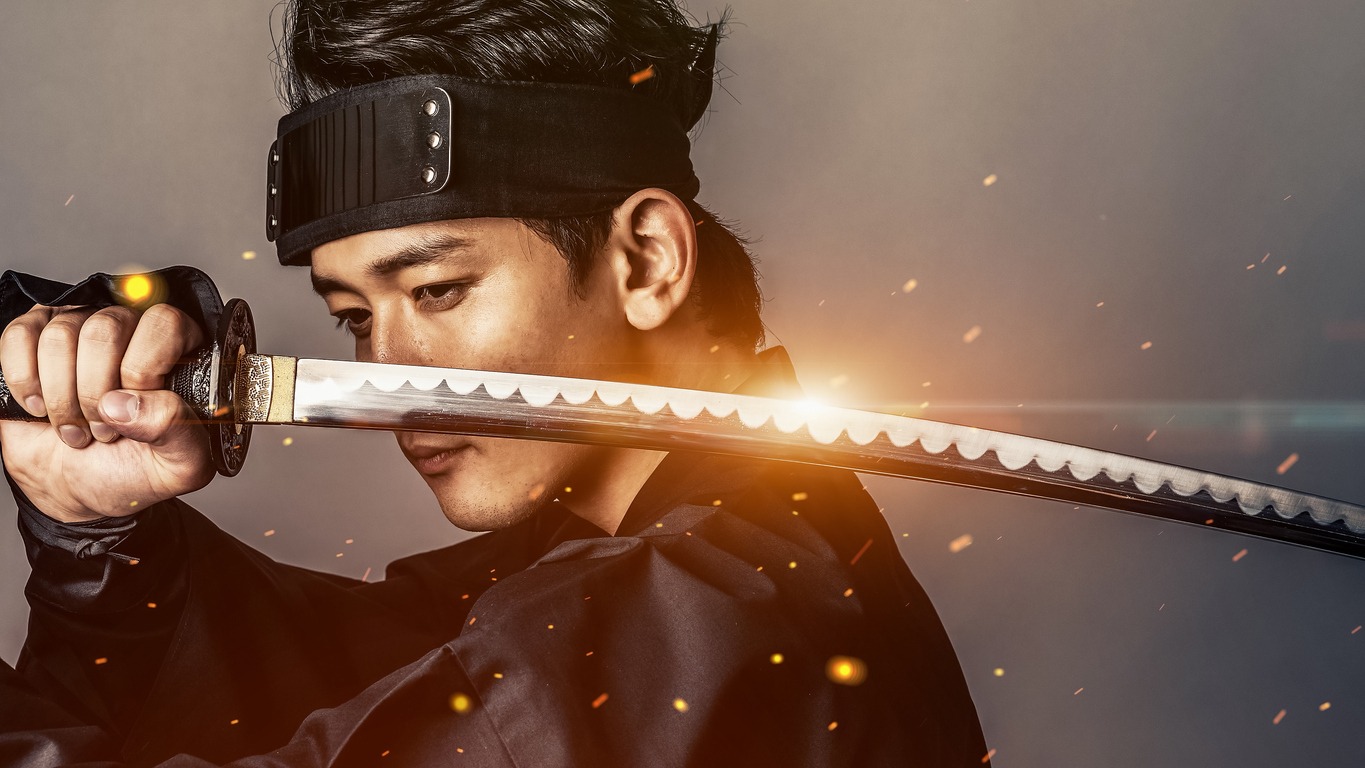
The Japanese sword has a rich history spanning over two thousand years. Early Japanese blades were simple copies of Chinese designs – straight and double-edged. Around 700 CE, during the Heian period, the first curved single-edged swords appeared. These were the ancestors of the katana.
Katanas became popular with samurai warriors during Japan’s feudal era (1185-1600). Their curved blade and quick-draw design suited the samurai’s fighting style. Samurai wore katanas through their sash with the sharp edge up. This let them draw and strike in one smooth motion.
The katana had both practical and symbolic importance for samurai. It was a deadly weapon and a badge of their social status. Samurai followed a strict code of honor called bushido. This code governed how they used their swords.
Katanas have several key parts:
- Blade: Usually 60-73 cm long
- Handle (tsuka): Wrapped in materials like ray skin
- Guard (tsuba): Protects the hand
- Scabbard (saya): Decorative wooden sheath
Skilled craftsmen called swordsmiths forged katana blades. They used special techniques to create strong, sharp blades that kept their edge. The best katanas were works of art as well as weapons.
In 1876, the government banned most people from carrying swords. This was part of Japan’s push to modernize. Many swordsmiths lost their jobs. The katana almost disappeared.
But in 1906, the government named two master swordsmiths “Imperial Household Artists.” This helped keep traditional sword-making skills alive. Today, modern swordsmiths still use ancient methods to create katanas.
The katana has become a symbol of Japan’s warrior past. It appears in many movies, books, and video games. Collectors prize antique katanas for their beauty and history. The Japanese sword remains an important part of Japan’s cultural heritage.
The Art of Crafting a Katana

Katana making is a complex process that takes about three months to complete. The journey begins with the creation of tamahagane, or “jewel steel,” from iron sand. This special steel forms the core of the sword.
Skilled swordsmiths use a tatara furnace to smelt the iron sand. They carefully control the carbon content to achieve the right balance of hardness and flexibility. The resulting steel is then folded and hammered repeatedly to remove impurities and create a strong, layered structure.
The blade’s shape emerges through repeated heating and hammering. The smith pays close attention to the edge, which must be incredibly sharp. They also focus on creating the hamon, a wavy pattern along the blade that results from differential heat treatment.
Next comes the polishing stage. Expert polishers called togishi use a series of increasingly fine stones to bring out the blade’s beauty and reveal its internal structure. This process can take weeks to complete.
The smith adds their signature, or mei, to the tang of the blade. This mark includes the maker’s name and sometimes the date of creation.
Finally, craftsmen attach the handle and other fittings. These components not only complete the sword’s appearance but also aid in balance and shock absorption.
Today, there are about 300 registered swordsmiths in Japan, but only a small number make swords full-time. A finished katana can cost millions of yen, reflecting the time, skill, and materials involved in its creation.
While owning a katana is legal in many places for adults, it’s important to check local laws before purchasing or carrying one. In Japan, observing the katana-making process is a rare opportunity that offers insight into this ancient art form.