

Although Ferdinand Magellan’s arrival in the Philippines in March 1521 marked the beginning of Spanish interest, it was Miguel López de Legazpi who truly initiated colonization efforts.
Magellan’s expedition highlighted the resistance of local leaders, particularly with his death at the Battle of Mactan. However, it wasn’t until Legazpi established the initial permanent settlement in Cebu City in 1565 that Spanish colonization took root.
His endeavor laid the groundwork for Spanish control across the archipelago. By 1571, the founding of Manila as a city solidified its role as a central hub for trade and administration.
Despite initial resistance, by the end of the 16th century, most coastal areas were under Spanish control, setting the stage for centuries of rule. Miguel López de Legazpi’s leadership was pivotal in establishing a colony named Villa del Santisimo Nombre de Jesus in Cebu after overcoming local resistance.
Religious and Cultural Transformation

As Spanish colonizers settled in the Philippines, they commenced a mission to transform the spiritual landscape by converting local populations to Roman Catholicism. They aimed to suppress indigenous religions, replacing them with Catholic rituals. Despite these efforts, many Muslims in Mindanao and Sulu resisted, leading to the Spanish-Moro Wars. The Catholic Church became a dominant institution, sharing power with Spanish authorities and influencing Filipino governance through diverse religious orders.
Catholicism reshaped social and cultural practices, blending Filipino traditions with Spanish customs, and fostering a unique syncretism. Under Spanish rule, traditional Filipino values persisted, evolving into a distinct Filipino identity.
This identity integrated both indigenous and colonial elements, reflecting the complex legacy of religious and cultural transformation during the colonial period. During this time, the Moro people continued to resist Spanish influence, maintaining their Islamic faith and cultural practices, which added to the complexity of the region’s history.
The Spread of Christianity and Religious Influence
One of Spain’s main objectives in colonizing the Philippines was to spread Christianity. Spanish friars belonging to various religious orders such as the Augustinians, Franciscans, Jesuits, and Dominicans played a major role in converting Filipinos. By the 17th century, most of the archipelago had embraced Catholicism, which remains the dominant religion today.
Spanish missionaries also introduced church-led education, establishing schools that taught religious doctrine, Spanish language, and basic literacy. The oldest university in Asia, the University of Santo Tomas (UST), was founded in 1611 by the Dominicans and remains one of the most prestigious institutions in the Philippines.
Governance and Political Structures
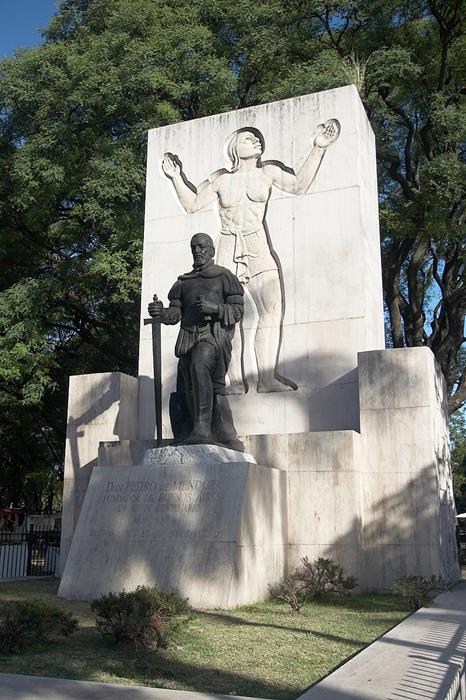
Under Spanish colonization, the governance and political structures in the Philippines underwent significant transformation. You’d notice the centralization of political power in Manila, where the governor-general acted with near-monarchical authority over military, civil, and ecclesiastical matters.
This Spanish colonial period introduced the encomienda system in 1568, giving encomenderos the right to collect tribute, although its abuse led to eventual abolition. Local leadership saw a shift from hereditary datus to colonial appointees, altering the dynamics of Filipino society.
Despite these changes, indigenous practices still persisted, creating a complex blend of old and new systems. Spanish settlements restructured communities around pueblos, changing traditional barangays. Despite the shift in power, Moro resistance against colonial rule persisted, especially in Mindanao and Sulu, where Islam had a strong foothold and local communities maintained their autonomy.
Economic and Agricultural Developments
During the Spanish colonization of the Philippines, economic and agricultural landscapes experienced significant shifts. The galleon trade turned Manila into an essential commercial hub, bridging economic interactions between the East and West.
You’ll see how the trade of Chinese silks for Mexican silver became crucial in Philippine history. However, tensions arose with the Chinese community in Manila, facing periodic violence due to Spanish distrust. The Spanish conquest introduced the Western concept of absolute land ownership, altering traditional agricultural practices. Local farmers shifted from shifting cultivation to sedentary farming, exacerbating class distinctions.
Datus claimed lands under new ownership rules, reinforced by the colonial government. Although agricultural technology evolved slowly, friars introduced new techniques, gradually changing farming practices across the archipelago.
Forced Labor and Revolts Against Spain

The polo y servicio system forced Filipino men aged 16 to 60 to provide 40 days of free labor annually for government projects such as road-building and ship construction. This practice, along with high taxes and abuses by Spanish officials, led to numerous revolts against Spain.
Some of the most notable uprisings included:
- The Dagohoy Rebellion (1744–1829) – The longest rebellion in Philippine history, led by Francisco Dagohoy in Bohol.
- The Silang Revolt (1762–1763) – Led by Diego and Gabriela Silang, this uprising in Ilocos sought independence but was suppressed by Spanish forces.
- The Cavite Mutiny (1872) – A failed rebellion by Filipino soldiers and workers that resulted in the execution of Gomburza, three priests falsely accused of sedition.
These revolts set the stage for the growing call for nationalism and independence in the 19th century.
Socioeconomic Impact of Spanish Rule
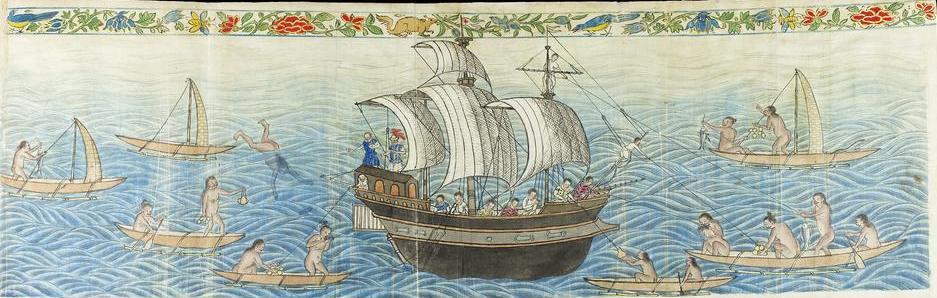
The economic shifts brought by the Spanish colonization had profound effects beyond agriculture, reshaping the very fabric of Philippine society.
You could see the socioeconomic impact through several key changes:
- Encomienda System: This tax farming system led to abuses but highlighted class distinctions by elevating the principalia class, which played a role in local governance alongside friars.
- Galleon Trade: Manila flourished as a commercial hub, strengthening the economy with the exchange of Chinese silks and Mexican silver.
- Land Ownership: Western concepts of absolute land ownership replaced traditional rights, altering agrarian structures and reinforcing class disparities.
Agricultural practices slowly evolved under Spanish influence, further entrenching class differences as new methods and crops were introduced by friars.
Resistance and Revolutionary Movements
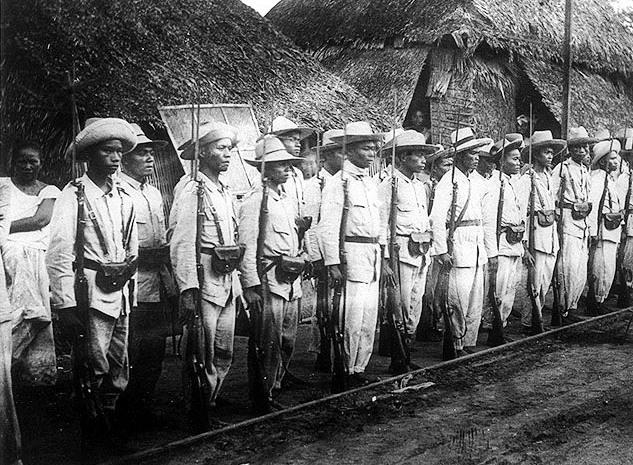
Although the seeds of resistance had been sown long before, the late 19th period marked a significant escalation in the fight against Spanish colonial rule in the Philippines.
This period saw the rise of the Philippine Revolution, where the Katipunan, founded by Andrés Bonifacio in 1892, emerged as a formidable force seeking reforms against Spanish rule.
As a Filipino leader, Bonifacio, alongside Emilio Jacinto, symbolized resistance and inspired many to join the cause for independence. The execution of José Rizal in 1896 further fueled the revolutionary fervor. By August 1896, rebellion erupted, driven by deep resentment towards Spanish governance.
The Spanish-American War in 1898 complicated the struggle, shifting the colonial power dynamics but not diminishing the fight for Filipino independence.
Final Thoughts
Spanish colonization shaped the Philippines in ways that are still evident today. It introduced Catholicism, a centralized government, European-style education, and global trade connections, but it also brought social inequalities and colonial oppression. Resistance movements sparked by Filipino revolutionaries paved the way for the eventual fight for independence.