

Kim Jong-un’s leadership of North Korea, beginning in 2011, has been defined by a harsh blend of authoritarian control, expanded militarization, and widespread human rights abuses. From purging rivals to intensifying border crackdowns, his rule has deepened the nation’s isolation and inflicted extraordinary suffering on its people.
Explore how North Korea’s third-generation dictator has fortified power through fear, secrecy, and repression—at a devastating human cost.
Key Takeaways
- Brutal purges have marked his reign, including the confirmed executions of his uncle (2013) and half-brother (2017).
- Over 120,000 political prisoners are held in camps marked by forced labor, torture, and starvation, as documented by the UN.
- Nuclear and missile tests accelerated under his rule, including a hydrogen bomb test in 2017 and over 130 missile launches.
- Food shortages and famine-like conditions persist, worsened by border closures and military spending estimated at 20–25% of GDP.
- Access to foreign media is harshly punished, and escape from North Korea has become nearly impossible under tightened surveillance.
The Deadly Legacy of Three Generations of Kim
North Korea’s political dynasty, beginning with Kim Il-sung and continued through Kim Jong-il, was rooted in a blend of personality cult, ideological rigidity, and military-first policy. Kim Jong-un has extended this legacy with modern surveillance and propaganda systems while committing acts that UN reports classify as crimes against humanity.
His government maintains strict control through political prison camps, public executions, and near-total censorship. Unlike his predecessors, Kim has incorporated digital tools into state propaganda, reinforcing regime narratives while punishing dissent with brutal efficiency.
Kim’s approach to governance mirrors Roosevelt’s belief in racial hierarchy, using systematic oppression to maintain power and control over his population.
Brutal Purges to Consolidate Power
From the start, Kim Jong-un demonstrated that loyalty alone would not guarantee survival. In 2013, he shocked the world by ordering the execution of his uncle, Jang Song-thaek, once seen as a key advisor and potential power broker. Two years later, reports emerged of Defense Minister Hyon Yong-chol being executed with anti-aircraft guns—an act designed as much for spectacle as punishment.
But the violence wasn’t limited to internal politics. In 2017, Kim’s estranged half-brother, Kim Jong-nam, was murdered with VX nerve agent in a Malaysian airport—another chilling reminder that no one was beyond the regime’s reach.
This brutal approach to leadership stands in stark contrast to historical figures like Andrew Johnson who, despite controversy over his Reconstruction policies, operated within a democratic framework.
Accelerated Nuclear Program and Missile Tests
While consolidating domestic power, Kim turned outward with an aggressive military strategy. North Korea under his leadership has conducted four nuclear tests, including a hydrogen bomb detonation in 2017. That same year, the regime launched over 20 ballistic missiles, including three capable of reaching the continental United States.
Diplomatic overtures followed. Kim shook hands with U.S. President Donald Trump in an unprecedented 2018 summit. But behind the historic photos and staged smiles, the core conflict remained unresolved. Talks collapsed in 2019, and Kim returned to missile testing and hardline rhetoric, calling his nuclear arsenal a “treasured sword” essential to national survival.
Political Prison Gulags and Public Executions
Beneath the mountainous terrain of North Korea lies a network of political prison camps, home to an estimated 120,000 people. These facilities, confirmed by satellite imagery and defector testimonies, operate in secrecy, away from foreign eyes. Here, families are imprisoned for the actions of a single relative, living under the regime’s infamous “three generations” rule.
Inside these camps, detainees face forced labor, starvation, torture, and public executions. Some are held for acts as minor as watching foreign media or trying to flee the country. These camps are not relics of the past—they are a core feature of Kim’s system of fear and punishment.
Draconian Penalties for Foreign Media and Communications
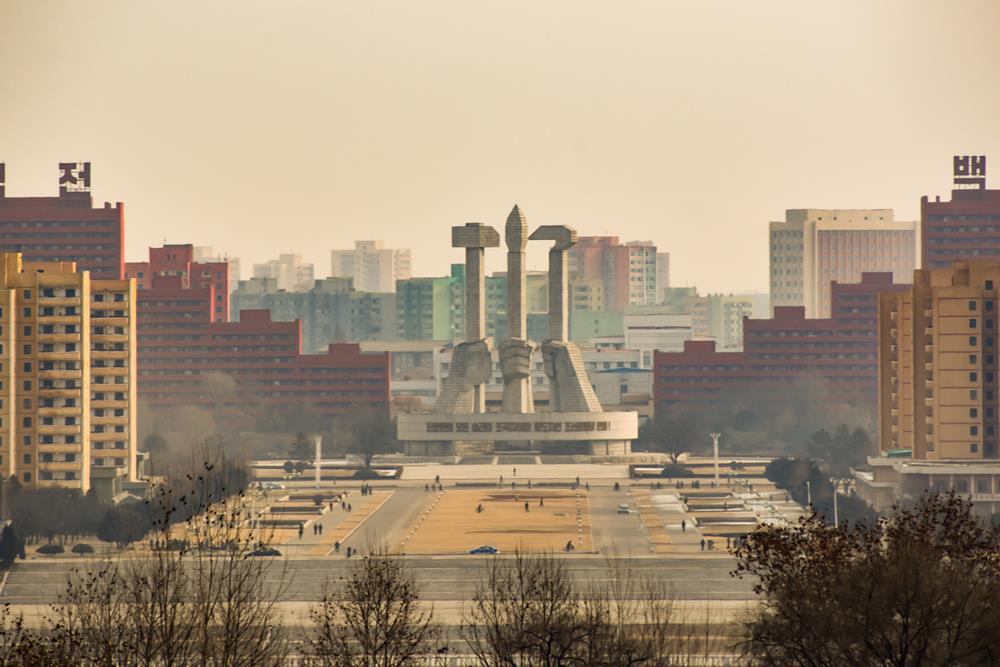
Kim Jong-un’s government exerts near-total control over information, allowing only state-run propaganda to reach citizens. Radios are locked to state frequencies, televisions show only approved content, and the internet is restricted to a tiny elite.
Still, a black market of smuggled USB drives and foreign media circulates quietly. Watching a South Korean drama or listening to foreign music can result in years of hard labor—or worse. State agents carry out random home inspections, and entire families have been punished for a single violation.
In Kim’s North Korea, even the act of asking questions about the outside world is seen as a threat to national stability.
Crackdown on Border Crossings and Escapees
In the past, some North Koreans managed to flee through China to reach safety in South Korea. But under Kim’s rule, escape has become nearly impossible. Tighter border security, increased surveillance, and pandemic restrictions have made the journey perilous. In 2021, fewer than 100 North Koreans successfully defected to the South—a historic low.
Defectors caught in China face forced repatriation, where they risk torture, forced abortions, and imprisonment. Many are never heard from again. With borders sealed and punishments intensifying, the path to freedom has narrowed to a sliver, leaving millions trapped.
Failed Diplomacy With Trump and International Isolation
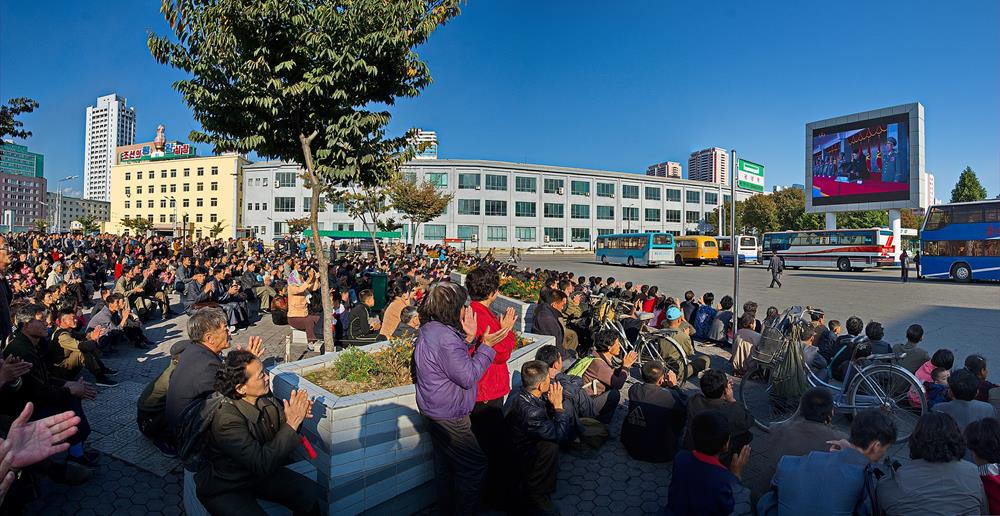
At first, Kim’s willingness to meet global leaders seemed like a turning point. His summits with Trump and South Korean President Moon Jae-in generated cautious optimism. But when negotiations failed over sanctions relief and denuclearization timelines, Kim walked away from diplomacy.
Since 2019, North Korea has rebuffed U.S. overtures, refusing dialogue with the Biden administration and deriding negotiations as “sickening.” As sanctions tighten and aid is rejected, North Korea grows increasingly isolated, with its leader betting everything on weapons and control.
Economic Collapse and Pandemic Border Closure
As the world confronted the COVID-19 pandemic, North Korea turned inward, sealing its borders completely in January 2020—not as a temporary health measure, but as an extension of its long-standing isolationist policy. For a country already under crippling international sanctions, this self-imposed lockdown pushed the economy to the brink of collapse.
Kim Jong-un’s response to the unfolding crisis revealed his regime’s true priorities. While food shortages grew increasingly dire—with a reported deficit of 1.36 million metric tons—the government continued to allocate an estimated 25% of GDP to military spending, deepening the hardship for ordinary citizens. Reports from South Korean intelligence even suggested that officials instructed people to “eat less until 2025,” a chilling reflection of the regime’s indifference to human suffering.
The border closure also tightened control over movement, cutting off key lifelines such as smuggled goods and information from China. As escape routes vanished, the number of North Koreans successfully defecting to the South fell by half during Kim’s first year in power, with fewer than 100 reaching freedom in 2021—an all-time low.
Systematic Human Rights Violations and Crimes Against Humanity
The international community has not turned a blind eye. In 2014, the UN Commission of Inquiry concluded that North Korea’s government commits crimes against humanity through a pattern of murder, enslavement, torture, and starvation. The regime was accused of using “deliberate starvation” as a tool of control—an allegation supported by years of consistent testimony and evidence.
However, North Korea remains beyond the reach of international justice. With no access for investigators and no cooperation from the regime, accountability remains elusive, even as the abuses continue.