

Kim Il-sung reshaped North Korean cinema into a potent instrument of propaganda, eliminating portrayals of capitalism, crime, and Western influence in favor of rigidly nationalistic themes. His belief in cinema’s power to indoctrinate reached extraordinary heights when his son, Kim Jong-il, orchestrated the abduction of South Korean director Shin Sang-ok and actress Choi Eun-hee to revitalize the regime’s film industry.
During their captivity, Shin introduced groundbreaking elements—such as North Korea’s first on-screen kiss—and directed Pulgasari, the country’s most internationally recognized film. Decades later, the “Eternal President’s” vision still defines a film culture designed not for entertainment, but for ideological control.
Key Takeaways
- Kim Il-sung transformed North Korean cinema into a propaganda tool, banning depictions of capitalism and Western influence while promoting nationalist themes.
- The regime used mobile film units to spread pro-communist content in rural areas, often adapting Kim Il-sung’s writings into ideological films.
- In 1978, South Korean filmmaker Shin Sang-ok and actress Choi Eun-hee were abducted by Kim Jong-il to improve North Korea’s film industry and produce state-sanctioned works.
- Shin directed films like Pulgasari and introduced cinematic innovations, including the first on-screen kiss in a North Korean film, while still under surveillance.
- Today, North Korean cinema remains tightly controlled, following Kim Il-sung’s original vision of film as a means of indoctrination rather than artistic expression.
The Birth of North Korean Cinema: From Soviet Influence to Propaganda Machine
North Korean cinema began to take shape during the Soviet occupation in the late 1940s and early 1950s, but it was under Kim Il-sung’s leadership that it evolved into a sophisticated tool for ideological indoctrination. Recognizing film’s persuasive power, Kim built upon Soviet cinematic practices to forge a uniquely North Korean propaganda model.
Early efforts mirrored Soviet methods, with mobile film units traveling to rural regions to screen Russian newsreels and pro-communist features. As the regime grew more entrenched, it banned depictions of capitalism, crime, and other “corrupting” elements deemed incompatible with socialist ideals.
Guided by Kim Il-sung’s own writings, North Korean filmmakers developed a signature style rooted in melodrama, pastoral settings, and fervent nationalism. Though socialist-themed films had existed as early as the 1920s, they failed to resonate with audiences and quickly disappeared as the regime turned inward, isolating itself from global artistic currents in favor of tightly controlled, domestically driven propaganda.
Just as the Spanish had used the power of religious orders to maintain control in the Philippines, Kim Il-sung recognized that controlling cultural media was essential to maintaining his authority.
Kim Il-sung’s Vision: Cinema as a Tool for Mass Indoctrination
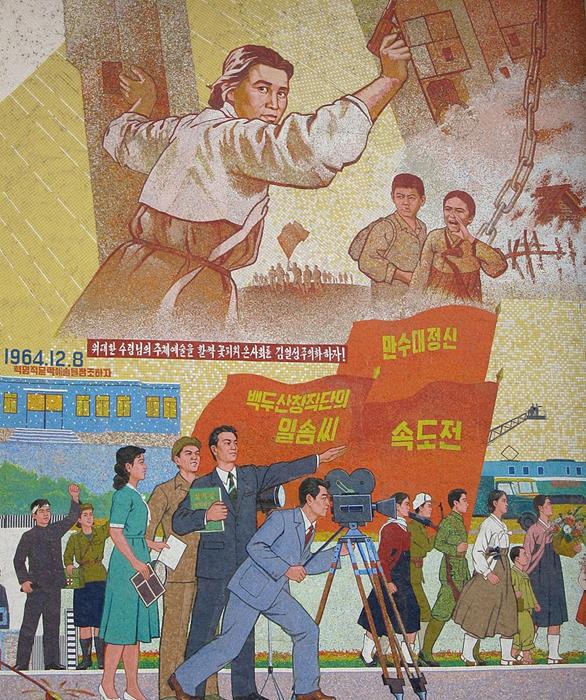
Unlike many authoritarian leaders who saw cinema merely as entertainment, Kim Il-sung recognized its profound potential as a weapon for mass indoctrination. He systematically transformed North Korean filmmaking into a propaganda machine, elevating it beyond mere diversion to become a critical vehicle for communist ideology.
Under his direction, the regime dispatched mobile film units to remote villages, ensuring even rural populations absorbed the carefully crafted messaging through Soviet newsreels and pro-communist features. Kim Il-sung’s own writings frequently became source material for films, cementing his “Eternal President” status in the national consciousness.
The regime maintained strict control by prohibiting any depictions of capitalism, crime, or “corrupting” Western influences that might undermine state ideology. Cinema wasn’t just art—it was a calculated tool for molding the perfect North Korean citizen.
His media manipulation tactics stand in stark contrast to democratic leaders like Woodrow Wilson, who used his platform to champion the Fourteen Points as the foundation for peace following World War I.
The Infamous Abduction: How Shin Sang-ok and Choi Eun-hee Were Forced to Make Films
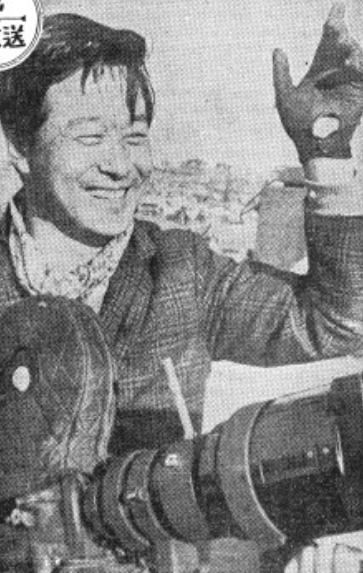
Kim Il-sung’s cinematic vision eventually evolved into one of history’s most bizarre cultural kidnapping plots. In 1978, famed South Korean filmmaker Shin Sang-ok and his ex-wife, actress Choi Eun-hee, were abducted separately in Hong Kong at the behest of Kim Jong-il, who sought to elevate North Korean cinema to international acclaim.
For eight years, the captive duo was forced to critique films and create propaganda that subtly pushed ideological boundaries. Shin’s office at Choson Film Studios became ground zero for unconventional North Korean productions like “Pulgasari,” a monster movie that introduced fresh concepts to the isolated nation’s cinema.
Their daring 1986 escape revealed Kim Jong-il’s detailed instructions through secret recordings, offering rare intelligence about the regime’s inner workings and film ambitions.
Breaking Boundaries: Shin’s Revolutionary Impact on North Korean Cinema
Kidnapped but undeterred, Shin Sang-ok sparked a cinematic revolution within North Korea’s tightly controlled film industry. You’d barely recognize North Korean films before his arrival, as they were strictly propaganda pieces without artistic merit.
Shin challenged these constraints by introducing the country’s first on-screen kiss in “Love, Love, My Love” and employing non-Korean extras in his monster film “Pulgasari.” His works depicted communist conversion naturally and featured rebellious themes, subtly pushing ideological boundaries.
The Monster Movie “Pulgasari”: North Korea’s Most Famous Film Export
In 1985, a towering, metal-eating monster named Pulgasari stormed onto screens, becoming North Korea’s most well-known cinematic export. Directed by Shin Sang-ok during his captivity, the film stands as a bizarre yet compelling fusion of forced artistry and state propaganda.
Conceived under Kim Jong-il’s close supervision, Pulgasari draws clear inspiration from Japanese kaiju films like Godzilla, but its narrative is distinctly ideological: the monster aids oppressed peasants in overthrowing a tyrannical ruler, mirroring North Korea’s revolutionary mythology.
While unmistakably a propaganda piece, Pulgasari garnered international attention for its production quality and unusual origin story. Though claims of it winning an award at the Moscow Film Festival remain unverified, the film did serve its purpose—bringing brief global recognition to a regime otherwise closed off from the cinematic world. Through Shin’s coerced direction, the North Korean state briefly succeeded in exporting its ideology under the guise of monster movie spectacle.
The Legacy of Kim Il-sung’s Film Propaganda in Modern North Korea
Although global cinema has evolved significantly since the 1950s, Kim Il-sung’s vision of film as a propaganda instrument remains deeply entrenched in North Korea’s cultural infrastructure. The ideological foundation he laid continues to define the nation’s film industry, where every production is meticulously crafted to glorify the Kim dynasty and reinforce state doctrine.
The temporary burst of creative experimentation during Shin Sang-ok’s captivity in the 1980s proved to be an exception rather than a turning point. Despite Kim Jong-il’s well-documented love for cinema—including a personal collection of over 15,000 films—his control over content stifled genuine artistic growth. Insecurity over ideological purity outweighed any interest in narrative innovation.
Today, North Korean films still mirror Kim Il-sung’s original blueprint: cinema functions not as an art form, but as a tool for indoctrination. While production quality has diminished over time, the regime’s unwavering commitment to using film for political messaging remains as firm as it was under the “Eternal President.”