

Pedro Alejandro Paterno, a name that resonates with both admiration and criticism, stands as one of the most complex figures in Philippine history. His life, marked by immense privilege, intellectual contributions, and controversial political actions, reflects the tumultuous era of the Philippine Revolution and the early years of American colonization. While often remembered for his role in the Pact of Biak-na-Bato, Paterno’s legacy is far more intricate, encompassing his work as a scholar, writer, and cultural advocate.
Early Life and Education: A Foundation of Privilege and Learning

Born on February 17, 1857, in Santa Cruz, Manila, Pedro Alejandro Paterno y de Vera Ignacio was the son of a wealthy and influential family. His father, Maximo Paterno, was a successful businessman with strong connections to the Spanish colonial government, while his mother, Carmen de Vera Ignacio, hailed from a prominent family. This privileged background provided young Pedro with opportunities that were rare for Filipinos of his time.
Paterno excelled academically at the Ateneo Municipal de Manila before continuing his education in Europe. He attended the University of Salamanca in Spain, where he earned a law degree, and later studied at the Central University of Madrid. It was during his time in Spain that Paterno became deeply involved in the Propaganda Movement, a collective of Filipino expatriates pushing for political reforms in the Philippines.
Literary Contributions: A Pioneer of Filipino Identity
Paterno’s contributions to Philippine literature are significant. He is best known for his novel Nínay, published in 1885, which is considered the first Filipino novel. Nínay aimed to highlight Filipino culture and traditions, though it often did so through a lens that romanticized Spanish influence. This work, alongside his poetry collection Sampaguitas y Poesías Varias (Jasmines and Poems), published in Madrid in 1880, helped to promote a sense of Filipino identity during a time when the nation was still under Spanish rule.
Paterno’s literary efforts were part of his broader involvement in the Propaganda Movement. Through his writings, he sought to present Filipino culture to both Spanish and Filipino audiences, fostering a sense of national pride. However, his tendency to accommodate Spanish perspectives led to criticism from some of his contemporaries, who viewed his work as overly conciliatory.
The Pact of Biak-na-Bato: Peacemaker or Betrayer?
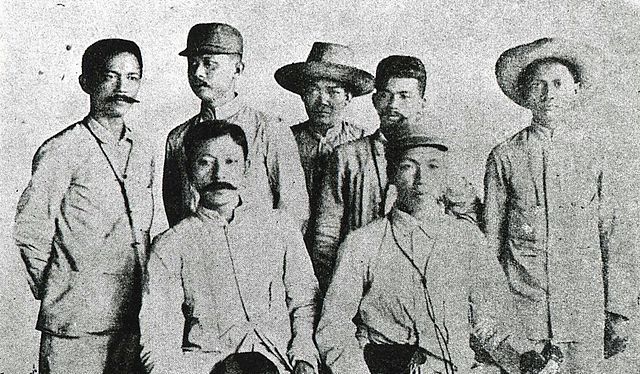
Paterno’s most significant and controversial political role came during the Philippine Revolution against Spanish rule. In 1897, he acted as a mediator between the revolutionary forces, led by Emilio Aguinaldo, and the Spanish government. His efforts resulted in the Pact of Biak-na-Bato, a temporary ceasefire that allowed Aguinaldo and other revolutionary leaders to go into exile in exchange for monetary compensation and promises of reform.
The Pact of Biak-na-Bato is a highly debated topic in Philippine history. While some view Paterno as a peacemaker who sought to protect Filipino lives, others see him as a betrayer of the revolutionary cause. The agreement was short-lived, and many revolutionaries believed it undermined their struggle for independence. Nevertheless, the pact afforded Aguinaldo the opportunity to regroup and eventually return to the Philippines to continue the fight for freedom.
Collaboration with the Americans: A Tarnished Legacy
After the Spanish regime fell and the Americans took control of the Philippines in 1898, Paterno continued to play a prominent role in the country’s political landscape. Initially supporting the First Philippine Republic, he later aligned himself with the American colonial government after the outbreak of the Philippine-American War. His decision to collaborate with the Americans further damaged his reputation among those who saw him as a traitor to the cause of independence.
Paterno served in various capacities under the American regime, including as a member of the Philippine Assembly, where he advocated for limited autonomy within the framework of American rule. His actions during this period made him a polarizing figure, with nationalist historians often condemning him as a collaborator who compromised the nation’s quest for freedom.
Cultural and Intellectual Contributions: Beyond Politics
Despite the controversy surrounding his political actions, Paterno’s contributions to Philippine culture and literature remain significant. He wrote extensively on the history and traditions of the Philippines, with works such as El Cristianismo en la Antigua Civilización Tagalog earning admiration for their depth and scholarship. Paterno’s work in preserving and promoting Filipino heritage, particularly in the context of Spanish and American colonialism, solidified his place as an intellectual figure of his time.
Legacy: A Man of Contradictions
Pedro Paterno’s legacy is one of contradictions. He was a man of immense intellect and cultural sensitivity, yet his political decisions often placed him at odds with the revolutionary ideals of his time. While some view him as a peacemaker and cultural advocate, others see him as a symbol of compromise and betrayal.
Paterno’s life serves as a reminder of the complexities faced by those navigating the path between resistance and collaboration during colonial rule. Whether regarded as a hero, a pragmatist, or a villain, his story is an integral part of the narrative of the Philippine struggle for independence.
Conclusion: The Enigma of Pedro Paterno
Pedro Paterno died of cholera on April 26, 1911, at the age of 53. His death marked the end of a life that was as illustrious as it was controversial. Today, Paterno’s contributions to Philippine literature, culture, and politics continue to be studied and debated, reflecting the enduring complexity of his character and the turbulent times in which he lived.
In the end, Pedro Paterno remains a figure who defies simple categorization—a man whose legacy is as multifaceted as the history of the nation he sought to shape.