

Eleanor Roosevelt wasn’t your typical First Lady. Born into privilege but no stranger to hardship, she transformed a traditionally supportive role into one of bold leadership and influence. Known for her strong voice on social justice, civil rights, and women’s equality, Eleanor took her position far beyond ceremonial duties, using it as a platform to advocate for those who were often overlooked. Let’s explore how she redefined what it means to be a First Lady in ways that still inspire us today.
Childhood and Early Life

On October 11, 1884, Anna Eleanor Roosevelt was born into a world of privilege and prestige, her family one of New York’s oldest and wealthiest. Yet, her childhood was anything but idyllic. Eleanor’s relationship with her mother was strained—she was nicknamed “Granny” because her mother found her unattractive and unworthy of the social spotlight. Unlike her relationship with her mother, Eleanor was close to her father, but their bond was cut short by his struggle with alcoholism and his death when she was just 10. By 15, she was left in the care of her strict grandmother, where she learned traditional values but also developed a deep empathy for the less fortunate. These early experiences shaped Eleanor’s compassion and resilience, two qualities that would later define her role as First Lady.
As a teenager, Eleanor attended Allenswood Academy in England, where she was mentored by headmistress Marie Souvestre, a strong advocate for social responsibility. Souvestre taught Eleanor that with privilege came a duty to serve, a lesson she would carry into her adult life. For Eleanor, this experience marked the beginning of a journey toward public service, one that saw her breaking conventions, advocating for civil rights, and transforming the role of First Lady from ceremonial hostess to an influential activist.
Eleanor and Franklin: A Marriage of Partnership
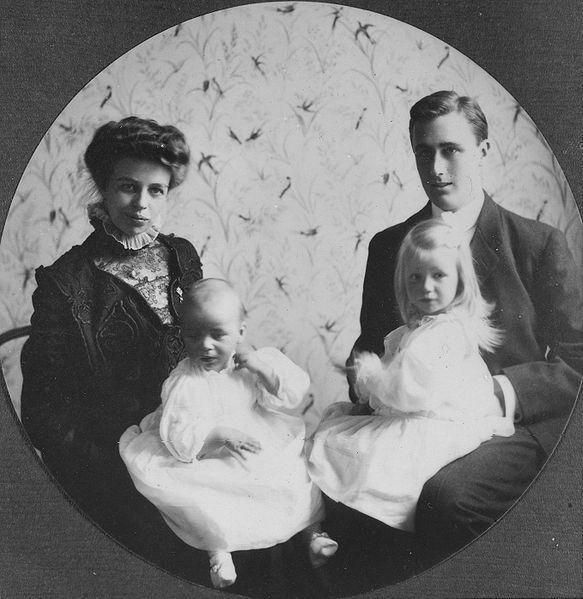
Returning to New York, Eleanor soon reconnected with her distant cousin, Franklin Delano Roosevelt. They married in 1905, beginning a partnership that would intertwine her life with the highest echelons of American politics. However, their marriage faced challenges. Franklin’s domineering mother, Sara, tried to influence every aspect of their lives, even encouraging Eleanor to abandon her social work. Eleanor, however, resisted, holding fast to her commitment to serve others.
When Franklin became Assistant Secretary of the Navy, the family moved to Washington, D.C. While Franklin was immersed in his political duties, Eleanor found herself out of place in the world of high society, preferring instead to volunteer for the Red Cross during World War I. It was during this time that Eleanor learned of Franklin’s affair with her personal assistant, Lucy Mercer. Devastated, Eleanor seriously considered leaving the marriage. However, they both knew a divorce would damage Franklin’s political future. Rather than retreat into bitterness, Eleanor sought new purpose, transforming her pain into a motivation to advocate for the voiceless.
Finding Independence: Advocate for Women’s Rights and Labor Justice
Returning to New York, Eleanor began building an independent life. She joined women’s clubs, became active in the Democratic Party, and began forging connections with other progressive women. This circle encouraged her activism and deepened her commitment to labor rights and women’s empowerment. In a pivotal moment, Eleanor co-founded the Todhunter School for Girls, where she found a love for teaching, saying, “I teach because I love it. I cannot give it up.”
When Franklin was struck by polio in 1921, he faced an uncertain political future. Franklin’s mother wanted him to retire, but Eleanor encouraged him to stay in politics. Her support was not passive; she actively campaigned for him and kept his political career alive, even as she pursued her own advocacy work. Eleanor’s independence grew, and she became a force in Democratic politics, eventually being appointed vice president of the Democratic Women’s Committee. This was a bold move in a time when women were only beginning to find their place in public life. Her early years of political engagement laid the groundwork for her transformation into an activist First Lady.
Champion of Civil Rights
Eleanor Roosevelt’s dedication to civil rights set her apart. In 1939, the Daughters of the American Revolution (DAR) refused to allow African American singer Marian Anderson to perform at Constitution Hall. Eleanor, a member of the DAR, could not condone their discrimination. Rather than remain silent, she publicly resigned from the organization and organized for Anderson to perform at the Lincoln Memorial instead. The concert drew a crowd of 75,000 people, becoming a defining moment in the fight for racial equality. This was more than just a symbolic gesture—it was a demonstration of Eleanor’s commitment to standing up for what was right, even at personal cost.
Throughout her tenure as First Lady, Eleanor visited African American neighborhoods and connected directly with marginalized communities. She used her daily column, “My Day,” to highlight the struggles of the poor and to advocate for civil rights. In her column, she was candid, voicing her belief that “freedom must be universal and all men must be assured that there will be respect for the individual human being, regardless of his race, his creed, or his color.” Her words reached millions and underscored her vision of a just and inclusive America.
Fighting Poverty and Promoting Economic Justice
Eleanor Roosevelt’s commitment to social justice was not just talk; she took real action to address poverty and economic inequality across the nation. Unlike previous First Ladies, she immersed herself in the realities of the Great Depression, traveling extensively to witness the struggles of Americans firsthand. Through her travels, Eleanor gained a deep understanding of the country’s hardships and used her influence to champion tangible change. Her empathy didn’t stop at observation; she actively pushed for reforms that would make a lasting impact.
Drawing inspiration from earlier reform movements like the Meat Inspection Act and Pure Food and Drug Act, which aimed to protect the vulnerable, Eleanor recognized that addressing poverty required concrete policies to protect the well-being of citizens. She became an outspoken advocate for FDR’s New Deal programs, working closely with him to support initiatives that brought relief to struggling families. By serving as the “eyes and ears” of the New Deal, she ensured that FDR’s policies were rooted in the realities she encountered on her visits, highlighting issues and recommending solutions based on her observations.
Eleanor also championed the National Youth Administration (NYA), a program within the New Deal focused on providing jobs and educational opportunities to young Americans. She pushed for the NYA to be inclusive, supporting women and vocational training to ensure broader access to economic growth. Unlike the Civilian Conservation Corps (CCC), which she felt was too militaristic, the NYA reflected Eleanor’s vision of empowerment through practical support and education, giving young people the tools to build a better future.
Her commitment to understanding poverty extended far beyond Washington, as she frequently visited impoverished communities to listen to people’s concerns directly. These community visits were essential in shaping her advocacy, as she could witness the everyday challenges Americans faced. With this insight, Eleanor became a public advocate for those without a voice, using her platform to ensure that their struggles were not overlooked.
Redefining the Role of the First Lady

Eleanor Roosevelt transformed the role of the First Lady, bringing her advocacy for social justice into the White House. She held press conferences, the first First Lady to do so, and invited women journalists, providing them a rare professional opportunity. She became a “woman [of influence] who speaks her political mind,” in the words of her contemporaries. Through her daily column, she openly discussed issues like racial inequality, women’s rights, and foreign policy, making her one of the most accessible and transparent figures in public office.
Eleanor’s direct engagement with the public broke new ground. She was unafraid to address controversial topics, even when her views diverged from FDR’s. In 1942, she traveled overseas to visit American troops during World War II, showing her solidarity with those fighting. Despite the physical and emotional toll, she visited hospitals and spent time with wounded soldiers, reminding them, “Every man who fights for us, is our man,” regardless of race or religion. Her visit earned her the affectionate nickname “Rover,” a testament to her unflagging commitment to her country.
Legacy of Human Rights Advocacy
After FDR’s death in 1945, Eleanor Roosevelt did not retreat from public service. Instead, her influence continued to grow. President Harry S. Truman appointed her as a delegate to the United Nations, where she played a pivotal role in drafting the Universal Declaration of Human Rights. She described this accomplishment as her “crowning achievement,” and it became a cornerstone of her legacy. Her work at the UN reflected her belief in the dignity of all people and her vision for a world committed to peace and equality.
At the United Nations, Eleanor was an outspoken advocate for civil rights, now understanding racial issues not just as social justice concerns but as integral to global human rights. She believed that the horrors of World War II underscored the need for universal standards of justice and equality, and her influence helped ensure that these values were enshrined in international law. Even after her official duties at the UN ended, she remained active in humanitarian work, tirelessly advocating for a fairer and more compassionate world.
Conclusion
Eleanor Roosevelt’s life is a testament to the power of empathy and resilience. She transformed personal hardships into a lifelong commitment to helping those who could not help themselves. As First Lady, she reshaped her role, using it to address the pressing issues of her time—from poverty and racial injustice to women’s rights and human rights on a global scale. Through her actions and words, she left a legacy of courage, proving that leadership is not defined by titles but by a willingness to serve.
Today, Eleanor Roosevelt’s legacy resonates as a reminder that each of us has the capacity to create change. Her journey from a young girl burdened by loss to an influential voice for justice and equality is a powerful example of how resilience can drive transformation. She showed the world that true leaders stand up for what is right, even when it’s difficult, and that advocacy, rooted in compassion, can bridge divides and build a better future.