

Rafael Trujillo’s authoritarian rule over the Dominican Republic from 1930 to 1961 was marked by extreme forms of self-glorification, widespread repression, and a relentless grip over cultural, political, and economic life.
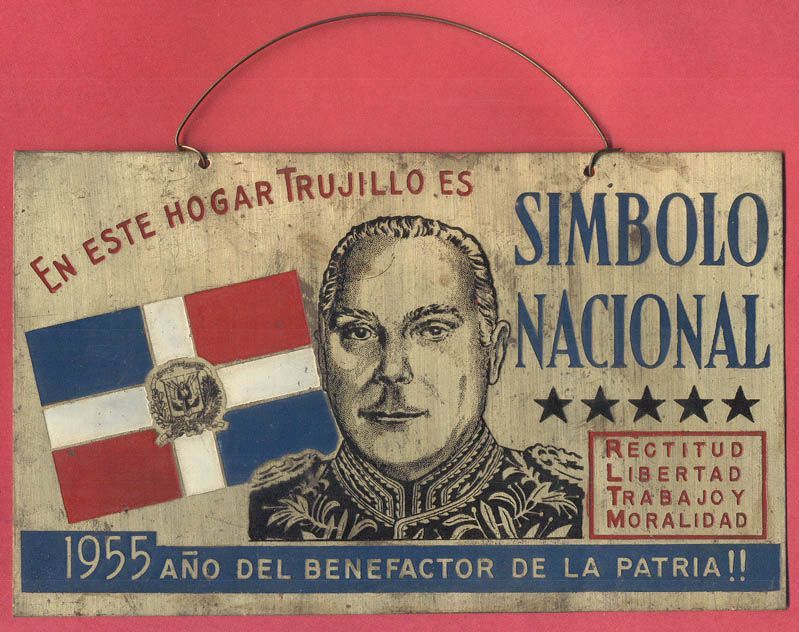
His regime left a legacy defined not only by fear and violence but by symbolic gestures that bordered on the surreal—mandating his portrait in every building, renaming cities and landmarks after himself, and curating national identity to suit his image.
Key Takeaways
- Rafael Trujillo enforced a personality cult by mandating the display of his portrait in all buildings, renaming Santo Domingo to Ciudad Trujillo, and declaring his birthday a national holiday.
- He manipulated merengue music, not by banning it outright, but by suppressing traditional styles and promoting regime-approved versions that glorified his leadership.
- Trujillo’s family dominated the government and economy, with relatives—regardless of age or experience—appointed to high-ranking positions and given monopolies over major industries.
- The SIM (Servicio de Inteligencia Militar) acted as a brutal secret police force, responsible for widespread surveillance, torture, and political assassinations both domestically and abroad.
- His regime committed international crimes, including the attempted assassination of Venezuelan President Rómulo Betancourt and the abduction of critic Jesús Galíndez from U.S. soil.
The Personality Cult: Mandatory Portraits and Self-Glorification
Few leaders constructed a cult of personality as meticulously as Rafael Trujillo. Under his rule, every public and private building was legally required to display his portrait. Citizens were compelled to refer to him with reverential titles such as “El Jefe” and “Benefactor of the Fatherland.”
Trujillo renamed numerous geographical landmarks and institutions in his honor, including the capital, which became Ciudad Trujillo in 1936—a name it retained until his death in 1961. His birthday was declared a national holiday, and lavish celebrations were held annually to reinforce loyalty. These rituals, bolstered by a propaganda machine operating across radio, newspapers, and staged public spectacles, cultivated an image of Trujillo as an infallible and divinely ordained leader.
Like Nixon, Trujillo’s leadership style demonstrated an unwavering commitment to meticulous planning and establishing firm control, with a paranoid distrust of those who might challenge his authority.
Renaming Geography: Cities, Mountains, and Landmarks Bearing His Name
Trujillo’s obsession with self-commemoration extended to the physical landscape of the Dominican Republic. In one of the most striking examples of symbolic authoritarianism, the capital Santo Domingo was renamed Ciudad Trujillo, and various streets, parks, and public institutions across the country were also given names honoring him and his relatives.
Although there were attempts to rename Pico Duarte, the nation’s tallest mountain, to Pico Trujillo, this change never took lasting hold and was reversed after his death. While the exact number of renamed locations is debated, dozens of sites were altered to reflect the regime’s dominance, functioning not as tributes to national progress, but as visual assertions of control.
His architectural control mirrored the methods of American civil governors who strategically shaped the built environment in the Philippines to establish authority during the early 1900s.
Cultural Control: The Merengue Ban and Approved Entertainment
Cultural expression under Trujillo was tightly regulated. Contrary to the notion of an outright ban, traditional merengue music—especially the rural perico ripiao style—was discouraged unless it glorified the regime. Instead, Trujillo promoted a more “refined” urban variant, notably through state-sponsored composers like Luis Alberti, to serve his political agenda.
Entertainment venues, radio stations, and theaters required official permits and operated under strict guidelines. Events frequently included visual propaganda and compulsory displays of loyalty. Cultural programming became another avenue for reinforcing Trujillo’s narrative of benevolent and singular leadership.
Family Dynasty: Nepotism and the Trujillo Empire
Trujillo’s control extended into government and commerce through rampant nepotism. His brother José Arismendy “Petán” Trujillo managed state propaganda, while his son Ramfis Trujillo was appointed to top military positions while still in his twenties. Other relatives, including his wife and children, were granted lucrative monopolies in sectors such as agriculture, industry, and transportation.
These appointments were not based on merit, and the Trujillo family systematically accumulated vast wealth by siphoning off public resources. This dynastic control destabilized the economy for ordinary citizens, exacerbating inequality while enriching the ruling elite.
The Secret Police: SIM’s Reign of Terror and Surveillance
Trujillo maintained dominance through fear, primarily via the Servicio de Inteligencia Militar (SIM). This secret police organization was responsible for widespread surveillance, arbitrary arrests, torture, and assassinations. Political dissenters were often detained in the infamous “Casa de la Tortura” (House of Torture), where brutal interrogation methods were routine.
SIM created a pervasive climate of suspicion by cultivating a dense network of informants. The agency’s methods—including wiretapping and infiltration—were modeled in part on strategies shared by international intelligence services. The result was a society in which citizens were afraid to speak openly, and even private conversations could result in violent reprisals.
Economic Quirks: Personal Fortune Amid National “Progress”
Despite showcasing large-scale infrastructure projects such as the Autopista Duarte, Trujillo orchestrated one of the most extensive personal enrichments in the hemisphere. By legally requiring businesses to display his portrait and often exacting “donations,” he redirected public funds into private accounts.
He and his family controlled major agricultural exports and public utilities, creating a virtual monopoly over the national economy. His fortune was estimated at $500 million, an enormous sum for the time, amassed while state propaganda lauded economic progress and downplayed growing inequality.
Bizarre Foreign Relations: International Assassinations and Diplomacy
Trujillo’s authoritarianism transcended national borders. His regime was implicated in several high-profile international crimes, most infamously the 1960 attempted assassination of Venezuelan President Rómulo Betancourt. The incident provoked international condemnation and led to the Dominican Republic’s expulsion from the Organization of American States.
Other covert operations included the 1956 abduction of Jesús Galíndez, a Basque exile and Columbia University lecturer, from New York, and the murder of Spanish journalist José Almoina in Mexico. These acts demonstrated the regime’s willingness to violate international law to silence critics abroad.
Daily Life Under El Jefe: Everyday Oddities of the Trujillo Era
Life under Trujillo was marked by the constant presence of authoritarian symbolism. Citizens were expected to greet each other with slogans like “¡Viva Trujillo!” and participate in government-sanctioned rituals. Military service was compulsory, and routine acts of daily life were infused with demonstrations of loyalty.
Failure to display proper reverence could result in social exclusion, loss of employment, or worse. Even cultural expressions like music and dance were regulated to align with regime narratives. In this way, everyday life became an extension of state ideology, erasing boundaries between the personal and political.
Rafael Trujillo’s dictatorship exemplifies how authoritarian rule can infiltrate every facet of a nation—from its culture and geography to its economy and daily life. His regime’s enduring legacy serves as a stark reminder of the dangers posed by unchecked power, systemic fear, and the manipulation of national identity for personal glorification.