

Antonio Luna was a remarkable figure in Philippine history. Born in 1866, he wore many hats throughout his life – soldier, scientist, musician, and journalist. Luna’s diverse talents and fiery personality made him stand out during a crucial time in his country’s fight for independence.
Luna’s life was marked by both scholarly pursuits and military service. He studied in Manila, Barcelona, and Madrid, earning degrees in pharmacy and chemistry. Later, he joined the Philippine Revolutionary Army and rose to the rank of general. His strategic mind and passionate nature made him a key player in the struggle against American colonial rule, though it also led to conflicts with other Filipino leaders.
Early Years and Education
Antonio Luna de San Pedro y Novicio-Ancheta was born in Manila on October 29, 1866. As the youngest of seven children, he grew up in a family with a Spanish mestiza mother and a traveling salesman father. From a young age, Luna showed great academic promise.
Luna’s education began at age 6 under a teacher named Maestro Intong. He excelled in his studies, earning a Bachelor of Arts from the Ateneo Municipal de Manila in 1881. He then pursued chemistry, music, and literature at the University of Santo Tomas.
In 1890, Luna traveled to Spain. There, he earned a pharmacy degree from the University of Barcelona and a doctorate from the University of Madrid. His time in Spain wasn’t all work – he fell in love with a woman named Nelly Boustead, though the relationship didn’t last.
Luna’s scientific pursuits took him across Europe. He studied at the Pasteur Institute in Paris, focusing on bacteriology and histology. He then continued his research in Belgium. His work on malaria caught the attention of the Spanish government, leading to his appointment as a specialist in tropical diseases in 1894.
Throughout his studies, Luna proved himself to be a talented scientist and researcher. His education and experiences in Europe laid the groundwork for his future contributions in various scientific fields.
From Reformist to Revolutionary
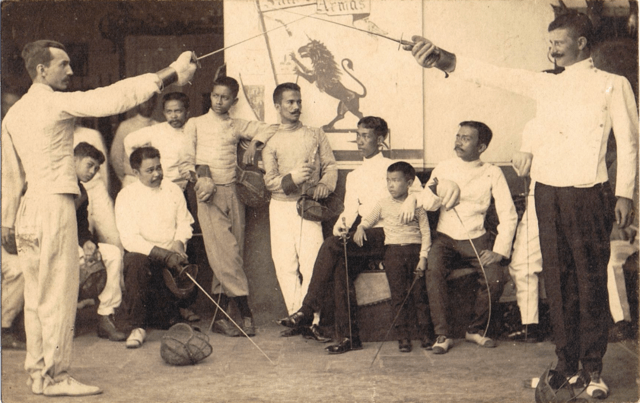
Antonio Luna’s path to revolution took an unexpected turn. In 1896, he came back to the Philippines and became the chief chemist at Manila’s Municipal Laboratory. He and his brother Juan set up a fencing club called Sala de Armas in the city.
The Katipunan, a secret group started by Andres Bonifacio, asked the Luna brothers to join. At first, they said no. They wanted slow change, not a big fight against Spain.
But things changed fast. In August 1896, Spanish officials locked up Antonio, Juan, and their brother Jose. They thought the Lunas were part of the Katipunan. Spain let Juan and Jose go, but sent Antonio to jail in Madrid.
This harsh treatment changed Antonio’s mind about Spain’s rule. He was angry about his time in jail and the death of his friend Jose Rizal. Now, he wanted to fight.
Luna got ready for battle in a smart way. He learned about war tricks, how to set up armies, and how to build forts. His teacher was Gerard Leman, a famous expert from Belgium.
Next, Luna went to Hong Kong. There, he met Emilio Aguinaldo, who led the fight against Spain. In July 1898, Luna came back to the Philippines to join the war.
Key Points:
- Luna worked as a chemist and started a fencing club
- Spanish officials wrongly jailed him
- His views changed after jail and his friend’s death
- He learned about war from a top teacher
- Luna met rebel leader Aguinaldo in Hong Kong
- He returned to the Philippines to fight in 1898
General Antonio Luna: Military Leader and Reformer

Antonio Luna played a key role in the Philippine-American War as a military commander and strategist. He rose to the rank of Brigadier General in September 1898, taking charge of war operations. Luna pushed for better military discipline and organization among Filipino troops.
Luna recognized the need for formal military training. He started what later became the Philippine Military Academy in October 1898. This school aimed to teach proper tactics and strategy to Filipino soldiers. However, it only operated for a few months before war broke out.
As a military leader, Luna was:
- Strict about discipline
- Focused on improving troop organization
- Skilled in military science and tactics
- Knowledgeable about field fortifications
Luna clashed with other Filipino leaders over strategy. He wanted to secure Manila when Spanish forces left, but was overruled. This decision later proved costly as American forces took control of the city instead.
Luna’s military expertise included:
- Guerrilla warfare tactics
- Field fortification techniques
- Troop training methods
- Strategic planning
Despite his skills, Luna faced challenges in reforming the Filipino military. Many soldiers were used to looser guerrilla-style fighting. Luna’s strict approach sometimes caused friction with troops and other officers.
Luna warned Filipino leaders about American intentions. He pushed for a stronger stance against U.S. forces setting up colonial rule. His outspoken views on military and political matters put him at odds with some other Filipino officials.
The Philippine-American War

The conflict saw fierce battles between American and Filipino forces. General Luna led troops against the Americans at La Loma, facing heavy fire from both land and sea. Filipino soldiers suffered many casualties in this engagement.
A Filipino attack on February 23 made some progress but fell apart due to internal disputes. Troops from Cavite refused Luna’s orders, saying they would only follow Aguinaldo. This led to tension between Luna and his men.
Luna faced many challenges with his troops’ lack of discipline. After more problems, he quit his position. Aguinaldo accepted his resignation at first. But as the war worsened for the Filipinos, Aguinaldo asked Luna to return as commander-in-chief.
Luna then created a smart defense plan. He built a network of trenches made from bamboo across the jungle. These trenches had traps like spikes and snake pits to slow down the Americans. Filipino soldiers could shoot from these hidden spots and quickly escape into the thick jungle.
This “Luna Defense Line” aimed to hold off the Americans while the Filipinos set up mountain bases for guerrilla fighting. It showed Luna’s skill in coming up with clever battle tactics to make up for his army’s weaknesses.
Plots and Whispers
Tensions simmered within the revolutionary army. Some officers resented General Antonio Luna’s strict leadership style. His brother Joaquin, a colonel, warned him of a plot against his life. Luna brushed off these concerns, trusting in President Emilio Aguinaldo’s protection.
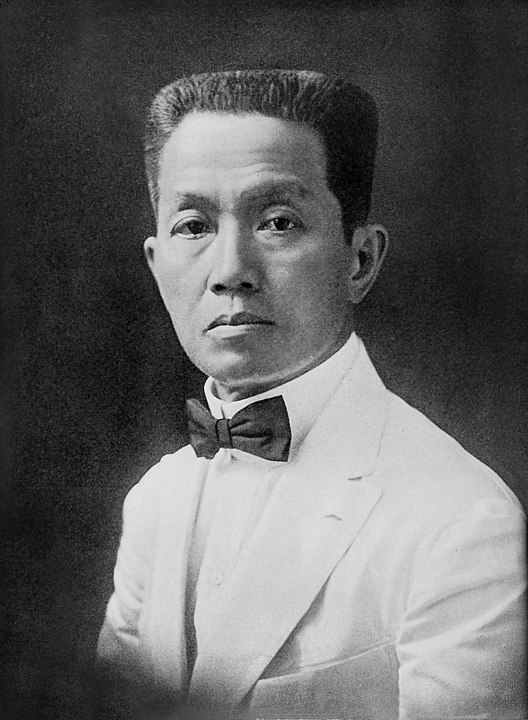
On June 2, 1899, Luna got two important messages. One called him to fight the Americans. The other, from Aguinaldo, summoned him to Cabanatuan. The new Philippine government was forming there, 120 km north of Manila. Luna saw a chance to become Prime Minister.
He set out with 25 cavalry escorts. But travel problems left him with just two officers when he reached Cabanatuan:
- Colonel Roman
- Captain Rusca
Luna’s troops stayed behind. This left the general exposed as he entered a tense political situation.
Key figures in Cabanatuan:
| Name | Role |
|---|---|
| Emilio Aguinaldo | President |
| Apolinario Mabini | Former Prime Minister |
| Presidential Guard | Aguinaldo’s security |
Luna walked into a complex web of rivalries and ambitions. His fate hung in the balance as he met with the revolutionary leadership.
Death of Antonio Luna
Antonio Luna met a violent end on June 5, 1899 in Cabanatuan. The 32-year-old general went to government headquarters alone to meet with President Aguinaldo. Instead, he found a man he had once punished for cowardice. This person told Luna the meeting was off and Aguinaldo wasn’t there.
Angry, Luna started to leave when a gunshot rang out. As he rushed downstairs, he ran into an officer he had fired earlier. This officer hit Luna on the head with a blade. Soon, more soldiers attacked the wounded general. Luna tried to fight back with his gun but missed. The troops stabbed him many times, leading to his death.
The killing of Luna raised questions about who was behind it and why. Some wondered if there was a plot against him. No formal investigation or trial ever took place to find answers.
Lasting Impact
Antonio Luna’s death marked a turning point in the Philippine-American War. His loss proved devastating for Filipino forces, who suffered repeated defeats afterwards. Luna’s strategic genius and military leadership were irreplaceable.
Many historians view Luna as a heroic figure in Philippine history. His bravery and dedication to independence are widely admired. Luna’s legacy extends beyond his military career. He made contributions to journalism, literature, and science.
As a writer, Luna used the pen name “Taga-Ilog.” His articles critiqued colonial rule and advocated for reforms. In science, Luna trained as a pharmacist and chemist. He conducted research in Europe before returning to the Philippines.
Luna’s life has inspired various works:
- Books examining his role in the war
- A 2015 biographical film
- Portrayals in historical documentaries
Some compare Luna to other Filipino heroes like Jose Rizal. Both were intellectuals who fought for their country’s freedom. Luna’s brother Juan was also a famous painter.
Today, streets, plazas, and schools across the Philippines bear Antonio Luna’s name. His image has appeared on stamps and currency. Luna remains an important symbol of Filipino patriotism and resistance against foreign occupation.