

In 1982, Zimbabwe’s first president Canaan Banana enacted a peculiar law making it illegal to mock his surname. The legislation prohibited puns, jokes, and references that might ridicule his name, creating challenges for journalists who had to carefully craft their reporting.
While this quirky decree drew attention, Banana’s presidency ultimately ended in disgrace from sexual assault allegations rather than name-related controversies. His relationship with Robert Mugabe and subsequent criminal conviction reveal a much darker legacy beyond this unusual law.
Key Takeaways
- Canaan Banana became Zimbabwe’s first president in 1980, holding a largely ceremonial role while Robert Mugabe exercised real executive power as Prime Minister.
- In 1982, an unofficial policy discouraged mockery of Banana’s surname, leading to self-censorship among journalists, though no formal law explicitly banned such jokes.
- Banana’s presidency ended in 1987, and he was later convicted in 1997 on 11 counts of sodomy and indecent assault, following allegations of coerced sexual acts with male subordinates.
- A murder trial involving Banana’s former bodyguard revealed a pattern of abuse, triggering public scandal and shifting focus from his unusual censorship policies to serious criminal misconduct.
- Banana’s legacy is overshadowed by scandal and Mugabe’s long rule, with his name-related censorship remembered more as an oddity than a defining political achievement.
The Birth of Zimbabwe and Banana’s Rise to Power
Zimbabwe emerged on the global stage in 1980 with the installation of Canaan Banana as its first president. While Robert Mugabe would go on to dominate the nation’s political narrative for decades, it was Banana who initially held the ceremonial presidential title in the newly independent state.
Despite his position, real executive authority resided with Prime Minister Mugabe, who directed the country’s early political and economic strategies amid mounting post-independence challenges. Beneath the surface, political tensions simmered as Zimbabwe worked to establish a cohesive national identity.
Banana’s tenure is remembered less for policy achievements and more for an unusual directive aimed at shielding his surname from public ridicule. This informal but widely acknowledged censorship effort became one of the most peculiar episodes of his presidency—overshadowed only later by personal scandals that would irreparably damage his legacy.
His leadership approach differed greatly from the military modernization philosophies of figures like Leonard Wood, who transformed colonial governance through infrastructure and education reforms in places like Cuba and the Philippines.
Who Was Canaan Banana: The Man Behind the Unusual Name
Born in 1936 to a Ndebele family in Southern Rhodesia, Canaan Sodindo Banana would become a prominent figure in Zimbabwe’s transition from colonial rule to independence. A Methodist minister, theologian, and nationalist, Banana played a symbolic role in the birth of the new republic, becoming its first president in 1980 as Zimbabwe emerged from British colonial governance.
Though initially seen as a unifying figure, Banana’s legacy was eventually marred by scandal. His presidency, largely ceremonial, concluded in 1987 when Robert Mugabe assumed full executive authority. However, his fall from grace came later, in the late 1990s, when allegations of sexual assault and coerced relationships with male subordinates led to his conviction on multiple counts of sodomy and indecent assault.
Banana is perhaps most famously associated with a 1982 directive—widely reported though not formally codified—that discouraged public mockery of his surname. This peculiar attempt to censor ridicule highlighted his sensitivity to personal insult but would ultimately become a footnote in a career overshadowed by far more serious allegations.
Like Andrew Jackson, Banana had a volatile temper that often manifested when he perceived insults to his dignity or name.
The Infamous 1982 Anti-Mockery Law
One of the most peculiar episodes in Zimbabwe’s early post-independence history occurred in 1982, when President Canaan Banana became the subject of an unusual censorship directive aimed at prohibiting mockery of his surname. Though no formal legislation has been found in the public legal record, journalists and editors widely reported that even lighthearted puns or casual references to Banana’s name could provoke state scrutiny or disciplinary action.
This informal yet powerful restriction created a chilling effect across the media landscape. In one notable instance, a journalist was reportedly cautioned by an editor simply for writing that someone should “contact Banana”—a phrase deemed risky under the climate of enforced sensitivity. While the directive did not address political criticism, it effectively criminalized linguistic humor, turning Banana’s name into a protected symbol of presidential dignity.
What stands out is the absence of organized public resistance. The restriction remained in effect throughout Banana’s presidency, fading only after his departure and as attention shifted toward the far more serious criminal scandals that would later define his legacy. This bizarre chapter in Zimbabwean political life remains a striking example of how state power can be wielded—even to shield a name from ridicule.
Journalistic Challenges: Reporting on President Banana
Reporting on President Canaan Banana came with an unusual obstacle: navigating the informal ban on mocking his surname. Journalists routinely self-censored, meticulously avoiding accidental puns that could be interpreted as ridicule.
In one case, an editor warned a writer that even the phrase “contact President Banana” might breach the unwritten rule. Such caution became standard, even in routine coverage.
Though the restriction didn’t target political criticism, the line between humor and offense remained blurry. This odd constraint outlived Banana’s presidency, complicating journalistic coverage well beyond his time in office—until far more serious scandals ultimately overshadowed it.
The Power Dynamic: Banana and Mugabe’s Relationship
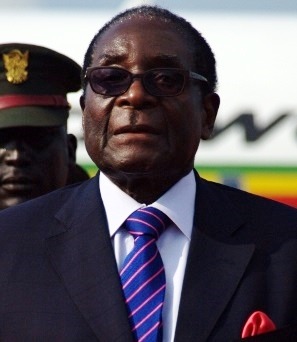
Although Canaan Banana technically held Zimbabwe’s first presidential office, Robert Mugabe’s shadow loomed large throughout his administration. You’d have noticed Banana’s gradual loss of power during the 1980s as his role became increasingly ceremonial while Mugabe tightened his grip on the country’s affairs.
What began as a partnership quickly evolved into Mugabe’s consolidation of control. Banana found himself relegated to figurehead status while Mugabe, as Prime Minister, made the decisions that shaped Zimbabwe’s future. By the late 1980s, the power imbalance was complete.
Even Banana’s unusual law prohibiting mockery of his surname lost relevance as Mugabe ascended. After Banana left office, personal scandals overshadowed his legislative quirks, and Zimbabwe’s attention turned fully to Mugabe, who’d dominate the nation for three more decades.
When Humor Becomes Illegal: Enforcement of the Name Protection
What made this decree particularly unusual was its narrow focus – only protecting Banana’s name rather than shielding his broader presidential actions from criticism.
The post-presidency implications of this law remained ambiguous, as Zimbabwe’s attention shifted to Banana’s more serious scandals, particularly allegations of homosexual assault, after he left office.
The protection of a name deemed inherently comedic created a peculiar chapter in Zimbabwe’s legal history.
The Bodyguard Scandal That Changed Everything
Canaan Banana’s public downfall began with a shocking murder tied to a deeper, hidden scandal. One of his former bodyguards, provoked by a policeman’s taunts about being Banana’s “homosexual wife,” fatally retaliated—triggering a trial that would expose a disturbing pattern of abuse.
In court, the bodyguard denied the relationship but revealed coerced sexual encounters, prompting a wave of similar accusations. Banana was soon charged with eleven counts of sodomy and indecent assault, and even his wife, Janet Banana, confirmed aspects of the allegations, reinforcing their credibility.
What started as an isolated act of violence quickly escalated into a national reckoning. The scandal shifted focus from Banana’s odd name-censorship efforts to criminal behavior concealed by presidential power, marking a dramatic and disgraceful end to his once-symbolic role in Zimbabwe’s history.
From Presidential Immunity to Criminal Conviction
Canaan Banana’s presidential stature ultimately collapsed under the weight of serious criminal allegations. In a striking blow to his defense, his wife Janet Banana supported elements of the prosecution’s case during the trial—an extraordinary shift that underscored how swiftly power and reputation can unravel when confronted by legal accountability.
Following his departure from office, Banana was convicted on eleven counts of sodomy and indecent assault, marking a dramatic fall from grace for Zimbabwe’s first president. The irony was widely noted: a leader once known for censoring jokes about his name now faced genuine criminal charges of a far more serious nature. His conviction permanently overshadowed the peculiar 1982 name-protection policy, redirecting public scrutiny to the disturbing realities of his personal conduct.
Legacy of Zimbabwe’s First President Beyond the Name
Canaan Banana’s legacy is a complex and often overshadowed chapter in Zimbabwean history. While his widely reported anti-mockery directive drew attention for its oddity, it was narrowly focused on shielding his surname from ridicule—not suppressing broader political dissent. Initially viewed as a symbolic figure in the country’s transition to independence, his presidency ultimately unraveled under the weight of sexual abuse allegations that emerged years after he left office.
Public perception of Banana shifted dramatically following the murder trial of a former bodyguard, which brought to light a disturbing pattern of coercion and misconduct. The revelations shattered any remaining reverence tied to his role as the nation’s first president.
Today, Banana’s influence is largely eclipsed by Robert Mugabe, whose three-decade rule reshaped Zimbabwe’s political landscape. In retrospect, Banana’s name-protection policy is remembered as a curious aside—an unusual footnote to a legacy marred by scandal and dwarfed by the far-reaching consequences of Mugabe’s authoritarian leadership.