

Muammar Gaddafi, who ruled Libya from 1969 to 2011, presided over one of the most unconventional and controversial regimes in modern history. His leadership was defined by a blend of radical political theories, bold infrastructure projects, and theatrical displays of power that often defied international norms. Driven by a desire to challenge Western dominance and redefine governance, Gaddafi implemented a series of policies that reflected both ideological ambition and authoritarian control.
His legacy, shaped by initiatives such as the Green Book, the Great Man-Made River, and a pan-African vision, continues to provoke debate among historians and political analysts alike.
Key Takeaways
- Gaddafi’s Green Book outlined a “Third Universal Theory” promoting direct democracy and rejecting both capitalism and communism.
- His “Amazonian Guard”, an all-female bodyguard unit, symbolized both female empowerment and regime propaganda, though later allegations of abuse emerged.
- The proposed gold-backed dinar aimed to free African economies from Western currencies, sparking concern among global powers.
- The Great Man-Made River was a massive irrigation project that demonstrated engineering prowess but was also criticized as a vanity project.
- Gaddafi pursued a pan-African vision, including a unified currency and the African Union, seeking to position himself as a continental leader.
The Green Book: Gaddafi’s Manifesto for a “Third Universal Theory”
Central to Gaddafi’s ideological framework was The Green Book, which proposed a “Third Universal Theory” intended to replace both capitalism and communism. This manifesto emphasized direct democracy through popular committees, rejecting conventional parliamentary systems. It further advocated for the abolition of professional armies and monetary systems, promoting economic self-reliance and civilian defense forces instead.
The Green Book became a pillar of Libyan life, incorporated into school curricula and government policy. Despite these efforts, its influence remained largely confined to Libya, failing to gain significant traction abroad.
Unlike the Abbasid Caliphate’s expansion, Gaddafi’s ideological influence remained largely confined to Libya’s borders rather than spreading across vast territories.
The Amazonian Guard: Elite Female Bodyguards and Their Symbolism
Among the many eccentric features of Muammar Gaddafi’s rule, few drew as much international attention as his all-female bodyguard unit, known as the “Amazonian Guard.” These women were more than just a security detail; they functioned as a highly visible extension of Gaddafi’s carefully curated image, blending spectacle with symbolism.
Reportedly handpicked by Gaddafi for their physical appearance and loyalty, members of the guard underwent intensive weapons training, along with instruction in psychological defense and close protection tactics. Their uniforms—typically military-style attire paired with high heels—became iconic representations of Gaddafi’s theatrical leadership style and drew widespread media fascination.
Western press coverage often portrayed the unit as an exotic and provocative feature of Gaddafi’s regime, further reinforcing his international mystique. However, serious allegations later surfaced, with multiple former guards claiming they were subjected to sexual abuse and coercion by Gaddafi and members of his inner circle. These accusations cast a dark shadow over what was publicly framed as a symbol of female empowerment.
Much like Princess Alice, these female bodyguards shaped cultural perceptions by challenging traditional gender roles while simultaneously becoming symbols of the contradictions of their era.
The Gold Dinar Plan: Challenging Western Financial Dominance
In addition to his unconventional domestic policies and symbolic displays, Muammar Gaddafi advanced a bold economic initiative that aimed to undermine Western financial dominance. His proposal to introduce a gold-backed dinar was designed as a pan-African currency that would reduce the continent’s reliance on the U.S. dollar and euro, thereby promoting regional financial autonomy.
Supported by Libya’s significant gold reserves, the plan envisioned a currency system that would enable African nations to trade among themselves using a stable, asset-backed medium of exchange. Such a move posed a direct challenge to the established global monetary order, especially to Western economies that had long benefited from the dominance of their currencies in international markets.
While the plan never advanced beyond the proposal stage, it sparked widespread debate. Some analysts and commentators have suggested that the initiative contributed to growing tensions between Libya and Western powers, with speculation that it may have been one of the factors behind the NATO-led intervention in 2011. Although unproven, this theory underscores the perceived geopolitical threat that Gaddafi’s vision of African economic sovereignty represented.
The Great Man-Made River: Engineering Marvel or Monument to Ego
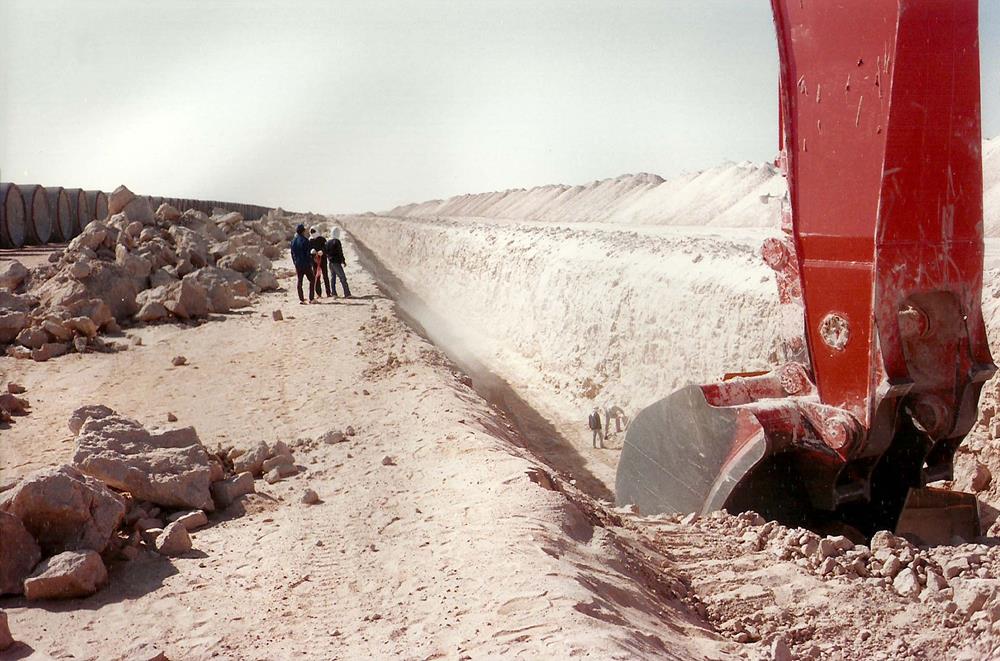
One of Muammar Gaddafi’s most enduring and visible legacies lies beneath the sands of the Libyan desert—the Great Man-Made River, an ambitious infrastructure project designed to transport freshwater from deep underground aquifers in the south to population centers along the northern coast. Completed in stages and officially inaugurated in 2010, the project was hailed as a technical triumph.
Engineered to draw from the Nubian Sandstone Aquifer, the system became the world’s largest irrigation project, consisting of:
- Over 1,300 miles of pipelines
- Approximately 5 million concrete segments
- More than 1,300 wells tapping into fossil water reserves
- A vision to transform arid regions into agricultural hubs
Gaddafi promoted the initiative as a means to achieve food security and showcase Libya’s technological self-sufficiency. It became a symbol of national pride, demonstrating the country’s ability to undertake large-scale infrastructure without foreign assistance.
However, the project also attracted significant criticism. While it undeniably improved access to water, many viewed it as a vanity undertaking that diverted funds from more urgent needs, such as healthcare, housing, and basic public services. Critics argued that the billions spent on the river could have been more equitably invested in improving the daily lives of ordinary Libyans.
In the eyes of many, the Great Man-Made River encapsulated the dual nature of Gaddafi’s leadership—grandiose in vision but flawed in prioritization, blending national development with personal glorification.
Pan-African Vision: Gaddafi’s Dream of a United States of Africa
As Muammar Gaddafi consolidated power within Libya, his political ambitions extended far beyond national borders to encompass the entire African continent. At the heart of his international agenda was a bold vision to create a “United States of Africa”—a unified political and economic bloc capable of asserting independence from Western influence.
Gaddafi played a key role in the formation of the African Union (AU) in 2002, viewing it as a foundational step toward deeper continental integration. He advocated for a range of initiatives including a gold-backed African dinar, which he believed could replace the U.S. dollar in intra-African trade and serve as a catalyst for economic sovereignty.
To advance this vision, Gaddafi invested Libya’s oil wealth in financing liberation movements, supporting political allies across the continent, and calling for the establishment of shared institutions such as an African Central Bank, a continental military force, and a common currency.
While some African leaders embraced elements of his agenda, others remained skeptical of his motives, wary that his pan-African rhetoric masked aspirations for regional dominance. Despite these divisions, Gaddafi’s efforts contributed to heightened discourse around African unity and independence, and remain a notable part of his legacy.
His pan-African vision exemplified both his grand geopolitical ambitions and the controversial methods he used to pursue them—seeking to transform Africa into a self-reliant global power, resistant to foreign intervention and economic exploitation.
Bedouin Tents and International Diplomacy: Defying Protocol
Muammar Gaddafi’s approach to international diplomacy was as unorthodox as his domestic policies, marked by a blend of symbolism, spectacle, and defiance of convention. Three of the most striking features that defined his global presence were his elaborate Bedouin tents, his all-female security detail, and his frequent disregard for diplomatic protocol.
During state visits—from Nigeria to Paris to Rome—Gaddafi insisted on staying in a traditional Bedouin tent, which he had pitched on embassy grounds or in public parks. These tents were not merely practical shelters; they carried deep cultural significance, representing his tribal heritage and nomadic identity. By bringing this symbol into the heart of foreign capitals, Gaddafi aimed to assert Libya’s cultural independence and challenge Western expectations.
Accompanying him was the Amazonian Guard, his elite unit of female bodyguards, whose striking presence and uniforms further heightened the media spectacle. Together, these elements transformed routine diplomatic engagements into theatrical displays of power and identity.
Abolishing Traditional Government: The Jamahiriya Experiment
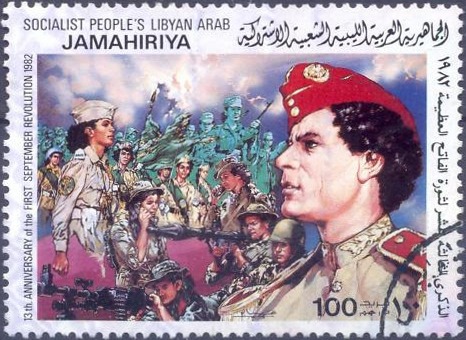
In 1977, Muammar Gaddafi implemented one of his most radical political reforms by dismantling Libya’s existing governmental framework and establishing the Jamahiriya, an Arabic term meaning “state of the masses.” This new system, rooted in the principles laid out in his manifesto, The Green Book, sought to replace both Western liberal democracy and Soviet-style communism with a model of direct governance through people’s congresses and local committees.
While the structure appeared to promote grassroots participation, in practice it functioned as a sophisticated mechanism for centralized control. Libyans were encouraged to take part in these local assemblies, but real authority remained firmly in Gaddafi’s hands. The vast network of people’s committees served largely as a political façade, masking an authoritarian regime beneath the rhetoric of participatory democracy.
This system endured for nearly four decades, reflecting Gaddafi’s ability to rebrand autocracy as revolutionary governance. The Jamahiriya allowed him to consolidate power, suppress dissent, and bypass traditional institutions, all while claiming to empower the populace.
A Rule Defined by Contradictions
Muammar Gaddafi’s four-decade rule was defined by a relentless pursuit of ideological innovation and political control, often wrapped in the language of revolution and liberation. From the utopian promises of the Green Book to the spectacle of the Amazonian Guard, and from the engineering marvel of the Great Man-Made River to the pan-African dream of unity, Gaddafi cultivated a persona that was as visionary as it was authoritarian.
His legacy remains one of paradox and controversy—a regime that claimed to uplift the masses while concentrating power in the hands of one man. Ultimately, Gaddafi’s ambitions to reshape Libya and Africa left behind a complex history of grand designs, symbolic defiance, and deep-rooted contradictions that continue to resonate long after his fall.