

Imagine it: towering mountains, relentless snowstorms, and winding paths cut through sheer cliffs. In the year 218 BCE, an audacious Carthaginian general named Hannibal Barca led his army, including war elephants, over the treacherous Alps—a journey so improbable that it altered the course of history. This was no ordinary military maneuver but a masterstroke that sent shockwaves across the Roman Republic, challenging their dominance and resilience. Hannibal’s crossing of the Alps wasn’t just a geographical feat; it was a bold psychological blow that reshaped the Second Punic War. Let’s unravel this journey, understand the strategic genius behind it, and explore how it changed everything for Rome.
Hannibal’s Strategic Vision
Hannibal’s decision to take his forces through the Alps was daring, even by ancient standards. Born into a family that had clashed with Rome, he inherited both a deep-seated enmity for the republic and a gift for strategy. But Hannibal wasn’t just fighting to match Roman might; he was determined to outthink them. He recognized that he had to make a move so unpredictable that Rome would be forced to play defense, adjusting to his terms. His strategic vision was built on understanding not just the battlefield but the psychology of his enemy. His approach is a lot like the influence of social issues on elections—understanding the mood and sentiments of the people can shift the outcome in surprising ways.
The crossing of the Alps was an audacious way to defy Roman expectations. Hannibal bypassed the predictable routes, such as a direct attack via the Mediterranean, where Rome’s navy reigned supreme. Instead, he led his troops northward from Spain, through Gaul, and into the heart of Italy via the seemingly impassable Alps. By doing so, he effectively bypassed Rome’s fortified borders and caught them completely off guard. Hannibal’s journey was a calculated gamble, but he understood that a successful crossing would give him the advantage of surprise—a move that would be studied and admired by military strategists for centuries to come.
The Treacherous Route Through the Alps
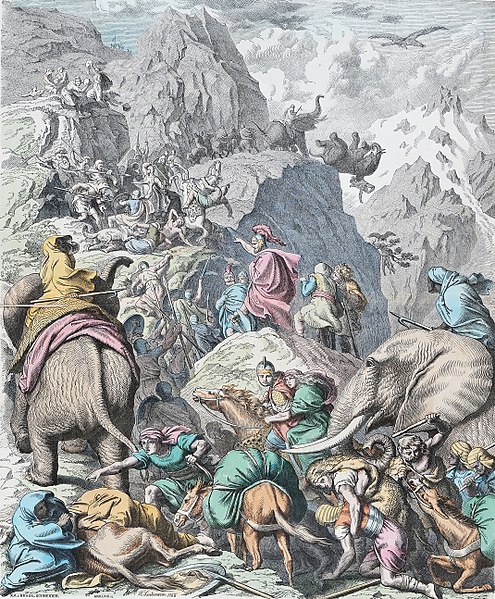
The Alps presented Hannibal’s army with some of the most treacherous terrain in Europe. Towering, snow-covered peaks, narrow passes, and freezing temperatures were daily challenges. This was no place for an army, let alone one accompanied by war elephants. The journey required grit, resilience, and ingenuity at every step.
Yet, Hannibal saw these mountains as a path to glory. Knowing that locals had used these routes for centuries, he sought guidance from local tribes, striking deals with some, battling others. But even with guidance, the terrain was unforgiving. With the threat of sudden rockslides and paths so narrow they forced men and animals to move single file along steep cliffs, the Alps seemed determined to resist this foreign army’s advance.
This level of strategic maneuvering is similar to the careful planning we see in important historical events, like failed presidential assassination attempts, where knowing the environment and anticipating every possible challenge is crucial. Hannibal had to adjust his plans on the fly, dealing with unpredictable weather that could shift from clear skies to snow-laden storms in an instant.
Snowstorms and biting winds battered Hannibal’s men, making each step a grueling feat. The icy landscape was alien to his North African soldiers, who had never experienced such relentless cold. Some days, the only markers were natural landmarks visible between gusts of snow. When paths disappeared under fresh snow or landslides, the soldiers were forced to rely on sheer willpower. Through these obstacles, Hannibal’s leadership kept his troops together, demonstrating a level of determination and adaptability that would go down in history.
Challenges Faced by the Army
As if the Alpine terrain weren’t enough, Hannibal’s troops faced a host of other grueling challenges. With limited supplies, feeding the army became a daily struggle. Starvation loomed as supplies dwindled, and many men were reduced to scouring the landscape for anything edible. Every day was a test of endurance, and every step brought them closer to Italy but further from the safe supply lines they’d left behind in Gaul.
Hannibal’s army also had to contend with local tribes that saw them as a threat. Though some tribes offered guidance in exchange for peace, others mounted attacks, raiding supply lines and harassing the soldiers at every opportunity. Trusting local guides was risky; some tribes led them down perilous paths or demanded protection money. Hannibal’s journey became a war within a war, forcing him to negotiate, fight, and adapt continuously.
Without accurate maps, the soldiers often had to rely on local knowledge to navigate. Every decision Hannibal made mattered. A wrong path could trap his army in a deadly ravine or lead them into an ambush. But despite every setback, Hannibal’s relentless determination inspired his soldiers to push forward, inching closer to their goal.
The Role of War Elephants
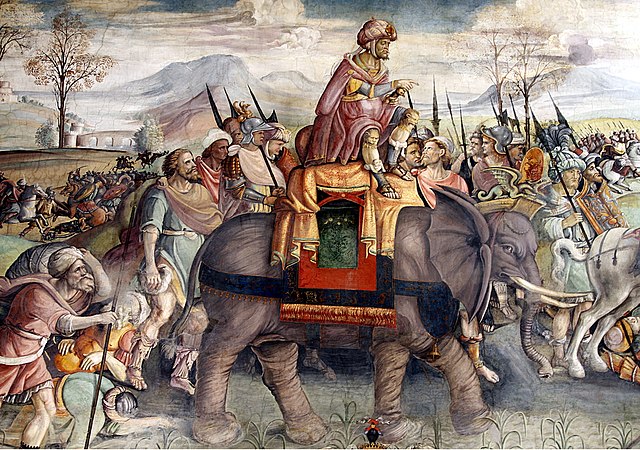
Perhaps the most memorable part of Hannibal’s army was his use of war elephants. Imagine the sight: these towering creatures, trudging through snow and ice, cutting an imposing figure as they made their way over steep paths. The elephants were more than just war animals—they were symbols of Carthage’s strength and Hannibal’s indomitable spirit. But moving such large animals over rugged terrain required tremendous logistical planning.
Ensuring the elephants were fed and rested was no easy feat in the Alps. They weren’t accustomed to the harsh conditions, and some didn’t survive the crossing. However, the psychological effect these creatures had on Roman forces later would prove invaluable. War elephants were practically unknown in Roman warfare, and their sight on the battlefield was as terrifying as it was awe-inspiring. By leading them over the Alps, Hannibal turned them into a psychological weapon, a signal to Rome that Carthage had brought the fight to their doorstep.
Impact on Roman Morale and Strategy
Hannibal’s successful crossing had a profound effect on Roman morale. The appearance of a Carthaginian army within Italy, led by a force of elephants, shattered any illusions of security the Romans might have held. For Rome, this wasn’t just a strategic blow; it was a cultural and psychological one. Here was a foreign general who had dared to march across impossible mountains to invade their homeland. It was a shock that rippled through Roman society, challenging the foundations of their identity and forcing them to reconsider their own vulnerabilities.
Rome’s military leaders scrambled to respond. They needed new strategies, and quickly. Hannibal’s army had forced them into a position of defense, and the Republic was unprepared. The shock forced Rome to adapt, rallying its citizens with renewed determination to defend their city and culture. Hannibal’s psychological warfare was as effective as his physical campaign, and his crossing of the Alps became a defining symbol of Carthage’s strength.
Tactical Surprise Against Rome
The crossing of the Alps wasn’t just audacious; it was Hannibal’s ultimate tactical surprise. Rome had no reason to expect an invasion from the north, let alone through one of the most inhospitable regions in Europe. Hannibal’s unpredictability became his greatest weapon, allowing him to use ambush tactics that Roman generals had not prepared for.
Once in Italy, Hannibal effectively used the element of surprise in his initial encounters with Roman forces. He was always a step ahead, using intelligence gathered by scouts and spies to outmaneuver Roman generals. This disruption in Roman military strategy highlighted Hannibal’s brilliance in adapting to the battlefield and understanding his enemy’s weaknesses. For Hannibal, every battle was an opportunity to turn the tables, using ambushes and unconventional tactics to throw Rome off balance.
Key Battles Following the Crossing
With his army now on Italian soil, Hannibal quickly engaged in battles that showcased his military genius. At the Battle of Trebia, he executed a tactical ambush, luring Roman forces into a trap where his troops, despite being outnumbered, decisively defeated them. This victory was more than a battlefield success; it was a testament to Hannibal’s ability to adapt and utilize his surroundings.
Another striking example was the Battle of Lake Trasimene, where Hannibal took advantage of a foggy morning and the narrow terrain to launch a surprise attack on the Romans. The defeat was devastating, further demoralizing the Roman ranks and instilling fear of the Carthaginian general’s cunning. Through each of these battles, Hannibal’s understanding of both terrain and enemy psychology became evident, cementing his place in military history.
Shifting Alliances in Italy
As Hannibal advanced, Italian politics began to shift. Many tribes and city-states in Italy, long resentful of Roman dominance, began to reconsider their allegiances. Hannibal’s victories inspired them to form alliances with Carthage, disrupting the regional balance of power. Rome, once the unchallenged ruler of the Italian peninsula, suddenly found itself surrounded by newly formed coalitions.
Hannibal’s understanding of Italian tribal dynamics allowed him to forge these alliances, complicating Rome’s efforts to maintain control. The shifting political landscape was not merely a side effect of Hannibal’s campaign but a calculated part of his strategy. By weakening Rome’s support within Italy, he forced them to divert resources and troops to keep rebellious regions in line, further stretching their capabilities.
Prolonging the Conflict
Hannibal’s strategic genius prolonged the conflict, forcing Rome into a long and costly war. By securing local alliances and maintaining crucial supply routes, he kept his army strong despite the challenging conditions. Hannibal’s ability to adapt, maintain troop morale, and outmaneuver the Romans guaranteed that the war stretched far beyond what anyone had anticipated.
Rome, meanwhile, found itself unprepared for the endurance required. Hannibal’s prolonged campaign tested the limits of Rome’s military and political resilience, straining their resources and morale. His efforts to stretch the conflict were a masterclass in strategic patience, showing that sometimes the true art of war is knowing when to hold on.
Legacy of Hannibal’s Maneuver
Hannibal’s crossing of the Alps has remained a remarkable feat in military history. It’s more than a story of war; it’s a story of resilience, adaptability, and innovation. The lessons drawn from Hannibal’s crossing have inspired military leaders, historians, and strategists across generations. His journey over the Alps stands as a testament to the power of bold thinking, turning an impossible feat into a game-changing maneuver.
For Hannibal, the crossing of the Alps wasn’t just a path to Rome—it was a statement. His legacy is a reminder of what’s possible when courage meets ingenuity and how the audacity of one leader can shift the course of history.
Conclusion
Hannibal’s crossing of the Alps remains one of the most iconic military maneuvers in history. Against overwhelming odds, he not only invaded Rome’s territory but also reshaped the Second Punic War and left a lasting impact on the art of war itself. The legacy of his audacity endures, challenging us to think beyond boundaries, whether geographic or strategic, and to remember that sometimes the boldest path is the one less traveled.