

Vikings are often remembered as fierce warriors, sailing across seas in their longships, leaving a legacy of exploration, conquest, and rich cultural traditions. One of the most fascinating aspects of Viking culture is how they honored their dead, especially their warriors, with elaborate burial practices.
Among these, the Viking burial ship stands out as a powerful symbol, combining the journey of life and the voyage to the afterlife. At the heart of many of these burials was the sword—an object not just of battle but of deep significance. In this post, we’ll explore why swords were so crucial in Viking burial ships, what they tell us about the Viking way of life, and their beliefs about the afterlife.
Historical Context of Viking Burial Ships
Viking burial customs are as intriguing as the people themselves. These seafaring warriors deeply respected the journey of life and the transition to the afterlife. When it came to saying goodbye to their dead, the Vikings didn’t just bury their loved ones in the ground. Instead, they often used burial mounds or even ships, reflecting their strong connection to the sea and their belief that the afterlife was just another voyage.
One of the most significant customs was the use of burial ships. For the Vikings, a ship was more than just a vessel for travel. It also symbolizes a person’s journey through life and beyond. By burying someone in a boat, either in the ground or set adrift, they were symbolically sending them on their final journey to the afterlife. This practice also reflected the belief that the deceased would need a vessel in the afterlife, perhaps to sail to Valhalla, the Grand Hall of Warriors.
Over time, archaeologists have unearthed several remarkable Viking burial ships that offer a window into these ancient practices. One of the most famous is the Oseberg Ship, discovered in Norway in 1904. This beautifully preserved ship, dating back to the 9th century, was used to bury two women, along with a wealth of grave goods, including various items that reflected their status and the belief in an afterlife. Another significant find is the Gokstad Ship, also discovered in Norway, which held the remains of a man, likely a chieftain, surrounded by his weapons, including a sword and other valuable items.
The swords found in these burial ships are often heavily corroded, so archaeologists rely on advanced imaging techniques like X-rays to uncover their details. The way swords are placed in the ships—like having the hilt near the hip and the blade over the face—shows their ritual importance and how these practices differed from typical sword burials.
These unique arrangements help us better understand Viking burial customs and the social rankings of the time. Since only a few Viking Era swords have survived in good condition, each discovery in a ship burial is precious for archaeological research.
The Role of Swords in Viking Society
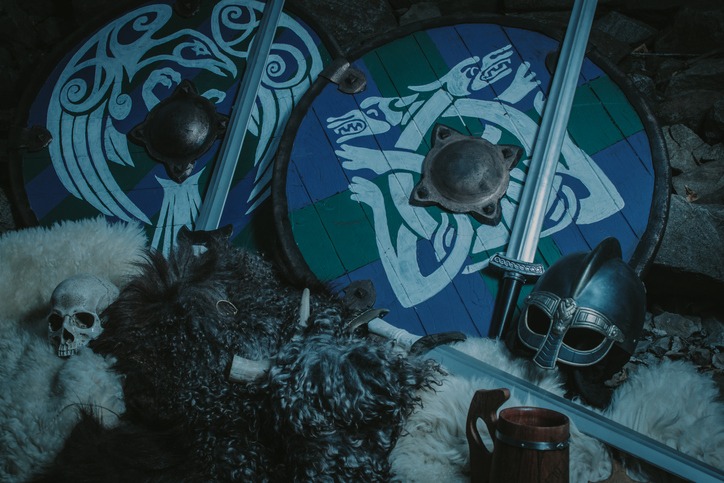
In Viking society, owning a sword was a mark of prestige, often indicating that the person was a warrior of high standing or even a chieftain. Unlike other weapons like axes or spears, which were more common, swords were expensive and required skilled craftsmanship. This made them valuable possessions, often passed down through generations, each blade carrying the stories and honor of those who wielded it before.
The spiritual and symbolic meaning of swords in Viking culture ran deep. To the Vikings, a sword was almost like an extension of the warrior’s soul. It wasn’t just a tool for battle; it was a companion that a warrior would rely on in life and, as many believed, in the afterlife. Swords were often given names, reflecting their importance and the belief that they held a spirit or power. This connection between the warrior and his sword was so strong that it was common for a warrior to be buried with his sword.
In many ways, the sword represented the very identity of a Viking warrior. It was a reflection of his strength, courage, and honor. How a sword was decorated—often with intricate designs and inscriptions—told a story of who the warrior was and what he stood for. Some swords were even believed to have magical properties, offering protection to their owner or bringing them luck in battle. This deep connection between the warrior and his sword meant that losing a sword in battle was seen as a great dishonor while gaining one from an enemy was considered a huge triumph.
In Viking society, to possess a sword was to hold power, both in the physical sense and in the spiritual realm. It was a badge of honor, a guardian in life and death, and a symbol of the warrior’s legacy.
Swords in Viking Burial Ships
Why exactly were swords placed alongside the deceased in these final resting places? For the Vikings, including a sword in a burial ship was a way of honoring the warrior’s life and ensuring they had what they needed for their journey to the next world. The sword symbolized the warrior’s strength and status, and placing it on the burial ship was a way to show respect for the life they lived.
There’s quite a variety of swords found in Viking graves. Some swords were simple yet sturdy, made for practical use in battle. Others were more ornate, with intricate designs and inlays of precious metals, reflecting the high status of the person buried with them. These more decorative swords were often as much works of art as weapons, symbolizing the warrior’s skill in battle and their wealth and importance in society.
The placement of swords within the burial ship was also significant. Archaeologists have found that swords were often placed in specific locations, which likely held symbolic meaning. For instance, a sword might be laid across the chest of the deceased, a position that suggests it was a central part of their identity. In other cases, swords were placed alongside other grave goods, like shields or helmets, emphasizing the warrior’s role even in death. The sword’s location within the ship could also be tied to the Viking belief in the afterlife, with some placements possibly intended to guide or protect the deceased on their journey to the next world.
Including swords in Viking burial ships was a profoundly symbolic act that reflected the values and beliefs of Viking society. The sword was a companion in life and death, representing the warrior’s spirit and a crucial part of their legacy. Whether simple or ornate, the swords found in Viking graves tell us a lot about the people who owned them and the culture that revered them.
Famous Viking Burial Ship Discoveries
Exploring Viking burial ships gives us a fascinating glimpse into the lives and beliefs of these legendary seafarers. Some of the most famous discoveries have been the Oseberg and Gokstad ships, both of which have provided valuable insights into Viking culture, especially regarding the role of swords in these burials.
The Oseberg Ship
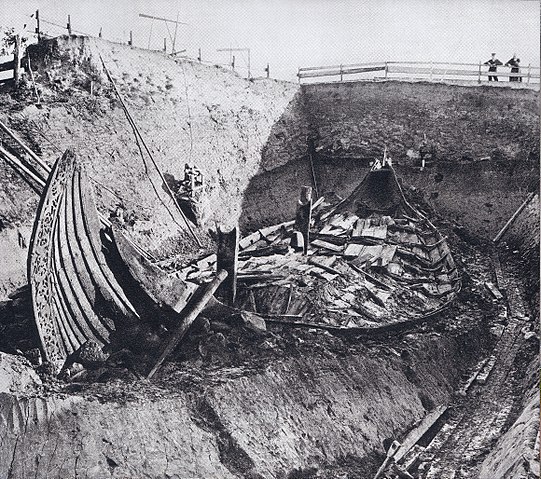
The Oseberg Ship is one of the most remarkable Viking burial discoveries ever made. Unearthed in 1904 in Norway, this ship dates back to the early 9th century and is incredibly well-preserved, giving us a detailed look at Viking burial practices. The ship itself is a work of art, with beautifully carved woodwork that shows the craftsmanship and artistry of the Vikings.
Inside the Oseberg Ship, archaeologists found the remains of two women, believed to be of high status, possibly even royalty. Along with their remains were numerous grave goods, ranging from everyday items like cooking utensils to more symbolic items like animal remains and a wagon.
Among these items, swords were notably absent, which has puzzled many researchers. The absence of swords in this particular burial has led to much speculation about the status of the individuals buried there. Some believe that the swords were not included since the burial was for women, as they were traditionally associated with male warriors. However, other high-status items still reflect the importance and respect given to the individuals buried in the Oseberg Ship.
The Gokstad Ship
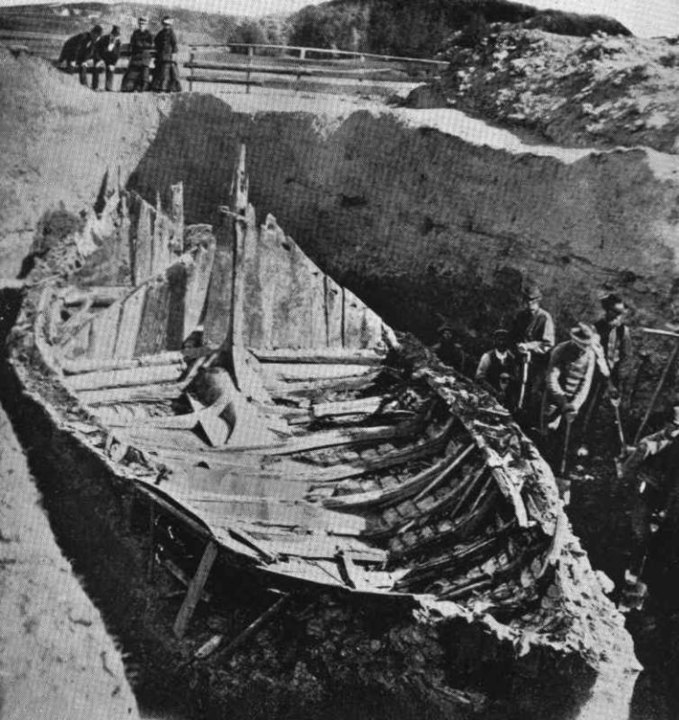
In contrast to the Oseberg Ship, the Gokstad Ship, discovered in 1880, provides a clear example of swords’ role in Viking burials. This ship, also found in Norway and dating back to the late 9th century, was the final resting place of a male warrior, likely a chieftain. The Gokstad Ship is larger and more robust than the Oseberg Ship, reflecting its use as a seagoing vessel before it was repurposed as a burial ship.
Inside the Gokstad Ship, the remains of the chieftain were found surrounded by a wealth of grave goods, including weapons like spears, shields, and, of course, swords. Multiple swords in this burial highlight the importance of these weapons in Viking culture. The swords were likely placed to accompany the chieftain into the afterlife. The inclusion of swords in this burial also reinforces the warrior identity of the deceased, showing that even in death, the individual was honored as a formidable fighter.
Other Notable Viking Ship Burials
Beyond the Oseberg and Gokstad ships, there have been other significant Viking ship burials where swords have played a prominent role. For example, the Tune Ship, also found in Norway, contained the remains of a high-status individual buried with various grave goods, including a sword. Though not as richly furnished as the Oseberg or Gokstad ships, the Tune Ship still provides valuable insights into Viking burial practices and the consistent presence of swords in these rituals.
Another fascinating discovery is the Balladoole ship burial on the Isle of Man. Although not as grand as the Norwegian ships, this burial site also included a sword, emphasizing the widespread practice of burying Viking warriors with their weapons across different regions.
Conclusion
In a Viking’s life, swords were a mark of status and skill, and in death, they became essential companions for the journey to the afterlife. Whether buried with great chieftains or placed in elaborate burial ships, swords played a vital role in ensuring that the Viking warrior was honored and prepared for whatever awaited them in the next world. These ancient traditions give us a deeper understanding of the Vikings’ beliefs and their enduring connection to the symbols of their warrior culture.